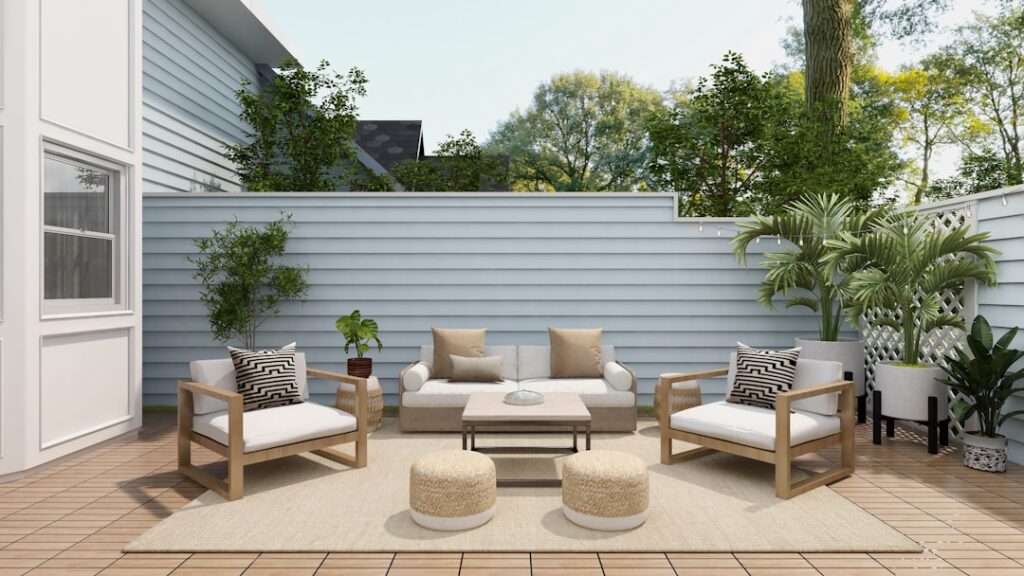
A 10×14 outdoor rug is one of the most useful sizes you can buy for a patio, covered deck, or pergola-shaded seating area. At 140 square feet, it comfortably defines a full conversation set with room to spare, and it gives a sprawling outdoor space the same grounded, finished feel a rug brings to a living room. Get the size, material, and placement right, and the rug will outlast several seasons of sun, rain, and foot traffic.
This guide walks through who needs this size, what materials hold up outdoors, how to position it, and what to expect when it comes time to clean.
Is a 10×14 the Right Size for Your Space?
Measure before you fall in love with a pattern. A 10×14 rug needs a generous footprint, so confirm you have at least 12 by 16 feet of usable surface to leave a comfortable border of bare deck or stone around the edges. That border matters visually. A rug crammed wall-to-wall looks like a mistake; a rug with 18 to 24 inches of breathing room on each side looks intentional.
This size shines under large sectionals, full dining sets for six to eight people, or two facing sofas. As a rule, you want the front legs of every seating piece resting on the rug. For a dining set, the rug should extend roughly 24 inches past the table edge on all sides so chairs stay on the rug when pulled out. If your patio is smaller than about 11 by 15 feet, step down to a 9×12 instead.
Outdoor Rug Materials That Last
Not every rug labeled “outdoor” performs the same. The fiber does most of the work, and a few materials dominate the category for good reason.
- Polypropylene (olefin): The workhorse of outdoor rugs. It resists moisture, mildew, and fading, dries fast, and rinses clean with a hose. Most affordable flatweaves use it.
- Recycled PET (polyester): Often woven from recycled plastic bottles. Soft underfoot, stain-resistant, and a popular eco-conscious choice.
- Polyester blends: Offer richer colors and a plusher hand, though they can hold a little more moisture than olefin.
- Natural fibers (jute, sisal): Beautiful but a poor fit for true outdoor exposure. Reserve them for fully covered, dry porches only, since they absorb water and rot.
For most homeowners, a polypropylene or recycled PET rug rated for UV resistance is the safe bet. Look for “UV-stabilized” or “fade-resistant” language on the label, especially if the rug will sit in direct afternoon sun.
Placement and Layout Tips
Orientation changes how a big rug reads. Run the 14-foot dimension parallel to your longest sight line, usually the direction you walk in from the house or the long edge of the deck. That stretches the space visually and keeps the layout from feeling boxy.
Center the rug under the main grouping rather than the patio itself, since the two are rarely the same. On a covered deck, pull furniture in slightly so no chair leg hangs off the edge. Around a fire pit or coffee table, leave 14 to 18 inches between the seating and the central piece for easy traffic flow.
One detail people forget: a 10×14 rug is heavy and can shift on smooth surfaces. A low-profile outdoor rug pad designed for hard surfaces keeps it flat, adds a touch of cushion, and improves airflow underneath so moisture dries instead of getting trapped against the deck boards.
Drainage, Airflow, and Avoiding Mildew
The biggest enemy of any outdoor rug is trapped water. Synthetic fibers resist mildew, but the surface beneath the rug can still hold dampness, and that is where problems start. After heavy rain, flip a corner up to let the area breathe, or drape the rug over a railing for a few hours if storms are frequent.
Choose a flatweave or low-pile construction over a thick shag for outdoor use. Flatweaves drain and dry quickly, shed debris easily, and resist the matting that traffic causes. If your space stays damp or shaded much of the day, prioritize an open weave that lets water pass through rather than pool.
Cleaning and Seasonal Care
Routine care keeps a large outdoor rug looking new far longer. The flat construction makes maintenance simple.
- Shake or sweep off loose dirt, leaves, and pollen weekly during peak season.
- Hose the rug down as needed. For grime, scrub with a soft brush and a mild dish soap solution.
- Rinse thoroughly so no soap residue remains, since residue attracts dirt.
- Hang or prop the rug to air-dry completely before laying it back down.
- Spot-treat spills quickly with water and gentle soap rather than letting them set.
Avoid pressure washers on the highest settings and harsh bleach, both of which can fray fibers or strip color over time. When the season ends, clean the rug, let it dry fully, then roll it (never fold) and store it somewhere dry. Rolling prevents permanent creases that folding can leave in a rug this large.
What to Budget for a 10×14 Outdoor Rug
Price tracks with material quality, weave density, and brand. As a general range, expect to pay roughly $120 to $300 for a basic polypropylene flatweave in this size, $300 to $600 for a mid-grade recycled PET or higher-density weave, and $600 and up for premium designer or hand-woven outdoor pieces. These are estimates; actual pricing varies by retailer and season.
Because this is a large surface, small per-square-foot differences add up. Spending a bit more on a UV-stabilized, tightly woven rug usually pays off over a cheap one that fades and frays within a season. Add another $40 to $80 for a quality rug pad sized to fit.
Final Buying Checklist
Before you order, run through the essentials so the rug fits and performs the way you expect:
- Confirm your usable area is at least 12 by 16 feet for proper borders.
- Choose UV-stabilized polypropylene or recycled PET for true exposure.
- Pick a flatweave or low pile for drainage and easy cleaning.
- Add a hard-surface rug pad to prevent shifting and trapped moisture.
- Verify front furniture legs will sit on the rug in your layout.
Chosen well, a 10×14 outdoor rug turns an oversized, awkward patio into a true outdoor room. Match the fiber to your climate, give it room to breathe, and keep up with simple seasonal cleaning, and you will get years of comfortable use out of it.