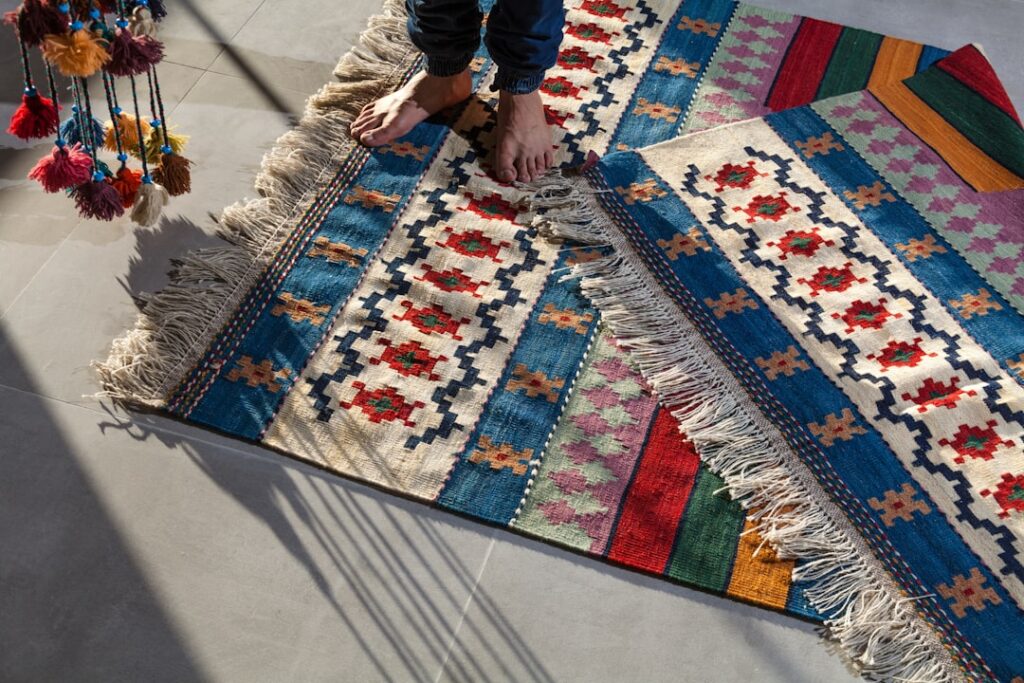
A rug that is too small makes a room feel disjointed, and that is exactly the trap many people fall into with smaller accent rugs. The 4×6 rug size measures four feet by six feet, which works out to 48 inches by 72 inches and roughly 24 square feet of coverage. It is one of the most useful accent sizes you can buy, but only when you put it in the right spot. This guide shows you exactly where a 4×6 shines and where it falls short.
What a 4×6 Rug Actually Covers
At four by six feet, this rug is an accent piece rather than a room-defining floor covering. It is large enough to anchor a small seating area or fill the floor in front of a piece of furniture, yet small enough to slip into entryways and tight corners. For perspective, a queen bed is about 5 feet wide, so a 4×6 will not span the full width at the foot of one.
Think of it as a finishing touch. It adds warmth, color, and a soft landing zone without committing to the footprint of a large area rug.
Best Rooms for a 4×6 Rug
This size earns its keep in several specific spots throughout a home:
- Entryways and foyers: A 4×6 grounds the entrance and catches dirt without overwhelming a modest space.
- Bedside accents: Placed along one side of a bed, it gives your feet a warm spot to land in the morning.
- Reading nooks: Tuck it under a chair and small table to define a cozy corner.
- Small offices: It fits neatly under a desk and chair without bunching at the wheels.
- Kitchens: A 4×6 runs nicely in front of a sink or island as a comfort mat with style.
How to Place Furniture With a 4×6
Because of its modest size, a 4×6 rug is usually used in one of two ways. The first is the floating method, where the rug sits entirely in front of furniture rather than under it. This works well at the foot of a bed, in front of a sofa, or in an entryway.
The second approach puts the front legs of a smaller piece, like an accent chair or a loveseat, onto the rug while the back legs stay on the floor. In a compact living room, you can pull a 4×6 in front of the sofa with a coffee table centered on it, leaving the sofa legs off the rug. Trying to fit a full living room set on a 4×6 will look cramped, so size up to an 8×10 for larger arrangements.
Choosing the Right Material
Match the material to the room and the traffic it sees. High-traffic spots like entryways benefit from durable, low-pile options.
- Wool: Naturally stain-resistant, plush, and long-lasting. Ideal for bedrooms and living areas.
- Jute or sisal: Tough natural fibers with a casual texture, good for entries but harder underfoot.
- Polypropylene: Budget-friendly, easy to clean, and a smart pick for kitchens and high-spill zones.
- Cotton: Soft and washable, well suited to bathrooms and casual rooms.
Always add a non-slip rug pad sized just under the rug dimensions. It keeps a 4×6 from sliding on hard floors, adds cushion, and extends the rug’s life by reducing fiber crush.
Cost Expectations
Price spans a wide range depending on material and construction. A machine-made polypropylene 4×6 often runs from about $40 to $120. Mid-range cotton or blended rugs land around $80 to $250. Hand-knotted wool pieces can reach $300 to $900 or more, reflecting the labor and fiber quality. Because the size is small, even premium materials stay relatively affordable compared with larger formats.
Common Mistakes to Avoid
The biggest error is using a 4×6 to anchor a large room, where it ends up looking like a postage stamp marooned on the floor. Leave at least 12 to 18 inches of bare floor between the rug edge and the walls in small rooms so it reads as intentional. Avoid centering a tiny rug in a wide-open space with no furniture touching it.
Another misstep is skipping the rug pad. Without one, a 4×6 wanders underfoot and wears unevenly. Finally, measure your space with painter’s tape laid out at four by six feet before buying, so you can see the footprint in real life rather than guessing.
4×6 vs. Other Common Sizes
It helps to see where a 4×6 fits among the standard rug dimensions you will shop. A 3×5 is a true small accent for a single doorway or in front of a sink. A 4×6 is the step up, large enough to define a small seating spot or anchor a bedside. Beyond that, a 5×8 starts to function as a small area rug under a coffee table, and an 8×10 or larger becomes a full room rug that furniture sits on.
Knowing this progression keeps you from over-buying or under-buying. If you find yourself wishing the rug covered more floor than a 4×6 allows, that is a sign your space wants a 5×8 or larger. If you only need to soften a single spot, the 4×6 or even a 3×5 is plenty.
Care and Maintenance
A small rug is easy to keep looking good. Vacuum it regularly to lift grit before it grinds into the fibers, and rotate it every few months so foot traffic and sunlight wear it evenly. Shake out lightweight rugs outdoors between vacuumings. For washable cotton or polypropylene 4×6 rugs, many can go straight into a home washing machine, which is a real advantage of the smaller size. Spot-clean spills promptly by blotting rather than rubbing, and check the care label before using any cleaner so you do not damage the backing or dye.
Is a 4×6 Right for You?
Choose a 4×6 rug when you want an accent that adds comfort and color to a defined spot rather than covering most of a floor. It is perfect for entries, bedsides, nooks, and small kitchens. If you need to unify a full seating arrangement or cover most of a room, step up to a larger size. Used in the right place, a 4×6 delivers big style impact for a small price.