Most rug shopping happens in rectangles, so when a room calls for something square, people get stuck. A 5×5 rug fills that gap perfectly. At five feet on each side, it is a true square that handles round dining tables, breakfast nooks, entryways, and reading corners far better than a rectangle ever could. It is one of those sizes that quietly solves a layout problem you did not realize had a clean answer, and once you see it in the right spot, the choice feels obvious.
Why a Square Rug Makes Sense
Rooms and furniture are not all rectangular, and forcing a rectangular rug into a square space leaves awkward bare strips on two sides. A square 5×5 rug mirrors the geometry of round tables, square ottomans, and compact seating arrangements, creating balance instead of fighting the layout.
The shape also draws the eye inward, which makes it ideal for defining a single zone, a conversation nook, a foyer landing, or the area beneath a small breakfast table. In open-concept homes, a square rug carves out a distinct space without competing with the larger rectangular rug nearby.
Best Places for a 5×5 Rug
This size punches above its footprint because it suits so many specific situations.
- Under a round dining table: A square rug echoes the table’s centered shape and leaves even clearance for chairs on all sides.
- Entryways and foyers: A 5×5 grounds the entrance and catches debris without overwhelming a modest space.
- Breakfast nooks and bistro sets: Perfect scale for a small two- or four-seat table.
- Reading corners and accent zones: Defines a chair-and-side-table vignette in a larger room.
- Square rooms: A small home office, nursery, or sitting room with square proportions.
- Under a coffee table: In a compact living room where an 8×10 would feel too big.
Sizing It Correctly Under Furniture
Getting the relationship between rug and furniture right is what makes a square rug look intentional. Under a round dining table, the rug should extend far enough that chairs stay on it when pulled out, so a 5×5 works best with a smaller round table seating four, typically up to about 42 inches in diameter. Anything larger and you will want to size up.
In an entryway, leave a border of bare floor around the rug rather than running it wall to wall, which keeps the space from feeling cramped. Under a coffee table, a 5×5 suits a setup where the table sits centered and the rug peeks out a foot or so on each side. The general principle is the same as with any rug: it should relate to the furniture, not just float in open space.
Styling a Square Rug
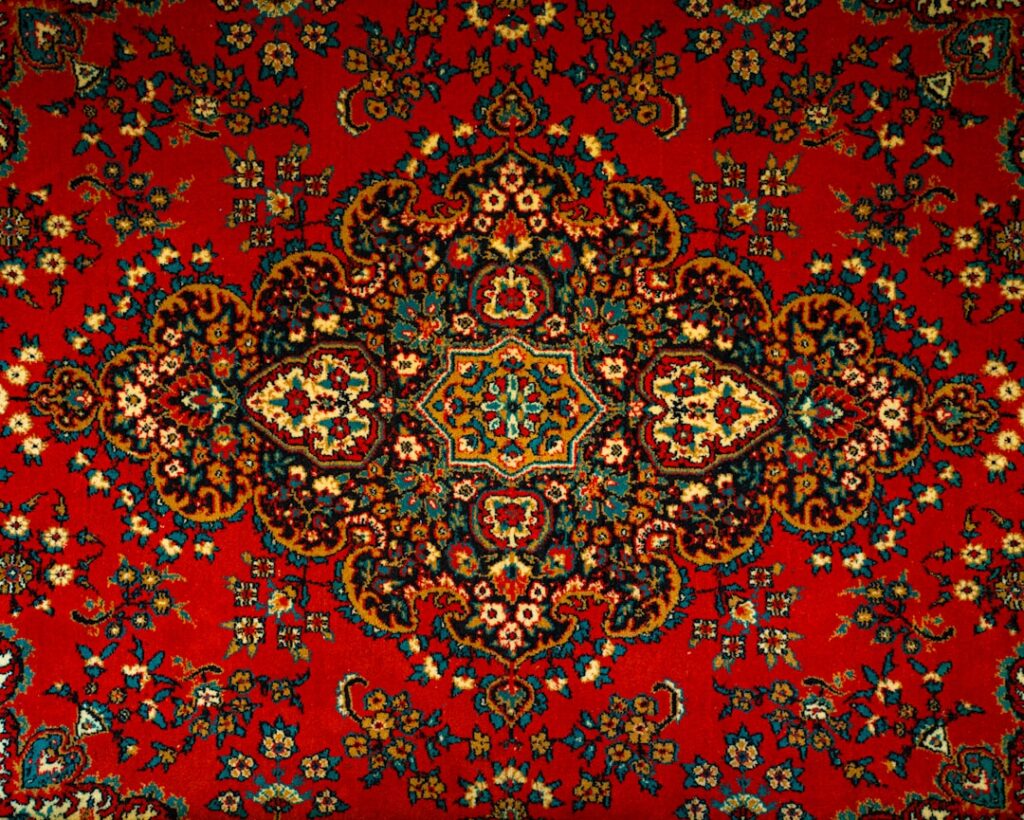
Because a 5×5 rug often anchors a focused zone, the pattern choice carries weight. A bold geometric or medallion design works beautifully in a square format, since the symmetry of the shape complements a centered pattern. In an entryway, a busier pattern hides tracked-in dirt and wear better than a solid.
For a calmer look, a solid or subtly textured square rug lets the furniture above it take center stage, which works well in a reading nook or under a dining set with an interesting table. Layering is another smart move: a patterned 5×5 over a larger natural-fiber rug adds depth in a living room and visually frames a seating area within a bigger space.
Choosing the Right Material
Match the fiber to where the rug will live, since a 5×5 often lands in high-use spots like entries and dining areas.
- Polypropylene: Stain-resistant and easy to clean, ideal under dining tables and in entryways where spills and dirt happen.
- Wool: Durable and soft for a reading nook or sitting room, with rich color that lasts.
- Jute or sisal: Natural texture that suits an entry or casual zone, though rougher underfoot and not for wet spots.
- Cotton flatweave: Lightweight and often washable, great for a kitchen nook or a kid’s room.
- Indoor/outdoor synthetics: A weatherproof option for a covered porch, patio, or a high-mess entry.
Common Mistakes to Avoid
The most frequent error is pairing a 5×5 rug with furniture that is too big for it, which leaves chair legs sliding off the edge or a coffee table dominating a too-small rug. Measure your table or seating before buying, and size up to a 6×6 or 7×7 if the furniture pushes the limits.
Another mistake is treating a square rug like a rectangle and shoving it against a wall, which wastes its balanced shape. Square rugs look best centered under or within a symmetrical arrangement. Finally, do not skip the rug pad; a square rug in a high-traffic entry will creep and curl at the corners without one, and the pad adds grip and cushioning that make the rug last longer.
Where to Buy and What It Costs
The square format is less common than rectangles, so the selection is smaller, but it is widely available online and at most home stores. Pricing tracks with material and quality: budget polypropylene 5×5 rugs start around $40 to $80, mid-range options run $80 to $200, and premium wool or designer pieces climb to $300 and beyond.
Because it is a smaller footprint, a 5×5 is an affordable way to add a quality rug to a space without the cost of a room-sized piece. If you have a round table, an awkward foyer, or a cozy corner that no rectangle seems to fit, a 5×5 rug is often the cleanest answer, and a relatively inexpensive one at that.
Square vs. Round in the Same Spot
Many of the places a 5×5 rug works, under a round table, in an entry, anchoring a small nook, are also spots where a round rug gets considered. The two shapes create distinctly different effects, so it is worth thinking through before you buy. A square rug introduces clean, structured lines and tends to feel more grounded and architectural, echoing the rectangular geometry of the room and the furniture around it.
A round rug, by contrast, softens a space and emphasizes the curve of a round table or a circular seating arrangement. Round rugs can make a small room feel a touch larger because they have no corners to define the edges, but they can also leave more awkward bare floor in a square room. As a rule, choose a 5×5 square when the surrounding space and furniture are angular, and lean round only when the dominant shapes nearby are curved. Matching the rug’s geometry to the room is what makes either choice look deliberate rather than accidental.