
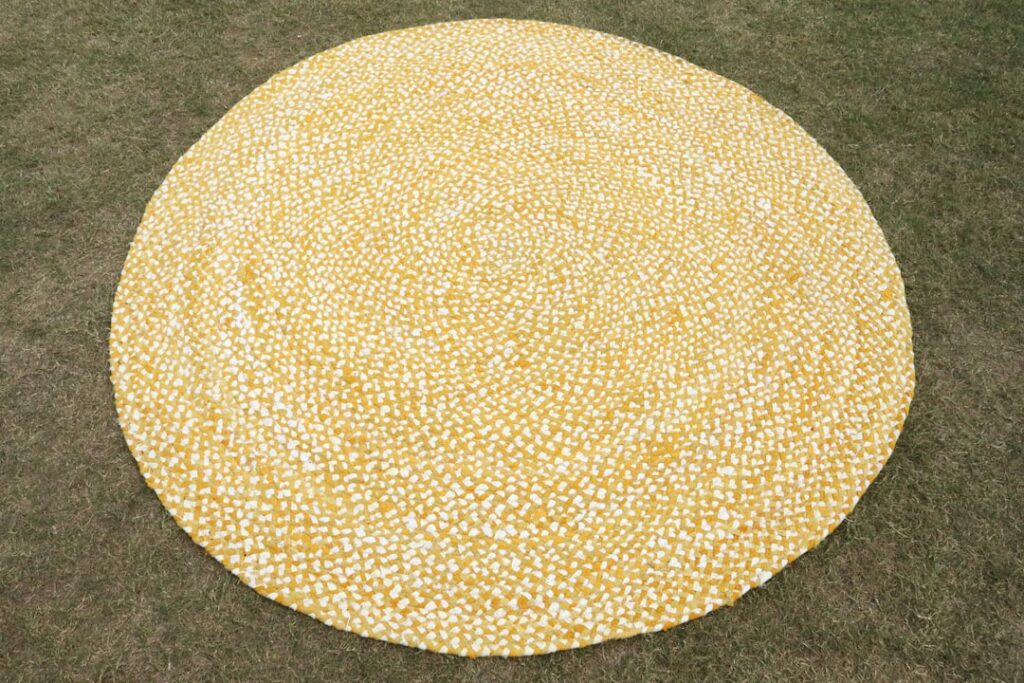
Most rooms default to rectangular rugs, but the right curve can do something a rectangle never will: soften hard corners and draw the eye to a focal point. A 6′ round rug spans six feet across, covering roughly 28 square feet, and it is the size that quietly solves a surprising number of design problems. It anchors an entryway, defines a cozy reading nook, fits neatly under a small round dining table, and breaks up the boxy feel of a square room. Knowing where and how to place one is the difference between a thoughtful design choice and a rug that just floats awkwardly.
Why Choose a Round Rug at All
Shape changes how a space feels. Straight lines and right angles dominate most homes, from walls to furniture to flooring, and a circle introduces welcome contrast. A round rug softens a room, guides movement around it, and creates a natural focal point. It is also a natural match for round and circular furniture, completing the geometry rather than fighting it. In small or narrow spaces, a circle can make the area feel less cramped than a rectangle pushed against the walls.
Where a 6-Foot Circle Fits Best
This particular size is versatile, landing between a small accent piece and a large room-defining rug.
- Entryways and foyers — Anchors the space, greets guests, and catches debris in a stylish footprint.
- Under a round dining table — A 6-foot rug suits a small table seating four; allow room for chairs to stay on the rug when pulled out.
- Reading nooks — Pairs with an accent chair and side table to carve out a cozy corner.
- Small bedrooms — Works beside or partially under a bed, or centered in a child’s room.
- Square rooms — Breaks up the boxiness and centers a seating arrangement.
- Under round tables in entry halls — A classic pairing beneath a circular table topped with flowers.
Placement Rules That Make It Work
A round rug succeeds or fails on placement. A few guidelines keep it looking intentional.
- Center it on a focal point. Round rugs read best when centered under a round table, a light fixture, or a seating group, not shoved into a corner.
- Match it to round furniture. Echoing the circle of a table or ottoman ties the look together.
- Leave breathing room. For a dining table, keep the rug wide enough that chairs stay on it when pulled out; a 6-foot rug fits a small 36 to 42 inch round table.
- Use it to define, not fill. A round rug marks a zone within a larger room rather than covering the whole floor.
A common mistake is placing a round rug against a wall or in a rectangular traffic path, where the curve looks accidental. Give it open space on all sides and a clear reason to be a circle.
Material Options to Consider
The best material depends on where the rug will live.
- Wool — Soft, resilient, and naturally stain-resistant; a premium choice for living rooms and bedrooms.
- Polypropylene (synthetic) — Durable, easy to clean, and budget-friendly; many indoor-outdoor rugs use it, making it ideal for entryways.
- Jute and sisal — Natural texture and an organic look, best for low-moisture indoor spaces.
- Cotton — Lightweight and often machine-washable in flatweave form, good for casual rooms.
For a high-traffic entry, a synthetic or indoor-outdoor rug holds up to dirt and moisture. For comfort underfoot in a bedroom or reading nook, wool or a plush synthetic feels best.
Styling a Round Rug
A circle invites you to build around it. Center a round rug under a pendant light to reinforce the focal point overhead. Pair it with a round table or a curved accent chair to repeat the shape. In a square room, place a round rug under a seating group to soften the corners and create an inviting island. Layering a smaller round rug over a larger natural-fiber base adds depth and texture, a favorite designer move. Keep the surrounding furniture simple so the rug’s shape gets to do its job.
Don’t Forget the Rug Pad
A round rug pad, cut to match, is worth the small extra cost. It keeps the rug from sliding (especially important on hard floors and in entryways), adds cushioning underfoot, and helps the rug lie flat instead of curling at the edges. A non-slip pad also protects the floor finish from abrasion. Cut a standard pad slightly smaller than the rug so it stays hidden around the curved edge.
Care and Maintenance
Round rugs are cared for like any other rug, with attention to the edges where curling can occur.
- Vacuum regularly to keep grit from grinding down the fibers; avoid an aggressive beater bar on natural-fiber and braided rugs.
- Blot spills immediately rather than rubbing them in.
- Rotate the rug periodically so it wears and fades evenly, especially under sunlit windows.
- Hose off and air-dry synthetic and indoor-outdoor rugs for a deep clean.
- Use a rug pad to prevent edge curling and slipping.
How a 6-Foot Round Compares to Other Sizes
Knowing where this size fits in the lineup helps you choose with confidence. A 4-foot round is an accent piece, suited to a small entry or beside a chair, but too small to anchor a seating group. A 6-foot round, at roughly 28 square feet, is the versatile middle: large enough to define a nook, sit under a small round dining table, or center a square room, yet compact enough for tight spaces. An 8-foot round is a true room-defining rug, ideal under a larger round dining table seating six or anchoring a full living-room seating arrangement. If you are torn between a 6-foot and an 8-foot circle for a dining table, measure the table and add at least 24 inches of clearance on each side so chairs stay on the rug when pulled out.
Common Mistakes With Round Rugs
A few missteps undercut an otherwise good choice. The most common is going too small, which leaves the rug looking like an afterthought floating under the furniture; when in doubt, size up. The second is shoving a circle against a wall or into a rectangular hallway, where the shape looks accidental rather than intentional. The third is skipping the rug pad, which lets the rug slide on hard floors and curl at the edges, both a tripping hazard and an eyesore. The fourth is fighting the room’s geometry instead of working with it; a round rug shines when it echoes round furniture or sits under a central light fixture, so place it where the circle has a clear reason to be there.
Final Thoughts
A 6′ round rug is one of the most underused tools in home decorating, perfect for softening square rooms, anchoring entryways, and pairing with round furniture. The size hits a sweet spot: large enough to define a zone, small enough to fit nooks and modest rooms. Center it on a focal point, match it to curved pieces, choose a material that suits the traffic, and add a non-slip pad. Used with intention, a round rug brings a sense of flow and warmth that a rectangle simply cannot.


