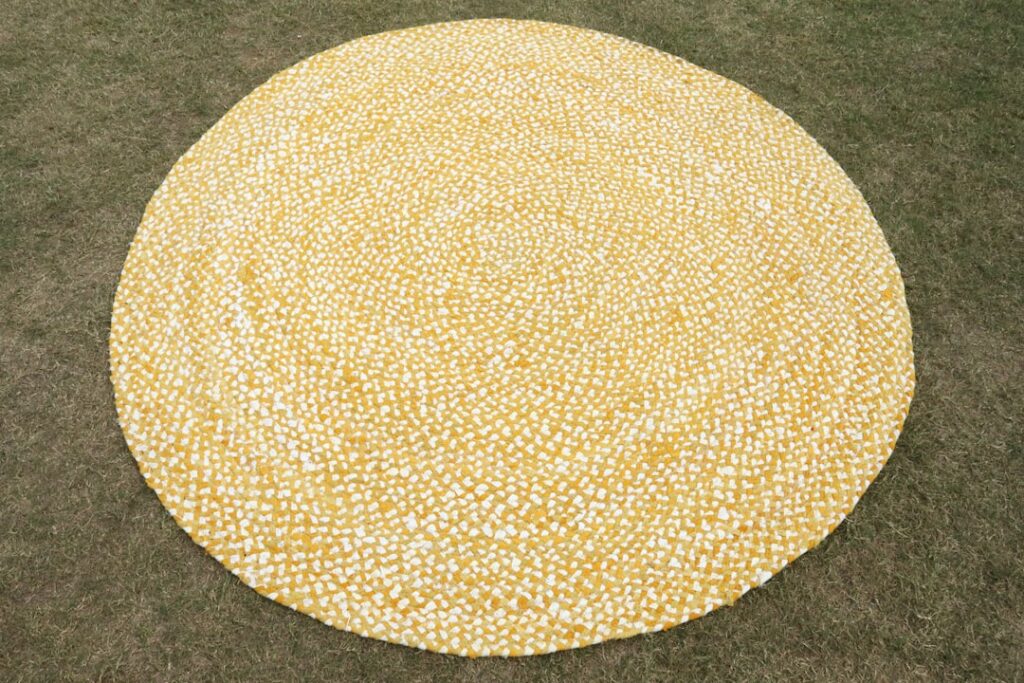
Walk into a room with a round rug and your eye immediately softens. An 8 foot round rug is one of the most versatile sizes you can buy, large enough to anchor a dining table or a round breakfast nook, yet compact enough to fit under a coffee table without swallowing an entire living room. Most homeowners default to rectangles out of habit, then regret it once they see how a circle breaks up the boxiness of a square room. Get the diameter right and the rug does the design work for you.
- Why Choose a Round Rug Over a Rectangle
- Where an 8 Foot Round Rug Works Best
- Materials and What They Cost
- Getting the Pile Height Right
- Don't Skip the Rug Pad
- Cleaning and Everyday Care
- Sizing Mistakes to Avoid
- Color and Pattern for a Round Format
- Solid Surface vs. Carpet Underneath
- Final Buying Checklist
Why Choose a Round Rug Over a Rectangle
Circles introduce movement. In a room full of straight lines, hard corners, and square furniture, a curved rug pulls the eye toward the center and makes the space feel less rigid. That is why designers reach for them in entryways, under pedestal dining tables, and in reading corners where a single chair sits.
An 8 foot diameter covers roughly 50 square feet of floor, which is enough to seat four to six people comfortably around a 42 to 48 inch round table while still leaving chair legs on the rug when guests pull back to stand. Push the table off-center and the proportions fall apart, so center it before you commit.
Where an 8 Foot Round Rug Works Best
Dining rooms are the classic home. A round rug under a round table is a near-perfect visual match, and the 8 foot size gives you the recommended 24 inches of rug beyond each table edge so chairs never catch on the border. Entry foyers are the second-most common spot, especially in homes with a two-story rotunda or a curved staircase that echoes the shape.
Other strong candidates include:
- Bedroom seating areas where a small accent chair and ottoman sit apart from the bed
- Home offices, centered under a desk to define the workspace
- Open-concept great rooms, layered over a larger rectangular rug for contrast
- Nurseries and playrooms, where rounded edges mean fewer tripping corners
Materials and What They Cost
Material drives both feel and price. Wool runs $300 to $900 for an 8 foot round and resists crushing in high-traffic zones, making it worth the premium under a dining table. Machine-made polypropylene sits in the $80 to $250 range, sheds water, and is the smart pick for entryways and homes with kids or pets.
Natural jute and sisal cost $120 to $400 and bring texture, but they scratch underfoot and stain easily, so keep them out of dining zones. Hand-knotted silk-blend pieces can climb past $1,500; gorgeous, but reserve those for low-traffic formal rooms where nothing gets spilled.
Getting the Pile Height Right
Pile height matters more on a round rug because chairs swivel and slide across the curve rather than tracking in straight lines. Under a dining table, choose a low pile of 1/4 inch or less so chairs glide and crumbs vacuum out easily. A plush 3/4 inch or taller pile feels luxurious in a bedroom but fights every chair leg in a dining room.
For entryways, a flatweave or low-pile construction sheds dirt and dries fast after wet boots. Save shag and high-loop styles for spots where bare feet, not furniture, do the walking.
Don’t Skip the Rug Pad
A round rug without a pad slides, curls at the edges, and wears thin in the center within a couple of years. Buy a non-slip pad cut to roughly 7 feet 6 inches so it sits about an inch inside the rug border and stays hidden. A quality felt-and-rubber pad costs $30 to $70, adds cushion, protects hardwood from grit, and dramatically extends the life of the rug. On hard floors it also stops the dangerous slip that catches people in socks.
Cleaning and Everyday Care
Vacuum weekly, but lift the beater bar or switch to a bare-floor setting on flatweave and natural-fiber rugs to avoid fraying the edges. Rotate the rug a quarter turn every few months so foot traffic and sunlight wear it evenly; round rugs hide uneven wear poorly because there is no obvious “front.”
Blot spills immediately with a clean white cloth, working from the outside of the stain inward so you don’t spread it. For synthetic rugs, a mix of one teaspoon of dish soap in a cup of warm water handles most messes. Wool needs a pH-neutral cleaner; harsh products strip its natural lanolin and dull the fibers. Deep-clean a high-traffic round rug professionally once a year and it will look sharp for a decade.
Sizing Mistakes to Avoid
The most common error is buying an 8 foot round for a room that actually needs a 9 or 10 foot. Measure your table, add 48 inches to the diameter for chair clearance, and compare that to the rug size before ordering. A 48 inch table plus 48 inches of clearance wants a 96 inch (8 foot) rug exactly, so anything larger than a 48 inch table starts to crowd.
The second mistake is floating the rug in a room that is too big, where an 8 foot circle looks like an island. In large open spaces, either size up or layer the round rug over a bigger rectangular one to ground it. Tape out the 8 foot circle on your floor with painter’s tape before you buy, live with it for a day, and you’ll know immediately whether the scale is right.
Color and Pattern for a Round Format
Round rugs read differently from rectangles, so pattern choice matters. A bold central medallion suits a circle beautifully because the shape naturally draws the eye inward, reinforcing the rug’s geometry. Border patterns also frame the circle cleanly, while all-over patterns and solids keep things calm under a busy dining setting.
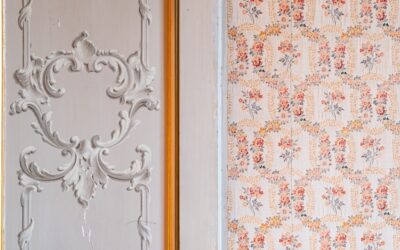
For color, consider how much the rug will show. Under a dining table, much of the center stays hidden by the table itself, so an outer border or ring pattern carries the visual interest where it’s actually visible. In an entryway where the whole rug is exposed, a stronger overall pattern or saturated color makes a confident first impression. If the room already has a lot going on with patterned wallpaper, busy art, or bold furniture, a tonal or low-contrast round rug grounds the space without adding clutter. When in doubt, pull one accent color from the room and let the rug echo it.
Solid Surface vs. Carpet Underneath
Where you place a round rug changes how it behaves. On hardwood, tile, or vinyl, the non-slip pad is non-negotiable, both for safety and to stop the edges curling. On wall-to-wall carpet, you’ll want a thin, firm pad designed for rug-over-carpet rather than a cushiony one, because a soft pad lets the round rug ripple and shift when chairs roll across it. A low-profile rug also lies flatter over carpet than a thick shag, which can look bulky and bunch at the edges. Match the pad to the floor and your 8 foot round will stay put and lie flat for years.
Final Buying Checklist
Before you order, confirm the diameter against your furniture, pick a material matched to the room’s traffic, choose a low pile for dining and a plush pile for lounging, and budget for a quality pad. An 8 foot round rug is forgiving when the math is right and frustrating when it’s off by even a few inches. Spend ten minutes measuring and taping, and the rug you bring home will look like it was made for the room.