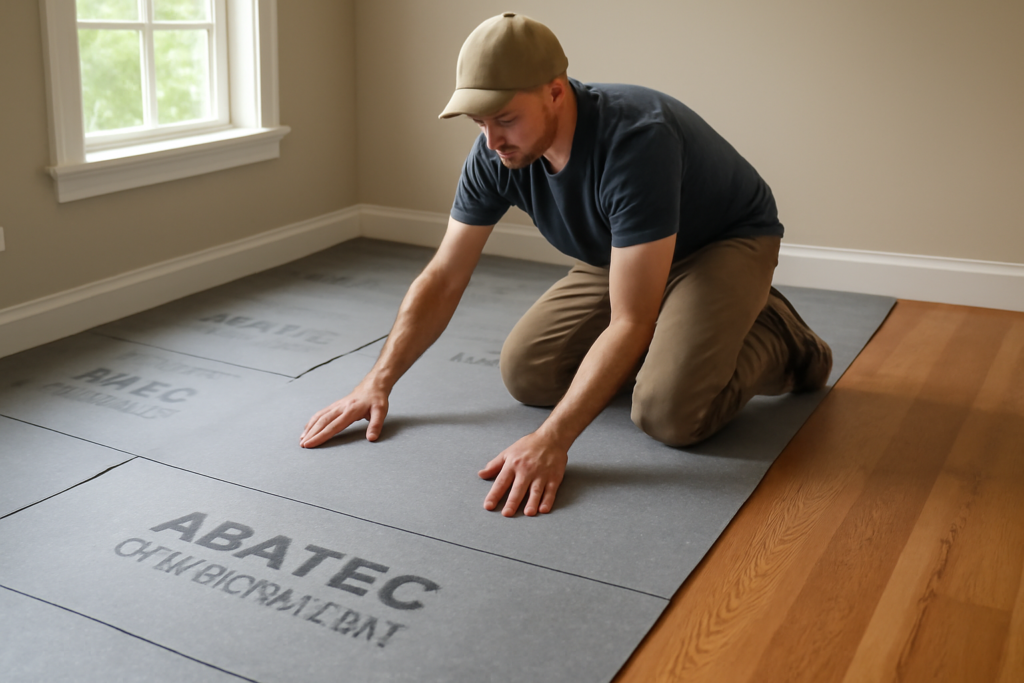
The thin layer you roll out before laying laminate or luxury vinyl plank rarely gets much thought, yet it quietly determines whether your new floor feels solid and quiet or hollow and loud. Abatec underlayment is one of the foam and film products homeowners encounter when shopping for that cushioning layer, and understanding what an underlayment like this actually does helps you choose the right one for your subfloor and flooring type. This guide explains the role of underlayment, what to look for, and how to install it so your floating floor performs the way it should.
What Underlayment Does
Underlayment is the buffer between your subfloor and your finished floating floor. It performs several jobs at once, and skipping it or picking the wrong type undermines even the best flooring. First, it smooths out minor subfloor imperfections so small bumps and dips do not telegraph through and stress the plank locking joints. Second, it cushions the floor, giving laminate and vinyl a slightly softer, warmer feel underfoot instead of a hard, cold slap. Third, it dampens sound, cutting the hollow click and echo that plagues cheaply installed floating floors.
Many underlayments, including foam-and-film products in the Abatec category, also incorporate a moisture barrier. This vapor-blocking layer is critical over concrete slabs, where ground moisture wicks up and can destroy laminate or promote mold beneath vinyl. Getting all of these functions from one rolled-out layer is why underlayment is worth understanding rather than treating as an afterthought.
Key Features to Look For
When evaluating any underlayment, including Abatec underlayment, focus on the specifications that actually affect performance rather than marketing language.
- Thickness: Most underlayments run 1mm to 3mm. Thicker is not always better; over-cushioning can flex the locking joints of rigid-core vinyl and void warranties.
- Moisture barrier: Look for an attached poly film if you are installing over concrete or below grade.
- Sound rating: Check the IIC and STC numbers, which measure impact and airborne sound reduction. Higher is quieter, and condos often require a minimum rating.
- Compatibility: Confirm the underlayment is rated for your specific flooring, whether laminate, engineered wood, or click-lock vinyl.
- Overlap and tape: Rolls with a self-adhesive overlap seam speed installation and seal the moisture barrier reliably.
Matching Underlayment to Your Flooring
The single most common mistake homeowners make is using the wrong underlayment for their flooring type. The rules differ significantly between products.
For Laminate Flooring
Laminate benefits from a standard foam underlayment, typically 2mm to 3mm, that provides cushioning and sound dampening. Over concrete, use a version with a built-in vapor barrier. Laminate is more forgiving of a slightly thicker pad than rigid vinyl is.
For Luxury Vinyl Plank
Many rigid-core LVP products come with an attached pad and require no separate underlayment; adding one can actually void the warranty. If your LVP has no attached pad, use a thin, dense underlayment rated specifically for vinyl, usually 1mm to 1.5mm. Never put soft, thick foam under rigid vinyl, since the excess give stresses the joints and causes gaps.
For Engineered Wood
Floating engineered wood floors use a foam or cork underlayment similar to laminate, with a moisture barrier over concrete. Cork adds excellent sound control for upper-floor installations.
Installation Step by Step
Rolling out underlayment correctly takes a bit of care but no special skill. Follow this sequence for a clean base.
- Clean and dry the subfloor. Sweep and vacuum thoroughly; any grit under the underlayment creates lumps.
- Check for flatness. Confirm the subfloor is within about 3/16 inch over 10 feet, and fill low spots with a leveling compound first.
- Roll out the first run. Lay it perpendicular to the direction your planks will run, snug against the starting wall.
- Do not overlap the foam. Butt seams edge to edge and tape them; overlapping creates raised ridges that show through the floor.
- Seal the moisture barrier. If the roll has a poly film lip, overlap only that film and tape it to create a continuous vapor seal.
- Work section by section. Only roll out as much as you will cover with flooring in a work session so you do not tear or shift it.
Common Mistakes to Avoid
A few errors show up again and again. Installing two layers of underlayment to get extra cushion is a frequent one, and it almost always causes the floating floor to flex and fail at the joints. Forgetting the moisture barrier over concrete is another, leading to warped laminate months later. And laying underlayment over an unlevel subfloor without leveling first simply hides a problem that will reappear as hollow spots and clicking planks.
Always read your flooring manufacturer’s installation instructions before buying underlayment. Warranties frequently specify exactly what type is allowed, and using the wrong one, even a good product, can void your coverage.
How Underlayment Affects Sound Between Floors
In a two-story home or a condo, underlayment does more than cushion your own footsteps; it controls how much noise travels to the room below. Hard floating floors like laminate and vinyl are notorious for transmitting the sharp click of heels and the rumble of dropped objects, and the right underlayment is the cheapest way to tame it. Two ratings tell the story. The IIC, or Impact Insulation Class, measures how well the assembly blocks impact noise like footsteps, while the STC, or Sound Transmission Class, measures airborne noise like voices and television. Higher numbers mean quieter, and many condo associations set a minimum IIC of 50 or higher as a condition of installing hard flooring.
Cork and rubber underlayments generally outperform basic foam for sound control, which is why they are popular on upper floors and in multifamily buildings. If quiet matters, weigh the acoustic ratings as heavily as thickness and moisture protection. Spending a little more on a higher-rated underlayment now is far easier than tearing up a finished floor later because the neighbors complain about every footstep.
Final Word
Abatec underlayment and similar foam-and-film products do quiet, unglamorous work that pays off every time you walk across the floor. Choose a thickness and moisture rating matched to your subfloor, confirm it is compatible with your specific laminate, vinyl, or engineered wood, and install it with butted, taped seams over a clean, level base. Take the time to check the manufacturer’s spec sheet for the exact type your flooring warranty requires, since matching the underlayment to the product is just as important as installing it well. Do that groundwork and your floating floor feels solid, stays quiet, and lasts as long as the flooring on top of it is designed to.