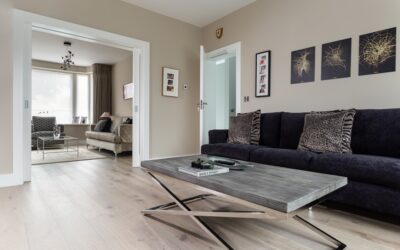
When shopping for laminate flooring, you will encounter AC ratings on nearly every product. These ratings tell you exactly how much wear and tear a laminate floor can handle before it shows signs of damage. At the top of the scale sits AC5 — the highest abrasion class available — designed for heavy commercial environments that would destroy lesser laminate floors within months.
- What Are AC Ratings on Laminate Flooring?
- Where Is AC5 Laminate Flooring Actually Needed?
- Key Features of AC5 Laminate Flooring
- Wear Layer Thickness and Composition
- High-Density Fiberboard (HDF) Core
- Commercial-Grade Locking Systems
- Enhanced Moisture Resistance
- Top AC5 Laminate Flooring Brands in 2026
- Quick-Step Impressive Ultra / Majestic
- Pergo Outlast+ and TimberCraft
- Kronotex Robusto and Mammut
- Balterio Grande and Magnitude
- Egger Pro Laminate
- AC5 vs AC3 vs AC4: Detailed Comparison
- AC5 Laminate Flooring Pricing in 2026
- Installation Considerations for AC5 Laminate
- Maintenance Tips for AC5 Laminate Floors
- Frequently Asked Questions
- Is AC5 laminate waterproof?
- Can AC5 laminate be used in bathrooms?
- How long does AC5 laminate last in a commercial setting?
- Is AC5 laminate worth the extra cost for a home?
- Is there an AC6 rating?
- Final Verdict on AC5 Laminate Flooring
But is AC5 laminate the right choice for your project? In this guide, we explain what AC ratings really measure, where AC5 is genuinely needed, the top brands manufacturing AC5-rated products, and how pricing stacks up against AC3 and AC4 alternatives.
What Are AC Ratings on Laminate Flooring?
AC stands for Abrasion Class, a standardized rating system developed under European norm EN 13329 and adopted globally. The rating measures how well a laminate floor’s wear layer resists surface abrasion — essentially, how long the floor maintains its appearance under foot traffic, furniture movement, and everyday use.
The AC rating is determined through the Taber abrasion test, where a rotating abrasive wheel is applied to the laminate surface under controlled conditions. The number of rotations the floor withstands before the wear layer breaks down determines the rating. There are five classes in total:
| AC Rating | Classification | Taber Rotations | Intended Use |
|---|---|---|---|
| AC1 | Light Residential | ~900 | Bedrooms, closets |
| AC2 | General Residential | ~1,800 | Living rooms, dining rooms |
| AC3 | Heavy Residential / Light Commercial | ~2,500 | Kitchens, hallways, small offices |
| AC4 | General Commercial | ~4,000 | Retail shops, restaurants, offices |
| AC5 | Heavy Commercial | ~6,500+ | Department stores, public buildings, airports |
What the AC Rating Does Not Measure
It is important to understand that the AC rating focuses specifically on surface abrasion resistance. It does not directly measure impact resistance, moisture resistance, scratch resistance from sharp objects, or the overall structural durability of the plank. A floor can have an AC5 surface rating but still be susceptible to denting from heavy point loads or swelling from moisture exposure if the core is not properly engineered.
For a complete picture of laminate quality, you should also evaluate the core density (typically measured in HDF density), the locking mechanism, moisture resistance treatments, and the overall plank thickness.
Where Is AC5 Laminate Flooring Actually Needed?
AC5 laminate is engineered for the most demanding commercial environments. These are spaces where hundreds or even thousands of people walk across the floor daily, where rolling carts and heavy equipment are common, and where the floor must maintain its appearance for years without replacement.
Ideal Applications for AC5
- Department stores and shopping centers — Continuous foot traffic from opening to closing, combined with shopping carts and display changes
- Airport terminals and train stations — Rolling luggage, high heels, and constant pedestrian flow
- Hotel lobbies and conference centers — Heavy traffic concentrated in specific pathways
- Government buildings and courthouses — Long-term durability expectations with tight maintenance budgets
- Schools and universities — Chair legs, backpack dragging, and thousands of daily footsteps
- Large office buildings — Rolling office chairs, high-traffic corridors, and reception areas
- Healthcare facilities — Rolling equipment, wheelchairs, and constant cleaning protocols
Do You Need AC5 for a Home?
For most residential applications, AC5 is overkill. An AC3-rated laminate handles typical household traffic comfortably, and AC4 provides extra margin for busy households with pets and children. However, there are a few residential scenarios where AC5 makes sense:
- Home gyms with heavy equipment and dropped weights
- Home-based businesses with client foot traffic
- Households with multiple large dogs
- Rental properties where longevity reduces turnover costs
- Homeowners who simply want the most durable option available and plan to stay long-term
Key Features of AC5 Laminate Flooring
AC5 laminate products share several construction characteristics that set them apart from lower-rated options.
Wear Layer Thickness and Composition
The wear layer on AC5 laminate is significantly thicker and denser than AC3 or AC4 products. Most AC5 floors use aluminum oxide particles embedded in the melamine resin overlay, creating a surface that resists abrasion far beyond standard residential laminate. Some manufacturers apply multiple overlay layers to achieve the required Taber test performance.
High-Density Fiberboard (HDF) Core
AC5 products almost universally use high-density fiberboard cores with densities of 900 kg/m3 or higher. This dense core provides superior structural integrity, better locking mechanism performance, and improved resistance to point loads from furniture legs and high heels. Many AC5 products feature 10mm or 12mm total plank thickness, compared to the 7mm–8mm common in budget AC3 laminate.
Commercial-Grade Locking Systems
The click-lock mechanisms on AC5 laminate are engineered for tighter tolerances and greater holding strength. Brands like Quick-Step use their Uniclic Multifit system, while Pergo uses PerfectFold, and Kronotex employs the Megaloc system. These locking systems prevent gaps from forming under the stress of commercial traffic patterns.
Enhanced Moisture Resistance
While no standard laminate is truly waterproof, AC5 products frequently include wax-treated edges and moisture-resistant core treatments. Some manufacturers offer water-resistance warranties of 24–72 hours for surface spills, compared to the 12–24 hours typical of lower-rated products.
Top AC5 Laminate Flooring Brands in 2026
Not all manufacturers produce AC5-rated laminate. The following brands are well-regarded for their commercial-grade offerings.
Quick-Step Impressive Ultra / Majestic
Quick-Step, owned by Unilin Group, offers several AC5 collections. The Impressive Ultra line features 12mm planks with HydroSeal surface treatment for enhanced moisture resistance. The Majestic collection adds wider, longer planks with the same AC5 durability. Quick-Step backs these products with 25-year residential and 5-year commercial warranties.
Pergo Outlast+ and TimberCraft
Pergo, the original inventor of laminate flooring, offers AC5 ratings across several collections. The Outlast+ line includes SpillProtect surface technology, while the TimberCraft+ collection features WetProtect waterproof technology paired with AC5 surface durability. Pergo provides lifetime residential warranties on these products.
Kronotex Robusto and Mammut
German manufacturer Kronotex produces some of the thickest AC5 laminate available. The Robusto collection features 12mm planks, while Mammut extends to 12mm with extra-long plank formats. Both use V-groove synchronous embossing for realistic wood textures.
Balterio Grande and Magnitude
Belgian manufacturer Balterio offers AC5 in their Grande Wide collection, featuring extra-wide planks at 9mm thickness. The Magnitude line provides AC5 performance in a 10mm format. Balterio uses their DropXpress installation system across both ranges.
Egger Pro Laminate
Egger’s professional line includes AC5 options specifically targeting the commercial market. Their products feature Aqua+ moisture resistance technology and are available in plank and tile formats, making them suitable for commercial spaces that want a wood or stone look.
AC5 vs AC3 vs AC4: Detailed Comparison
Understanding the practical differences between these three most commonly purchased AC ratings helps you make a cost-effective decision.
| Feature | AC3 | AC4 | AC5 |
|---|---|---|---|
| Taber Rotations | ~2,500 | ~4,000 | ~6,500+ |
| Typical Thickness | 7mm–8mm | 8mm–10mm | 10mm–12mm |
| Material Cost (per sq ft) | $0.80–$1.50 | $1.50–$2.50 | $2.50–$4.50 |
| Installed Cost (per sq ft) | $2.50–$4.50 | $4.00–$6.00 | $5.50–$8.00 |
| Residential Warranty | 15–25 years | 20–30 years | 25 years–Lifetime |
| Commercial Warranty | None–3 years | 3–5 years | 5–10 years |
| Best For | Bedrooms, living rooms | Kitchens, hallways, light commercial | Heavy commercial, high-abuse residential |
| Core Density | 800–850 kg/m3 | 850–900 kg/m3 | 900+ kg/m3 |
When AC3 Is Sufficient
For a bedroom, guest room, or low-traffic living space in a home without pets, AC3 laminate performs admirably and represents the best value. Most homeowners will never wear through an AC3 surface in normal residential use.
When AC4 Hits the Sweet Spot
AC4 is the go-to rating for busy households — families with kids and pets, kitchens, entryways, and hallways. It also works well for light commercial spaces like small offices, boutique shops, and professional suites. AC4 offers a significant durability upgrade over AC3 without the premium pricing of AC5.
When AC5 Justifies the Investment
AC5 makes financial sense when the cost of floor replacement — including business disruption, labor, and material disposal — exceeds the upfront premium. In a busy retail store, replacing AC3 laminate every 3–4 years costs far more than installing AC5 once and getting 8–10 years of service life.
AC5 Laminate Flooring Pricing in 2026
AC5 laminate sits at the premium end of the laminate price spectrum, but it remains significantly more affordable than solid hardwood, engineered hardwood, or commercial-grade tile installations.
Material Costs
- Budget AC5 options: $2.50–$3.00 per square foot — typically from lesser-known brands or discontinued colorways
- Mid-range AC5 options: $3.00–$3.75 per square foot — major brands like Kronotex and Balterio
- Premium AC5 options: $3.75–$4.50+ per square foot — Quick-Step, Pergo, and specialty collections with advanced moisture protection
Installation Costs
Professional installation for AC5 laminate typically runs $2.50–$4.00 per square foot, depending on your location, subfloor condition, and pattern complexity. The thicker planks and tighter tolerances of AC5 products do not significantly increase installation time compared to AC4, so labor costs are comparable.
Total Project Costs
For a typical 500-square-foot commercial space, expect total installed costs of $2,750–$4,000 for AC5 laminate. By comparison, commercial-grade luxury vinyl plank for the same space would cost $3,000–$5,000, and engineered hardwood would run $5,000–$8,000.
Installation Considerations for AC5 Laminate
Installing AC5 laminate follows the same general principles as any laminate floor, but the commercial-grade nature of these products introduces a few specific considerations.
Subfloor Requirements
AC5 laminate demands a flat, dry, and structurally sound subfloor. The maximum allowable deviation is typically 3/16 inch over a 10-foot span. In commercial settings, concrete subfloors must be tested for moisture content and may require a vapor barrier with a moisture emission rate below 3 lbs per 1,000 sq ft per 24 hours.
Underlayment Selection
For commercial installations, choose a dense underlayment rated for commercial traffic. Many AC5 products come with pre-attached underlayment, but if purchasing separately, look for underlayment with an IXPE or rubber composition rated for high-traffic use. Avoid cheap foam underlayment in commercial applications — it compresses over time and can cause locking system failures.
Expansion Gaps
AC5 laminate requires standard expansion gaps of 8mm–10mm around all perimeters and fixed objects. In commercial spaces larger than 40 feet in any direction, transition strips and expansion breaks are mandatory to prevent buckling. Follow the manufacturer’s specific guidelines for maximum continuous run lengths.
Acclimation
Allow AC5 laminate to acclimate in the installation space for at least 48 hours before installation. In commercial buildings with large temperature or humidity differentials from the storage location, extend this to 72 hours. The planks should be stored flat, unopened, in the room where they will be installed.
Maintenance Tips for AC5 Laminate Floors
Despite their commercial-grade durability, AC5 laminate floors still require proper maintenance to maximize their lifespan.
- Daily sweeping or dust mopping removes grit and debris that can scratch the surface over time
- Damp mopping weekly with a laminate-specific cleaner keeps the floor looking fresh — never use excessive water
- Felt pads under all furniture legs prevent concentrated point-load damage
- Walk-off mats at all entrances capture the majority of incoming dirt and moisture, dramatically reducing wear
- Avoid wax, polish, or steam mops — these can damage the wear layer or force moisture into seams
- Address spills promptly — even with enhanced moisture resistance, standing water can eventually penetrate seams
Frequently Asked Questions
Is AC5 laminate waterproof?
No. AC5 refers only to surface abrasion resistance, not moisture resistance. However, many AC5 products include enhanced moisture protection like wax-treated edges and sealed surfaces. For truly waterproof flooring, consider waterproof flooring options like SPC or WPC vinyl plank.
Can AC5 laminate be used in bathrooms?
Standard AC5 laminate is not recommended for bathrooms. Some newer AC5 products with waterproof technology (like Pergo WetProtect) may be rated for bathroom use, but always verify the manufacturer’s specific moisture warranty before installing in wet areas.
How long does AC5 laminate last in a commercial setting?
In moderate commercial traffic, AC5 laminate typically lasts 8–12 years. In extremely heavy traffic environments like department stores or airports, expect 5–8 years. In residential settings, AC5 laminate can last 25 years or longer with proper maintenance.
Is AC5 laminate worth the extra cost for a home?
For most homes, AC4 laminate provides the best balance of durability and value. AC5 is worth considering if you have large dogs, a home gym, or a home-based business with client traffic. Otherwise, the premium over AC4 may not deliver proportional benefits in a residential setting.
Is there an AC6 rating?
The current EN 13329 standard goes up to AC5. There is no officially recognized AC6 rating. Some manufacturers market products as “AC6” for promotional purposes, but this is not an industry-standard classification. Treat such claims with caution and verify testing certifications independently.
Final Verdict on AC5 Laminate Flooring
AC5 laminate flooring represents the pinnacle of laminate durability. For commercial spaces facing heavy daily foot traffic, it offers an excellent balance of performance, aesthetics, and cost-effectiveness compared to hardwood, tile, or premium vinyl alternatives. For residential use, it is a premium choice that makes the most sense in high-abuse environments or for homeowners who prioritize maximum longevity above all else.
Before purchasing, compare AC5 options from multiple brands, request samples to evaluate the look and feel in person, and carefully consider whether AC4 might meet your needs at a lower price point. The right laminate floor is the one that matches both your performance requirements and your budget.
Prefer to explore on your own?
See how new flooring looks in your actual room in seconds — free, no signup.
Try the free Floor Studio →