
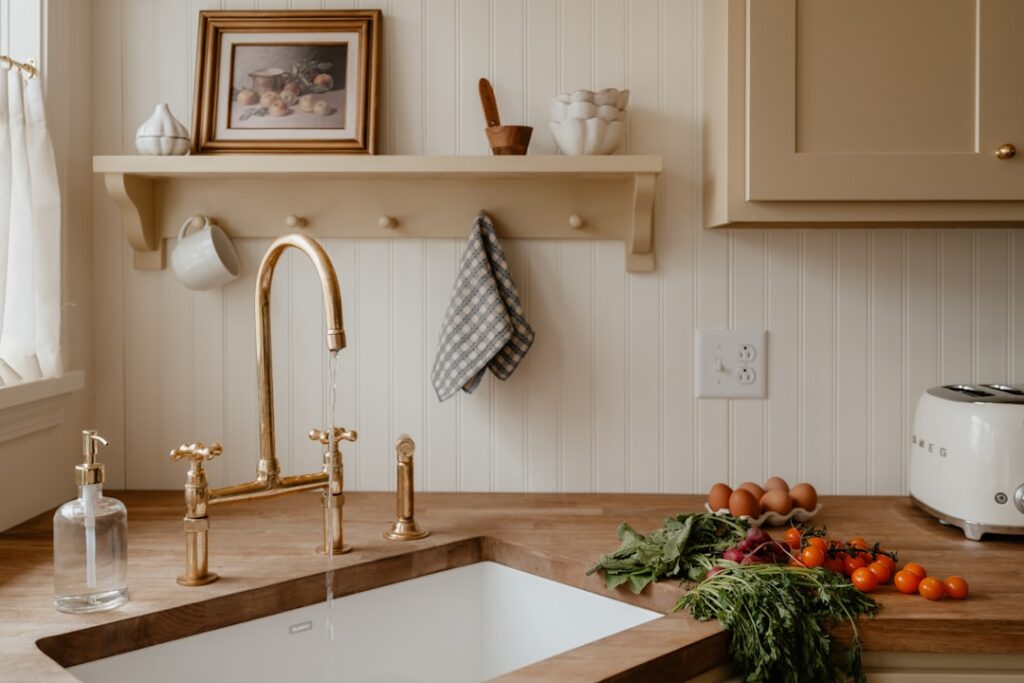
Wood countertops bring a warmth and character to kitchens that no stone or engineered material can match, and acacia butcher block countertops are one of the most striking options available. With dramatic grain patterns, rich tones ranging from golden honey to deep chocolate, and a price point that undercuts many competing hardwoods, acacia has become a favorite among homeowners and designers. At DnG Flooring, we have installed and recommended acacia butcher block for years, and this guide shares our hands-on knowledge of the material — the good, the bad, and the practical.
About Acacia Wood
Acacia is a genus of over 1,000 tree species found across tropical and subtropical regions worldwide, with the majority coming from Southeast Asia, Africa, and Australia for commercial lumber. The species most commonly used for butcher block countertops is Acacia mangium or Acacia auriculiformis, often sourced from sustainably managed plantations in Vietnam, Indonesia, and Thailand.
What makes acacia distinctive is its dramatic grain. The wood features bold, swirling patterns with pronounced contrast between light sapwood and dark heartwood. This natural color variation means every acacia butcher block countertop is unique — some slabs are predominantly golden with dark streaks, while others lean toward deep brown with honey highlights.
Acacia is a hardwood with a Janka hardness rating of approximately 1,750 to 2,300 pounds-force, depending on the specific species. For comparison, red oak rates 1,290, hard maple rates 1,450, and walnut rates 1,010. This means acacia is harder than most traditional countertop woods, providing better resistance to dents, scratches, and daily wear.
The wood also has natural oils that give it moderate resistance to moisture and decay — better than maple, though not as resistant as teak. These natural oils contribute to the wood’s characteristic luster and make it relatively forgiving of occasional water exposure.
Pros and Cons
Pros:
- Stunning grain patterns. Acacia’s dramatic grain and color variation create a visual warmth and interest that more uniform woods like maple cannot achieve. It is a conversation piece.
- Excellent hardness. With Janka ratings above most countertop hardwoods, acacia resists scratches and dents from daily kitchen use better than walnut, cherry, or oak.
- Affordable pricing. Acacia typically costs 20 to 40 percent less than walnut butcher block and is comparable to or slightly less than hard maple, making it one of the best values in premium wood countertops.
- Sustainable sourcing. Most acacia lumber comes from fast-growing plantation trees that reach harvestable size in 8 to 15 years, compared to 40 to 80 years for native hardwoods. This makes acacia one of the more environmentally responsible wood choices.
- Natural moisture resistance. Acacia’s inherent oils provide better water resistance than many hardwoods, though it still requires sealing for countertop use.
- Warm, inviting aesthetic. Acacia brings organic warmth to any kitchen style, from rustic farmhouse to modern eclectic.
Cons:
- Color variation can be extreme. If you prefer a uniform look, acacia may feel too busy or inconsistent. Each slab varies significantly, and matching multiple pieces for a long countertop run can be challenging.
- Requires regular maintenance. Like all wood countertops, acacia needs periodic oiling to maintain its moisture resistance and appearance. Neglect the oiling schedule and the wood dries out, cracks, and stains.
- Not as water-resistant as claimed. While better than some hardwoods, acacia still absorbs water if the finish is compromised. Persistent standing water causes swelling, warping, and dark stains.
- Can be inconsistent in quality. Because acacia countertops are often manufactured in Southeast Asian factories and imported, quality varies between manufacturers. Cheap imports may have poor joinery, uneven surfaces, or insufficient drying that leads to warping after installation.
- Not food-safe without proper finishing. Raw acacia must be treated with a food-safe oil or finish before using it as a food preparation surface.
Cost and Where to Buy
Acacia butcher block countertops are among the most affordable premium wood countertop options available in 2026.
Pre-made slabs: $25 to $60 per square foot. Standard sizes (25 inches deep, 1.5 inches thick, various lengths) are available at home improvement stores. A 6-foot section runs $150 to $300.
Custom-fabricated: $50 to $100 per square foot. Custom sizing, thickness, edge profiles, and sink cutouts add to the cost.
Where to buy pre-made acacia butcher block:
- Home Depot and Lowe’s carry pre-cut acacia butcher block countertops from brands like Hardwood Reflections and Hampton Bay. Prices start around $150 for a 4-foot section. Selection varies by location.
- Floor & Decor offers acacia butcher block in several thicknesses and finishes. Their prices tend to be slightly lower than the big-box stores.
- Lumber Liquidators (LL Flooring) stocks acacia countertops alongside their flooring lines. Good for matching your countertop wood to acacia hardwood flooring.
- Online retailers like Amazon, Wayfair, and Butcher Block Co. offer a wider selection of sizes and finishes, often with free shipping on large orders. Compare reviews carefully — photo quality varies dramatically from the in-person product.
Cost comparison with other wood species: Acacia runs 20 to 40 percent less than walnut ($45 to $90 per square foot), about the same as hard maple ($30 to $65 per square foot), and slightly more than bamboo ($20 to $45 per square foot). For the combination of beauty, hardness, and price, acacia represents excellent value.
Acacia vs. Maple vs. Walnut
These three species dominate the wood countertop market. Here is how they compare head to head.
Hardness: Acacia (1,750-2,300 Janka) is the hardest of the three. Hard maple (1,450 Janka) is the industry standard for cutting boards. Walnut (1,010 Janka) is the softest and most prone to dents. If durability is your primary concern, acacia wins.
Appearance: Acacia has the most dramatic grain with high contrast between light and dark tones. Maple is light and uniform — clean and classic but less visually dynamic. Walnut is rich and dark with subtle grain patterns — elegant and warm. This category is purely subjective.
Food safety: Maple is the traditional choice for commercial cutting boards and food preparation surfaces because of its tight grain structure that resists bacterial penetration. Acacia and walnut are both suitable for food contact when properly finished but do not have the same food-safety track record as maple.
Price: Acacia is the most affordable, followed by maple, with walnut commanding the highest prices. For a 40-square-foot kitchen, the difference between acacia and walnut can be $800 to $1,200.
Maintenance: All three require similar maintenance — periodic oiling with mineral oil or a food-safe hardwax oil. Walnut’s darker color hides stains better than maple’s light surface. Acacia’s varied coloring also masks stains well.
Availability: Maple and walnut are domestic woods with wide distribution. Acacia is imported, which means less selection in physical stores and longer lead times for custom orders.
Our recommendation: Choose acacia for bold visual impact and excellent value. Choose maple for a classic, clean look and the best food-prep surface. Choose walnut for rich, dark elegance if the budget allows.
Oiling and Finishing
Proper finishing is the most critical factor in the long-term performance of acacia butcher block countertops. Here are the finishing options and their trade-offs.
Mineral oil is the most common finish for wood countertops used as food-preparation surfaces. It penetrates the wood, reduces moisture absorption, and is completely food-safe. The downside is that it provides minimal surface protection and must be reapplied every two to four weeks during the first few months, then monthly thereafter. Apply liberally, let it soak for 20 to 30 minutes, then wipe off the excess.
Mineral oil plus beeswax (often sold as “board cream” or “wood butter”) combines the penetrating benefits of mineral oil with a thin surface wax layer that adds water resistance. Products like Howard Butcher Block Conditioner and Caron & Doucet work well. Apply after oiling for extra protection.
Hardwax oil (Rubio Monocoat, Osmo, or similar) provides a more durable finish than mineral oil alone. These products penetrate the wood and cure to form a water-resistant barrier within the grain. One to two coats provide protection for three to six months between reapplications. They are food-safe once cured and available in clear or tinted formulations.
Polyurethane (water-based or oil-based) creates a hard, protective film on the surface. It provides the best water and stain resistance of any finish but is not food-safe for direct food contact. If you use polyurethane, always use a cutting board. The trade-off is that polyurethane can peel and scratch over time, and repairs require sanding and refinishing the entire surface.
Tung oil is a natural, food-safe option that cures to a harder film than mineral oil. Pure tung oil (not “tung oil finish,” which contains solvents) provides excellent water resistance and a warm, amber glow. It requires more coats (five to seven for initial application) and longer curing time (two to three days between coats).
Our recommendation: For countertops used as cutting surfaces, use mineral oil with beeswax conditioner. For countertops that are primarily decorative (food is prepared on cutting boards), hardwax oil provides the best balance of protection and natural appearance.
Daily Maintenance
Wood countertops are not high-maintenance, but they do require consistent habits to stay beautiful.
Cleaning: Wipe with a damp cloth and mild dish soap after each use. Avoid soaking the surface with water — wring out your cloth well. Never use bleach, ammonia, or abrasive cleaners on wood countertops.
Drying: Always dry the surface after cleaning. Standing water is the enemy of wood countertops. Pay special attention to the area around the sink, where water exposure is constant.
Stain removal: For surface stains, sprinkle coarse salt on the area and rub with half a lemon. The salt provides gentle abrasion while the lemon acts as a natural bleaching agent. For deeper stains, sand lightly with 220-grit sandpaper and re-oil immediately.
Preventing damage: Use trivets for hot pans (while acacia handles heat better than some woods, direct heat can scorch the finish). Use cutting boards for knife work to protect the oiled surface. Place rubber mats under dish racks and soap dispensers to prevent water rings.
Monthly oiling: Once the initial break-in period is complete (weekly oiling for the first month), oil your countertops monthly or whenever the wood looks dry. You will notice the color fading and the grain looking “thirsty” when it is time to re-oil. The process takes 30 minutes including soak time.
Installation Tips
Installing acacia butcher block countertops is a manageable DIY project. Here are the key steps and pro tips.
Acclimate the wood. Let the countertop sit in your kitchen for 48 to 72 hours before installation. Wood expands and contracts with humidity changes, and acclimating prevents warping after installation.
Do not glue the countertop to the cabinets. Wood moves seasonally. Attach the countertop to the cabinet base using L-brackets with slotted screw holes that allow lateral movement. This prevents the countertop from cracking as it expands and contracts.
Leave expansion gaps. Leave 1/8 inch between the countertop and any wall. Cover the gap with a backsplash or trim strip. Without this gap, seasonal expansion can cause the countertop to buckle.
Seal all sides. Oil or seal the bottom and edges of the countertop in addition to the top surface. Moisture can enter from any exposed surface. Unsealed bottom surfaces absorb moisture from the cabinets below, causing cupping and warping.
Reinforce sink cutouts. The area around the sink cutout is the weakest point in any butcher block countertop. Apply extra sealer here and ensure the undermount sink clips provide even support around the entire perimeter.
Join sections carefully. If your countertop requires multiple sections, use draw bolts (also called miter bolts) to pull joints tight. Apply waterproof wood glue at the joint and clamp until dry. Sand the joint flush and seal immediately.
Design Pairings and Style Ideas
Acacia’s bold grain and warm tones pair well with a variety of kitchen styles.
White cabinets + acacia countertops is the most popular combination. The contrast between bright white and warm wood tones creates a fresh, inviting kitchen that photographs beautifully and appeals to a wide range of tastes.
Dark cabinets + acacia countertops create a rich, moody kitchen. Navy, charcoal, or black cabinets with the golden tones of acacia deliver drama without feeling heavy. Add brass or gold hardware to complete the look.
Mixed-material kitchens use acacia for the island and stone for the perimeter countertops (or vice versa). This adds visual interest and gives you the warmth of wood where you want it most — the social hub of the kitchen.
Farmhouse and rustic styles pair acacia with apron-front sinks, open shelving, and subway tile backsplashes. The wood’s natural character reinforces the handmade, organic feel these styles celebrate.
Frequently Asked Questions
Is acacia good for butcher block countertops?
Yes, acacia is an excellent butcher block material. Its Janka hardness (1,750 to 2,300) exceeds maple, the traditional standard, providing superior resistance to dents and scratches. Its natural oils offer moderate moisture resistance. The main consideration is that acacia’s dramatic grain variation is not to everyone’s taste — if you prefer a uniform appearance, maple is a better choice.
How often do you oil acacia butcher block?
Oil weekly for the first month after installation to saturate the wood fibers. After that, oil monthly or whenever the surface looks dry and the color appears faded. In dry climates or heated homes during winter, you may need to oil every two to three weeks. Use food-grade mineral oil for surfaces that contact food.
Does acacia butcher block stain easily?
When properly oiled, acacia resists most stains well. Its darker, varied coloring also hides stains better than light woods like maple. However, red wine, beet juice, and turmeric can stain even well-maintained wood. Clean colored spills immediately and re-oil if the finish appears compromised. The good news is that most stains can be sanded out and the surface re-oiled.
How long does acacia butcher block last?
With proper maintenance (regular oiling and prompt spill cleanup), acacia butcher block countertops last 20 to 30 years. The surface can be sanded and refinished multiple times over its lifetime, effectively renewing its appearance. The 1.5-inch standard thickness allows for three to four complete refinishing cycles.
Is acacia wood sustainable?
Acacia is one of the more sustainable hardwood choices for countertops. The trees grow rapidly (reaching harvest size in 8 to 15 years), are predominantly sourced from managed plantations rather than old-growth forests, and the plantations often occupy degraded agricultural land. Look for FSC (Forest Stewardship Council) certification for the strongest sustainability assurance.


