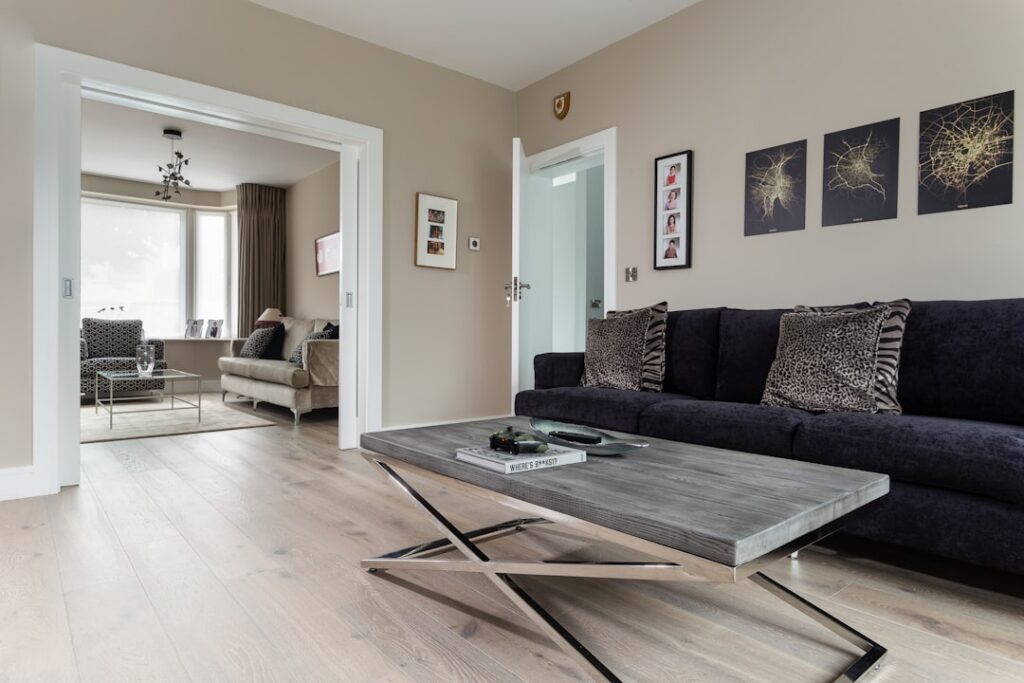
A 1,200 sq ft house can be re-floored with real-looking wood grain for less than the price of a used sedan. Affordable laminate flooring in the $1.19-$2.49 per sq ft range has improved so dramatically since 2015 that a trained eye often needs to bend down and touch the plank to tell it from engineered hardwood. The catch is that budget boxes vary wildly in durability, and a $1.29 plank that looks identical to a $2.89 plank on the shelf may fail in three years instead of fifteen.
What You Actually Pay For at Different Price Tiers
Budget laminate at $0.89-$1.49 per sq ft typically uses a 7 mm core, an AC3 wear rating, and a 10-year residential warranty. Mid-grade runs $1.79-$2.49 and jumps to 8-10 mm cores with AC4 ratings and 25-year warranties. Premium laminate over $2.99 delivers 12 mm cores, AC5 wear ratings, water-resistant HDF, attached pad, and transferable lifetime warranties.
The single most important spec is the AC rating (Abrasion Class). AC3 handles moderate residential traffic — bedrooms, dining rooms, light hallways. AC4 survives heavy residential and light commercial use. AC5 is rated for active retail. A busy kitchen with pets needs AC4 at minimum regardless of budget.
Where to Shop for Real Savings
Big-box stores (Home Depot, Lowe’s, Floor & Decor) carry the cheapest volume brands — Pergo Outlast, TrafficMaster, Style Selections, and NuCore. Lumber Liquidators (now LL Flooring) and online retailers like BuildDirect and Wayfair often beat big-box pricing by 15-25 percent on name brands. Check closeout and overstock pallets — discontinued colors in the $0.69-$0.99 range can carry AC4 specs at throwaway prices if you accept the color limitation.
Buy enough overage in one lot. Dye batches vary, and buying an extra box three months later almost always produces a visible mismatch. Calculate 7-10 percent waste on simple rectangular rooms and 12-15 percent on rooms with closets, angled walls, or diagonal layouts.
Pros That Make the Category Dominant
- Realistic visuals. Embossed-in-register textures align the surface grain with the printed image, so knots and grain feel right under your hand.
- DIY-friendly click-lock. A motivated homeowner installs 400 sq ft in a Saturday with a miter saw, tapping block, and utility knife.
- Hard wear surface. Aluminum-oxide wear layers resist scratches from dog nails and kid toys better than most finished hardwoods.
- Easy cleaning. Dry sweep plus a lightly damp microfiber mop keeps the floor looking new — no waxing, no refinishing, no sealers.
- Transferable warranties. Many mid-grade products carry 25-year residential warranties that transfer to the next homeowner, which is a real asset at resale.
Honest Drawbacks to Budget Here
Water is still the enemy. Even “water-resistant” budget laminate has an HDF core that swells permanently when standing water sits for hours. Kitchens and half-baths are fine if spills are wiped quickly. Full bathrooms, mudrooms, and basements are not — spend up to waterproof rigid-core vinyl for those rooms.
Sound can be hollow without a good pad. Cheap boxes with attached foam often sound like you are walking on a drum when installed over plywood. Spend $0.35-$0.55 per sq ft on a dedicated cork or felt underlayment where possible.
Thickness Matters Less Than You Think
Marketing pushes thickness (7 mm, 8 mm, 12 mm) as the headline spec, but wear-layer quality and core density matter more. A dense 8 mm plank with AC4 rating and a robust locking system outperforms a cheap 12 mm plank with soft HDF and AC3 wear. That said, thicker planks forgive subfloor imperfections better and feel more substantial underfoot — worth the upgrade when the budget allows.
Installation on a Tight Budget
Professional installation adds $1.50-$3.50 per sq ft on top of materials. DIY saves that cost but requires basic tools: a miter saw ($125 rental), tapping block and pull bar ($35), spacers, and a utility knife. Level the subfloor to within 3/16 inch over 10 feet. Acclimate boxes for 48 hours at normal room temperature. Leave 3/8 inch expansion gaps at every vertical surface.
Run planks perpendicular to the longest wall or toward the dominant light source. Stagger end joints at least 8-12 inches apart in adjacent rows — short staggers look amateur and weaken the floor. Rip the last row to width with a table saw or circular saw and finishing blade.
How It Compares to Other Budget Flooring
Versus cheap LVP: laminate looks more like real wood at comparable price points because embossing technology is more mature, but LVP wins on water and flexibility. Versus carpet: laminate costs slightly more installed but lasts 3-4 times longer and does not trap allergens. Versus sheet vinyl: laminate is warmer underfoot and looks more upscale but cannot compete on waterproofing.
For dry-area bedrooms, living rooms, and hallways, affordable laminate flooring is the best-looking floor you can buy in the $2-$4 installed range. No other material delivers that much visual realism for the money.
Care That Protects the Investment
Sweep or vacuum weekly with a hard-floor setting (no beater bar). Damp-mop monthly with Bona Stone, Tile & Laminate Cleaner or Pergo’s own branded cleaner — never a wet mop, never soap, never vinegar. Place felt pads on all furniture legs and walk-off mats at exterior doors. Wipe spills within minutes, not hours.
Repair damaged planks by disassembling from the nearest wall, replacing the single board, and reassembling. Keep two unopened boxes stored flat in a climate-controlled space for future repairs. Done right, affordable laminate flooring delivers 15-20 years of service in normal residential use — an outstanding return on a first-floor renovation done for $3,000 instead of $15,000.
Prefer to explore on your own?
See how new flooring looks in your actual room in seconds — free, no signup.
Try the free Floor Studio →