If you want to shade your patio without hiring a contractor or maintaining a wood structure that rots and needs repainting, a prefabricated kit is hard to beat. Aluminum patio cover kits ship as pre-cut, pre-drilled components with hardware and instructions, so a reasonably handy homeowner can build a permanent, weatherproof patio roof over a weekend or two. Aluminum will not rot, warp, rust, or attract termites, and a quality kit runs a fraction of what a custom-built cover costs. The trick is choosing the right style, size, and panel type for your space, and this guide walks you through all three.
Why Choose Aluminum Over Wood or Steel
Material matters more than most buyers realize. Aluminum has become the default for patio covers for good reasons. It is lightweight, which makes DIY assembly manageable and reduces the structural load on your home. It never rots, warps, or splinters like wood, and unlike steel it will not rust, even in coastal or humid climates. The baked-on powder-coat or enamel finish holds its color for decades with nothing more than an occasional hose-down.
Compared to a wood patio cover, aluminum skips the yearly staining, sealing, and board replacement. Compared to steel, it is lighter and rust-proof. The main tradeoff is appearance, some homeowners prefer the natural look of wood, though many aluminum kits now come in wood-grain finishes that closely mimic it.
Two Main Roof Styles: Solid vs. Lattice
The first big decision is how much cover you want overhead.
Solid Roof Covers
A solid aluminum roof gives full shade and rain protection, turning the patio into a genuinely usable all-weather space. The roof is built from interlocking insulated or hollow pans that shed water to a gutter. Choose this if you want to sit outside in the rain, keep furniture dry, and block the sun completely.
Lattice (Open) Covers
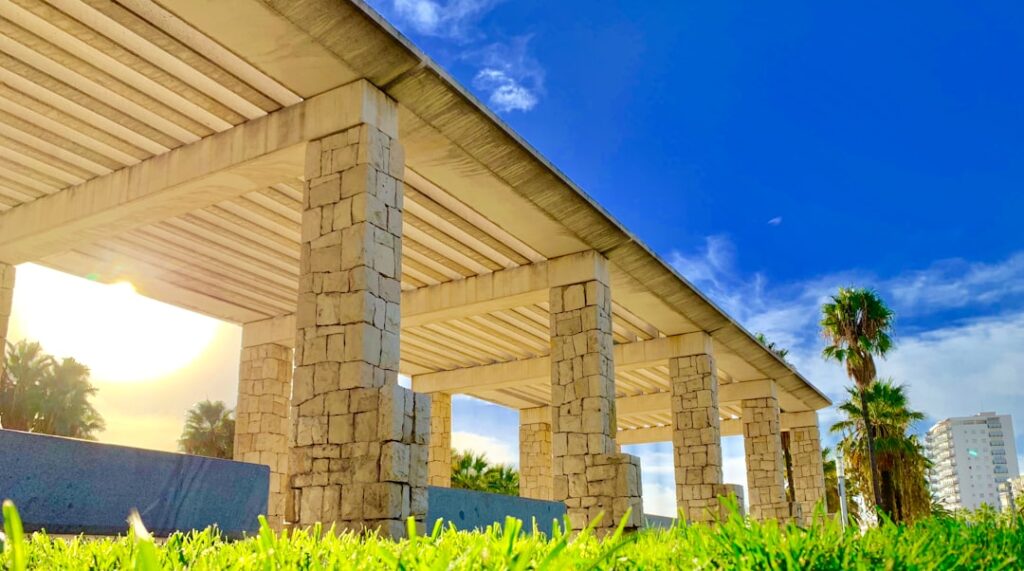
A lattice cover uses spaced rafters and cross members, like an aluminum pergola, to create partial shade and an open, airy feel. It filters sun rather than blocking it and lets rain through. Lattice kits cost less, look lighter, and suit gardeners or anyone who wants dappled light rather than a fully enclosed roof.
Panel Types and Insulation
Within solid covers, you will choose between a few roofing pan options that affect comfort and price.
- Non-insulated (hollow) pans: The most affordable solid roof. Blocks sun and rain, but transfers heat, so the space underneath gets warm and rain is noisier.
- Insulated (foam-core) pans: A layer of foam sandwiched between aluminum sheets keeps the patio noticeably cooler and quiets rain to a soft patter. Costs more but is worth it in hot climates and for spaces you use daily.
- Polycarbonate or acrylic panels: For a lattice or solid cover that still lets light through, translucent panels shed rain while brightening the space. Available clear, tinted, or opal.
Sizing and Attachment Options
Kits come in standard footprints, commonly ranging from 10×10 up to 20×20 feet, with larger custom sizes available. Measure your patio and decide how far the cover should project from the house; 10 to 12 feet of projection is typical for a comfortable seating depth.
You will also choose how the cover attaches. An attached (ledger-mounted) cover fastens to the house wall on one side and rests on posts along the outer edge, the most common setup for covering a patio against the home. A freestanding kit stands on posts on all sides, useful for detached patios or where you cannot attach to the house. Freestanding kits need more posts and footings but give you placement freedom.
What a Kit Costs
Price scales with size, roof type, and insulation. As a rough guide for materials only:
- Lattice kits: roughly $5 to $12 per sq ft, so a 12×12 cover might run $700 to $1,700.
- Solid non-insulated kits: around $10 to $20 per sq ft.
- Solid insulated kits: about $15 to $30 per sq ft, so a 12×16 insulated cover often lands between $3,000 and $6,000.
Doing it yourself saves the $2,000 to $5,000 in labor a contractor would charge on a comparable installed cover. Add a few hundred dollars for concrete footings, fasteners, and any tools you do not own.
What’s in the Box and What You’ll Need
A typical kit includes the roof pans or lattice rafters, support beams, posts, a ledger board or wall-mount channel, gutters and downspouts (on solid covers), and all the brackets and fasteners, along with step-by-step instructions. You supply the concrete for footings and basic tools: a drill, level, ladder, socket set, and a helper.
Plan on installing posts into concrete footings or anchoring them to an existing concrete slab with post bases. On an attached cover, the ledger must be lag-bolted securely into the house framing and flashed to keep water out of the wall, this is the step people most often rush, and it is the one that causes leaks if done wrong.
Installation Tips and Permits
Most kits are designed for two people and a weekend, but a few habits make the job smoother. Lay out and inventory all parts before you start. Set your posts plumb and your beams dead level, and build in a slight slope on solid roofs, about 1/4 inch per foot, so water drains to the gutter instead of pooling. Flash the wall connection properly on attached covers.
Before buying, check local building codes. Many jurisdictions require a permit for a permanent patio cover, and areas with heavy snow or high winds have load requirements your kit must meet, so confirm the kit’s engineering rating for your snow and wind zone. A cheap kit that is not rated for your climate can collapse under a heavy snow load.
For a durable, low-maintenance patio roof you can install yourself, aluminum patio cover kits are one of the best values in home improvement. Decide between solid and lattice, spring for insulated panels if you want a cooler, quieter space, size it for your patio, and mind the flashing and drainage. Get those right, and you will add years of comfortable outdoor living for a fraction of a custom build.
Common Add-Ons and Upgrades
Once you have the basic cover planned, a few upgrades turn it from a simple roof into a finished outdoor room. Integrated LED lighting is the most popular, recessed lights or light strips built into the beams and rafters let you use the space after dark without hanging separate fixtures. Many solid-roof kits offer a lighting package designed to snap into the panel channels.
Ceiling fans are another common addition; a fan-rated mounting point under a solid roof keeps the space comfortable on still summer days. Some homeowners add screen or roll-down shade panels along the open sides to block low sun, add privacy, and keep out insects, effectively enclosing the space when they want. Gutters and downspouts, standard on most solid kits, can be routed into a rain barrel or drainage line. Finally, wood-grain finishes and a range of color options let you match the cover to your home’s trim or roof so it looks built-in rather than bolted on. Plan for any electrical add-ons before you build so you can run wiring through the beams cleanly.
Maintenance and Lifespan
One of the biggest selling points of an aluminum cover is how little upkeep it demands. Unlike wood, there is no annual staining, sealing, or board replacement, and unlike steel, there is no rust to sand and repaint. In most climates, an occasional rinse with a garden hose to remove pollen, dust, and leaves is all the cleaning it needs. Once or twice a year, clear the gutters and downspouts so water keeps draining and check that the fasteners at the wall ledger and posts are still snug.
A quality powder-coated aluminum patio cover holds its finish and structural integrity for 20 to 30 years or more, easily outlasting a comparable wood structure. Inspect the wall flashing periodically on attached covers, since that connection is the one spot where a leak can develop and reach the house. Keep an eye on snow load in winter, non-insulated hollow pans are lighter-duty than insulated ones, so know your kit’s rating and clear heavy accumulation if it approaches the limit. Give it that minimal attention and an aluminum patio cover kit rewards you with decades of low-hassle, weatherproof shade, which is exactly why so many homeowners choose aluminum over the alternatives in the first place.