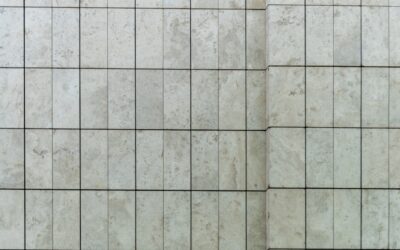
Walk into a school cafeteria, a hospital corridor, or a 1960s mid-century home and you have probably stood on it without knowing — Armstrong’s vinyl composition tile (VCT) shaped a century of commercial and residential floors and remains in production today. Armstrong vct flooring refers specifically to the Standard Excelon Imperial Texture and Companion Square lines, which dominate the commercial-grade VCT category. The product is not luxury, it requires significant maintenance, and the install is labor-intensive — but at $0.85 to $1.85 per square foot material, nothing else competes on raw cost-per-square-foot for institutional-grade flooring.
What VCT Actually Is
VCT stands for vinyl composition tile — a homogeneous tile composed of limestone filler (the bulk of the material), PVC binder, color pigments, and stabilizers. The tile is solid color through its full thickness, typically 1/8 inch (3.175mm), in 12 by 12 inch standard format.
Unlike modern LVT and SPC, VCT has no wear layer — the entire tile is the wear surface. This means the tile is functionally infinite in life, but requires polish coats and periodic stripping and re-coating to maintain appearance. Without polish, raw VCT scuffs and dulls within months.
Armstrong’s Specific Product Lines
Standard Excelon Imperial Texture is the workhorse VCT line — over 75 colors in stock, 12 by 12 by 1/8 inch tiles, ASTM F1066 Class 2 (through-color tile) certified. Standard Excelon Companion Square adds tonal variation within tiles for a more modern look. Standard Excelon Stonetex offers a stone-look pattern within the same VCT format.
Armstrong also produces Migrations BBT (biobased tile), which substitutes plant-based polymers for some petroleum content but performs and installs identically to traditional VCT. All Armstrong VCT lines are FloorScore certified for indoor air quality.
Pricing Reality
Material cost at distributor pricing runs $0.85 to $1.45 per square foot for Standard Excelon Imperial Texture in stock colors. Premium tonal patterns (Companion Square, Stonetex) run $1.25 to $1.85. Migrations BBT lands at $1.65 to $2.25.
Installed cost adds the labor differential — VCT install requires troweled adhesive (Armstrong S-515 or similar), full tile spread, rolling, and seam alignment. Expect $2.50 to $4.50 per square foot labor in most US markets, with commercial-grade installs at the higher end. Total installed pricing typically lands at $3.50 to $6.25 per square foot.
Maintenance Cost Is the Real Story
VCT requires polish to look acceptable. New install gets 4 to 5 coats of acrylic floor finish (Hillyard Top-Line, Diversey Vectra) at $0.35 to $0.65 per square foot per application cycle. Recoat every 6 to 12 months. Strip and refinish (full removal of old polish, fresh coats) every 18 to 36 months at $1 to $2 per square foot.
Over a 20-year lifespan, maintenance cost typically exceeds the original material cost by 8 to 15 times. This is the math VCT users accept in exchange for the lowest per-square-foot install cost in the category.
Pros of Armstrong VCT
Cost-per-square-foot is unbeatable for non-LVT vinyl. Schools, hospitals, retail backs-of-house, and budget commercial installs default to VCT for this reason alone. A 5,000 square foot install at $4.50 per square foot installed totals $22,500 — half the cost of comparable LVT.
The through-color construction means scratches, gouges, and burnish marks blend with the surrounding tile rather than exposing a contrasting backing. Patching damaged tiles is straightforward — pull and replace individual 12 by 12 squares without lippage concerns.
Armstrong’s color library is the deepest in the VCT category. Over 75 standard colors plus tonal variations means schools and institutional buyers can pattern-match across decades of original installs. Replacement tiles for a 1970s school renovation usually source from the current Armstrong line.
Cons to Understand
Maintenance burden is significant. The polish-strip-recoat cycle requires custodial staffing or contractor visits that residential owners almost never plan for. Skipping polish leaves VCT looking dingy within 6 months — a common complaint from residential owners who chose VCT for cost and discovered the maintenance reality afterward.
Install labor is harder than click-lock LVT or SPC. Troweled adhesive applied at the correct notch size, working time managed against open time, tile alignment maintained across long runs — this is professional-installer work, not DIY territory. A handy homeowner can manage a small mudroom or laundry room install with practice, but a 1,000 square foot living area is the wrong DIY project.
Visual appearance reads institutional. Even Armstrong’s most decorative VCT looks like a school or hospital floor, not a luxury residence. This is the right answer for commercial budgets and the wrong answer for design-focused residential projects.
How VCT Compares to LVT and SPC
VCT wins on raw material cost ($0.85 to $1.85 per square foot vs $2.50 to $6.50 for LVT and SPC). LVT and SPC win on aesthetic quality, maintenance simplicity, water resistance, and DIY install accessibility.
VCT requires troweled adhesive; LVT and SPC offer floating click-lock options. VCT needs polish and stripping; LVT and SPC need only sweeping and pH-neutral cleaner. VCT has a homogeneous wear surface with infinite life; LVT and SPC have 6 to 22 mil wear layers with finite life measured in 5 to 20 years.
Brand Spotlight: Standard Excelon Imperial Texture
Imperial Texture has been Armstrong’s volume seller since the 1970s. The tile measures 12 by 12 by 1/8 inch, ASTM F1066 Class 2 certified for through-color homogeneous construction. Static load resistance per ASTM F970 modified at 250 PSI is excellent — the tile handles rolling traffic from medical carts, library carts, and retail dollies without permanent marking.
FloorScore certification means the product meets stringent indoor air quality standards (CDPH/EHLB Standard Method V1.2). Total VOC emissions stay well below California Section 01350 limits, making the tile appropriate for schools, healthcare, and indoor air quality-sensitive installs.
Installation Notes
Run ASTM F1869 calcium chloride or ASTM F2170 in-situ moisture testing on concrete slabs before VCT install. Target under 5 pounds per 1,000 sq ft per 24 hours (F1869) or under 85 percent RH (F2170) — VCT’s adhesive system tolerates slightly higher moisture than LVT.
Apply Armstrong S-515 adhesive with a 1/16 inch by 1/16 inch by 3/32 inch U-notch trowel. Allow proper open time before tile placement — typically 15 to 30 minutes depending on humidity and temperature. Roll the installed tile with a 100 lb three-section floor roller, both directions, immediately after placement.
Who Should Buy Armstrong VCT
VCT remains the right choice for commercial installs prioritizing absolute lowest cost-per-square-foot, for institutional projects (schools, healthcare, government) requiring deep color libraries and replacement-tile availability across decades, and for residential utility spaces (basements, mudrooms, garages, laundry rooms) where appearance is secondary to durability and cost. Skip VCT for design-focused residential installs or any project unwilling to commit to the polish-strip-recoat maintenance cycle. Match the product to the maintenance budget and the floor delivers what schools have proven for 70 years.
Prefer to explore on your own?
See how new flooring looks in your actual room in seconds — free, no signup.
Try the free Floor Studio →