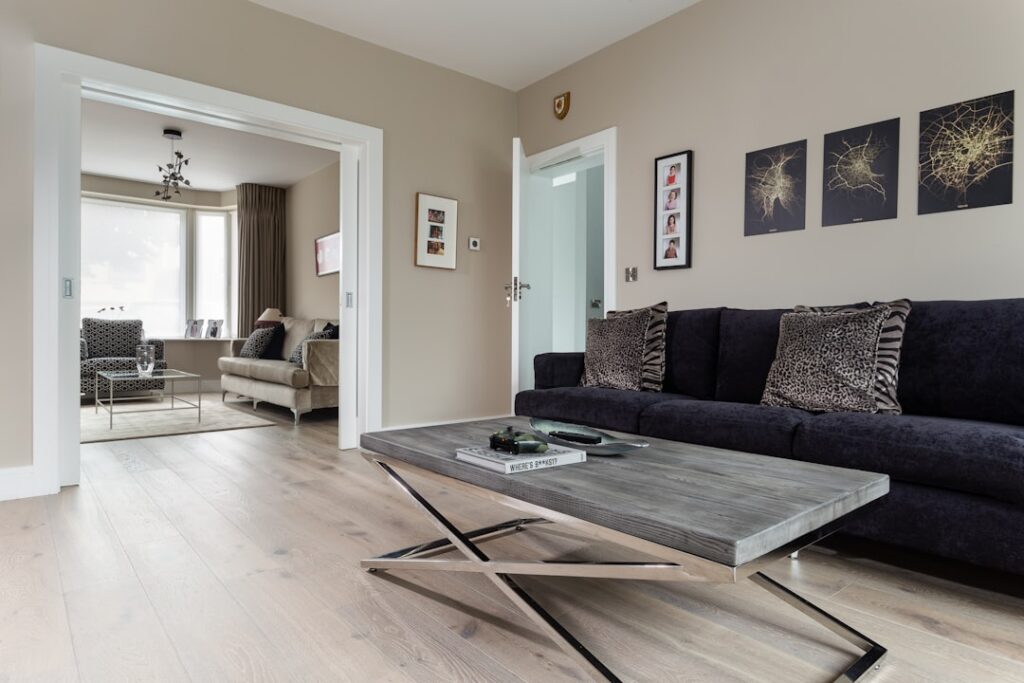
Laminate has shed its dated reputation. Today’s decorative, high-design laminate, sometimes marketed as art or designer laminate, reproduces hand-scraped oak, reclaimed barnwood, and even marble and concrete so convincingly that the floor becomes a focal point rather than a budget compromise. Art laminate flooring is the catch-all term for these style-forward boards that prioritize realistic visuals and texture. If you want a showpiece floor for a fraction of hardwood’s cost, this is where to look.
What Sets Art Laminate Apart
Standard laminate aims to be functional and cheap. Art or designer laminate aims to be beautiful. The difference shows up in three places: the print layer uses higher-resolution photography for more authentic grain and color variation, the surface texture is embossed to match the print (so a knot you see is a knot you feel), and the design catalog is broader, covering distressed woods, wide planks, herringbone patterns, and stone looks. The core construction is the same dense fiberboard, but the visual quality is a clear step up.
Popular Art Laminate Styles
Designer laminate lets you chase looks that would be expensive or impractical in real materials:
- Reclaimed and barnwood: weathered, multi-tone planks with saw marks and color variation.
- Hand-scraped oak and hickory: textured surfaces that mimic artisan-finished hardwood.
- Wide and extra-long planks: 8-inch-plus widths and 48-inch-plus lengths for a modern, open look.
- Herringbone and chevron: classic parquet patterns at a fraction of real-wood cost.
- Stone and concrete looks: matte gray and travertine visuals for an industrial feel.
These styles let a homeowner mimic high-end design trends without committing to the price or upkeep of the genuine article.
What Art Laminate Costs
Designer laminate sits at the upper end of the laminate range but still well below hardwood. Expect:
- Standard designer laminate: $2.50 to $4 per sq ft material.
- Premium textured and wide-plank lines: $4 to $6 per sq ft.
- Waterproof designer laminate: $4 to $7 per sq ft for lines like Pergo Extreme or Mohawk RevWood Plus.
- Installation: $2 to $4 per sq ft for professional click-lock installation.
A 300-square-foot room in premium designer laminate runs roughly $1,800 to $3,000 installed, against $4,000 or more for comparable hardwood.
Reading the Specs That Matter
Looks aside, the technical numbers determine how long the floor lasts. Focus on these:
- AC rating: choose AC4 for living areas and AC5 for high-traffic or rental use.
- Thickness: 10mm to 12mm boards feel more solid and quiet underfoot than thin 7mm.
- Water resistance: look for water-resistant or fully waterproof cores for kitchens and entries.
- Embossing: registered (in-register) embossing aligns texture with the print for maximum realism.
- Plank variations: more unique boards mean less visible pattern repeat.
A high-design print on a thin, low-AC core is a false economy; pair the look you love with at least AC4 durability.
Installation and Underlayment
Art laminate installs like any quality floating laminate, which makes it DIY-friendly. The boards click together over an underlayment with no nails or glue. A few tips protect the finish: acclimate the planks in the room for 48 hours, lay a quality foam or cork underlayment to dampen sound and smooth minor subfloor flaws, and add a moisture barrier over concrete slabs. Leave a 1/4- to 3/8-inch expansion gap at every wall so the floor can move with humidity. For wide planks and herringbone layouts, take extra care with the first rows, since any misalignment compounds across the room.
Caring for a Designer Laminate Floor
Maintenance is simple and a big part of the appeal. Sweep or vacuum regularly to keep grit from dulling the wear layer, and clean with a damp, not wet, microfiber mop and a laminate-safe cleaner. Wipe spills promptly, especially on standard (non-waterproof) cores, since standing water in the seams is laminate’s main weakness. Use felt pads under furniture and avoid steam mops, which can force moisture into the joints. Treated well, art laminate holds its designer look for 15 to 25 years.
Art Laminate Versus Hardwood and Vinyl
Designer laminate competes with two neighbors, and understanding the trade-offs sharpens your choice. Against engineered hardwood, art laminate costs less and resists scratches better, but it cannot be sanded and refinished, and a discerning buyer will know it is not real wood. Against luxury vinyl plank, laminate often delivers crisper, more textured visuals in the premium designer lines, though standard LVP is fully waterproof while only some laminate is. The decision usually comes down to two questions: do you need waterproof performance, and how much does refinishing matter to you?
For a dry living space where looks lead, art laminate frequently wins on realism per dollar. For a wet room, waterproof LVP or a waterproof laminate line is the safer call. For a floor you want to restore over decades, only real hardwood fits.
Where Designer Laminate Works Best
Art laminate makes the biggest impact in rooms where the floor is meant to be seen and admired. Strong candidates include:
- Living rooms and great rooms, where a wide-plank or reclaimed look anchors the space.
- Home offices and studies, where a herringbone or chevron pattern adds character.
- Bedrooms, where soft hand-scraped textures bring warmth.
- Open-concept main floors, where a single dramatic plank runs continuously for a cohesive look.
In kitchens and entries, choose a waterproof designer line so the style does not come at the cost of moisture protection.
Is Art Laminate Worth It?
For homeowners who want a striking, on-trend floor without hardwood’s price or fragility, art laminate flooring is a strong value. You get realistic textures, designer patterns, and waterproof options for $2.50 to $7 per square foot, a fraction of the materials it imitates. The key is buying for both looks and specs: pick the style that makes the room, but insist on AC4-or-better durability and a thickness of 10mm or more. Get that balance right and you end up with a floor that turns heads and survives daily life, which is exactly what designer laminate promises.
Prefer to explore on your own?
See how new flooring looks in your actual room in seconds — free, no signup.
Try the free Floor Studio →