
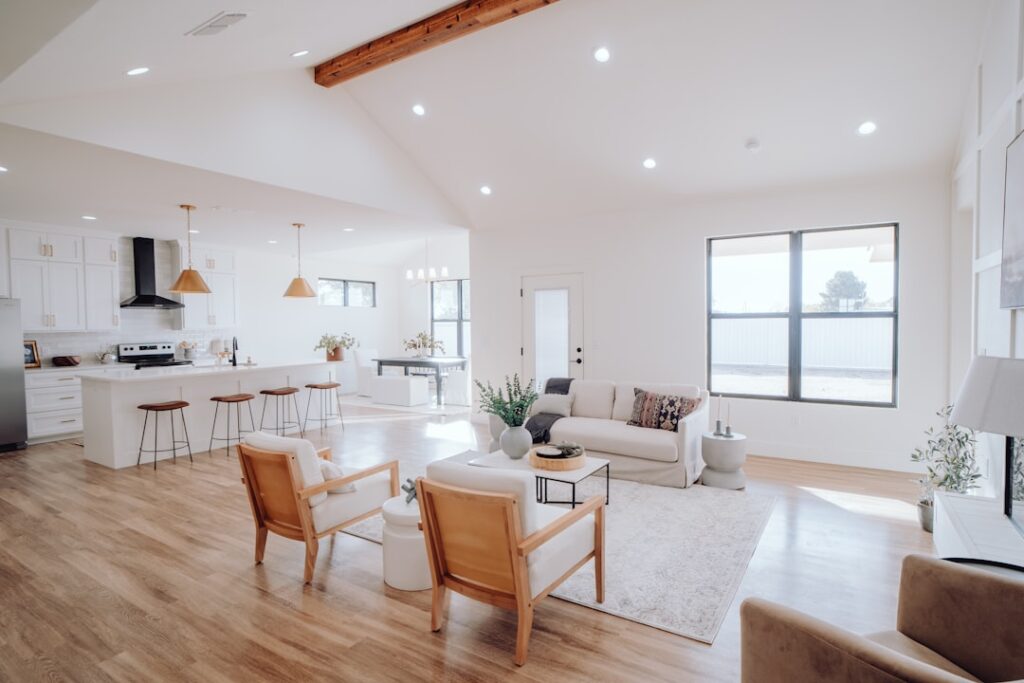
Hybrid flooring is what happens when SPC vinyl, laminate, and engineered wood get mashed together — a rigid waterproof core with a realistic surface and a click-lock install. Artemis hybrid flooring represents the category from a value-focused manufacturer, with wide planks, 5mm to 7mm thicknesses, and attached underlayment. The category has exploded since 2020 because it solves problems that pure LVP, laminate, and engineered hardwood each struggle with individually.
- What Hybrid Construction Actually Means
- Pricing Across the Hybrid Category
- Pros That Make Hybrid Compelling
- Cons to Plan Around
- Comparing Artemis to Mainstream Brands
- Installation Notes
- Step by Step DIY Install
- Maintenance Routine
- Who Should Choose Hybrid
- Warranty Reality Check
- Color Variation Sourcing Tips
What Hybrid Construction Actually Means
A typical hybrid plank has four to five layers. From bottom up: an attached IXPE or EVA acoustic underlayment, an SPC (stone polymer composite) rigid core 4 to 5mm thick, a printed decorative film, and a wear layer of 0.3 to 0.5mm (12 to 20 mil) topped with embossed-in-register texture and a ceramic bead UV finish. Artemis planks typically run 7 inches wide by 60 inches long at 6mm to 7mm overall thickness.
The SPC core is roughly 70 to 80 percent limestone powder bound with PVC and stabilizers. That mineral content is what makes hybrid genuinely waterproof, dimensionally stable, and dent-resistant in ways laminate never could be.
Pricing Across the Hybrid Category
Artemis-tier hybrid runs $3.50 to $5.50 per sq ft at specialty retailers. For comparison, COREtec Originals sits at $4 to $6.50, Karndean Korlok at $5.50 to $7.50, and Mannington ADURA Max Apex at $4.50 to $6. Installation by a flooring contractor adds $1.50 to $3 per sq ft. DIY install is realistic for most rooms — the click-lock system requires only a tapping block, pull bar, and miter saw.
Pros That Make Hybrid Compelling
Waterproof performance is the headline. Hybrid planks survive standing water for 24-plus hours without swelling, warping, or seam damage. That makes them legitimate for kitchens, bathrooms, laundry rooms, and basements where laminate fails and solid hardwood is risky. Pet stains, leaks, and seasonal flooding from poorly sealed exterior doors no longer write off the floor.
Dimensional stability is the other big win. Hybrid expands and contracts roughly one-tenth as much as laminate or engineered wood across the same temperature and humidity range. That means longer runs without T-moldings, no gapping in winter, and stable installs in vacation homes that swing 30 degrees between visits.
Cons to Plan Around
Subfloor flatness still matters. Hybrid is rigid — bumps and dips greater than 3/16 inch over 10 feet telegraph through the plank and create rocking sensations. Self-leveling compound from Mapei or Ardex adds $1 to $2 per sq ft if your subfloor needs prep. Most subfloors do.
Refinishing isn’t possible. When the wear layer eventually shows through after 15 to 25 years, replacement is the only path. Solid hardwood refinished four times over its life ends up cheaper in dollars per service-year, but hybrid wins on upfront cost and water tolerance.
Comparing Artemis to Mainstream Brands
Against COREtec Originals, Artemis matches the SPC core construction at typically lower prices, though COREtec has more decor options and a deeper warranty network. Against Karndean Korlok, Artemis is thinner and less premium-feeling — Karndean uses a 5.5mm SPC core with a 0.55mm wear layer. Against Mannington ADURA Max Apex, Artemis competes evenly on spec but ADURA has wider distribution at flooring retailers.
For shoppers focused on price-per-spec, Artemis tier products typically deliver 80 to 90 percent of the performance at 70 to 80 percent of the cost.
Installation Notes
Acclimate planks 24 to 48 hours in the install space at 65 to 85 degrees F. The expansion gap is smaller than laminate — typically 1/4 inch versus 3/8 — because hybrid moves less. Stagger end joints at least 8 inches and keep runs under 50 feet without a transition. The 5G or Välinge 2G click systems both drop planks in from above, which simplifies replacing damaged boards later.
Concrete subfloors need ASTM F2170 RH testing to confirm under 75 percent before install. Most hybrid manufacturers also require a 6-mil poly vapor barrier under the attached IXPE if installing over slab.
Step by Step DIY Install
First, verify subfloor flatness with a 6-foot straightedge and patch high spots with belt sander or low spots with self-leveler. Second, lay 6-mil poly vapor barrier on concrete only — wood subfloors don’t need it. Third, snap a chalk line for the first row 1/4 inch from the longest straight wall. Fourth, cut tongues off the first row planks and click them together end-to-end against spacers at the wall. Fifth, work across the room in rows, staggering end joints, until you reach the far wall. Sixth, install matching baseboards or quarter-round to cover the expansion gap.
Maintenance Routine
Hybrid is genuinely low maintenance. Sweep or vacuum (no beater bar) two to three times weekly. Damp mop with Bona Pro Series Stone, Tile and Laminate Cleaner monthly. Spot-clean spills immediately even though the floor is waterproof — long-term puddles can wick under planks at the perimeter expansion gap.
Who Should Choose Hybrid
For homeowners who want one floor across an entire main level — kitchen, living, dining, hallway, bathroom — hybrid is the easiest answer. The waterproof performance, dimensional stability, and DIY-friendly install combine to solve practical problems other categories can’t. Artemis hybrid flooring specifically suits budget-conscious buyers who want the category’s benefits without paying premium-brand markups. For higher-end aesthetics or longer warranty support, step up to COREtec or Karndean — but for everyday family homes, the value tier delivers.
Warranty Reality Check
Most value-tier hybrid carries a 25-year residential and lifetime structural warranty, which sounds generous until you read the exclusions. Wear-through, indentation under heavy point loads, fading from prolonged UV exposure, and damage from improper subfloor prep are routinely excluded. Document the install with photos including subfloor moisture testing results, acclimation conditions, and adhesive or underlayment used. Save these records for at least 10 years — warranty claims after year 5 typically require this documentation to process.
Color Variation Sourcing Tips
Mix planks from at least 3 to 4 boxes during install to avoid concentrated color batches. Manufacturers print decor layers in production runs that can vary slightly between dye lots — pulling from multiple boxes blends any variation across the room and prevents visible patches of darker or lighter planks. This is particularly important for wide-plank hybrid where each board occupies more visual space than narrower products.
Prefer to explore on your own?
See how new flooring looks in your actual room in seconds — free, no signup.
Try the free Floor Studio →

