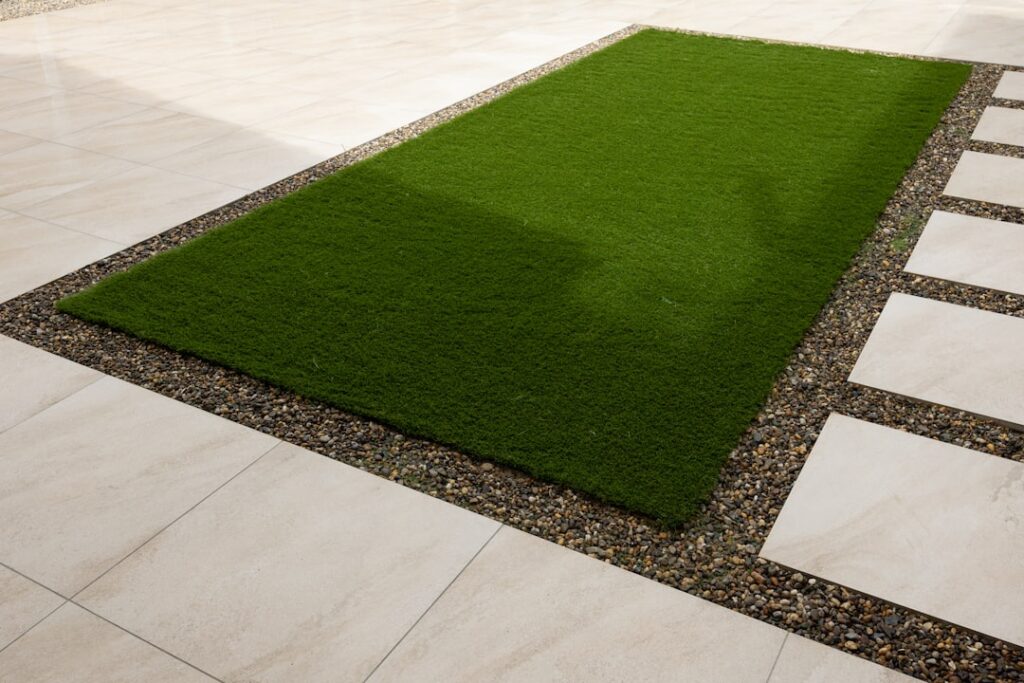
An artificial turf rug gives you the fresh, green look of grass anywhere you want it, from a balcony to a basement playroom, without any mowing, watering, or muddy footprints. Made from synthetic fibers backed onto a durable mat, an artificial turf rug is one of the simplest ways to soften a hard surface and bring an outdoor feel indoors or out. This guide explains what to look for, where to use one, how to install it, and how to keep it clean.
What Is an Artificial Turf Rug
An artificial turf rug is a portable, rug-style piece of synthetic grass. Unlike a permanent turf lawn that gets installed over graded ground, a turf rug is cut to standard sizes, finished with bound or trimmed edges, and laid down like any area rug. The blades are usually made of polyethylene, polypropylene, or nylon, attached to a backing that often includes drainage holes so water passes straight through.
The result is a low-maintenance surface that looks like grass, feels soft underfoot, and can be picked up, rolled, and moved whenever you like. That portability is what sets it apart from full turf installation and makes it appealing for renters and homeowners alike.
Where to Use One
Turf rugs are remarkably flexible. Because many are designed to drain and resist fading, they work in spots where a fabric rug would struggle.
- Balconies and apartment patios, where a real lawn is impossible
- Decks and porches that you want to feel greener and softer
- Around pools, since quality turf drains quickly and resists moisture
- Children’s play areas and pet relief spots, indoors or out
- Sunrooms, basements, and finished garages that need a fresh look
- Event setups, trade-show booths, and seasonal decorating
Keep in mind that turf rugs designed mainly for indoor or decorative use may not hold up to constant direct sun and weather as well as heavy-duty outdoor turf, so check the product description for UV resistance and outdoor rating before buying.
What to Look For When Buying
Not all turf rugs are equal, and a few features make a big difference in how realistic and durable yours will be. Pay attention to these factors as you shop.
- Pile height: shorter blades around three-quarters of an inch look tidy and feel firm, while taller piles of an inch or more feel plush and lawn-like.
- Density: more stitches per square area mean a fuller, more realistic look and better resilience underfoot.
- Face weight: a higher face weight generally signals more material and a longer-lasting rug.
- Color blend: multi-tone turf with hints of brown thatch reads far more natural than a flat single green.
- Drainage: perforated backing matters for any outdoor or poolside use.
- UV protection: look for fade resistance if the rug will sit in direct sunlight.
Prices vary widely with quality and size. A small decorative turf rug might run $20 to $60, while larger, higher-density outdoor pieces can cost anywhere from roughly $50 to a few hundred dollars depending on dimensions and construction. Treat these as general estimates and compare specifications, not just price.
How to Install an Artificial Turf Rug
One of the best things about a turf rug is how little effort installation takes. For most uses you simply unroll it, but a few steps help it lie flat and stay put.
- Clean and dry the surface underneath so dirt and grit do not collect beneath the rug.
- Unroll the rug and let it relax for a few hours, or lay it flat in the sun, so the backing loses its curl.
- Trim the edges with a sharp utility knife if you need a custom fit around posts or corners, cutting from the back.
- For windy outdoor areas, secure the corners with landscape staples, outdoor-rated double-sided tape, or weighted planters so the rug does not lift.
- On a deck or balcony, make sure drainage holes line up with gaps in the decking when possible so water flows away freely.
Cleaning and Maintenance
A turf rug needs almost no upkeep compared with a real lawn, but a little routine care keeps it looking its best. Shake out or sweep off loose leaves and debris, and rinse the rug with a garden hose when it gets dusty. The water drains right through perforated backing.
For pet use, rinse soiled spots promptly and, if odor develops, use a mild enzyme cleaner formulated for synthetic turf, following the product instructions. Spot-clean spills with mild soap and water rather than harsh chemicals, and never mix cleaning products together. Brush the fibers occasionally with a stiff broom against the grain to keep the blades standing upright, especially in spots where furniture or foot traffic has flattened them.
Pros, Cons, and Final Thoughts
The appeal of an artificial turf rug comes down to convenience. It needs no water, no mowing, and no fertilizer, it stays green year-round, and it transforms a bland patio or balcony in minutes. For families and pet owners, it offers a soft, washable surface that handles messes far better than fabric.
The trade-offs are worth knowing. Lower-quality turf can look plasticky, dark turf can get hot in strong direct sun, and even good synthetic grass will eventually fade or flatten after years of heavy use. Choosing a denser, UV-resistant rug with a natural color blend addresses most of these concerns. For a low-maintenance burst of greenery in a space where a real lawn simply will not work, an artificial turf rug is a practical and genuinely attractive choice.
Artificial Turf Rug Versus Real Grass and Other Rugs
It helps to weigh a turf rug against the alternatives. Compared with real grass, the turf wins on convenience and consistency: it stays green through every season, needs no sunlight to survive, and works on concrete, decking, or tile where nothing could grow. Real grass still offers a cooler surface, a natural smell, and genuine environmental benefits, so for a true backyard lawn it remains the better pick. The turf rug shines exactly where living grass cannot take hold.
Against a standard outdoor fabric rug, turf offers better drainage and a playful, grassy texture that softens hard patios. Fabric outdoor rugs, on the other hand, come in far more colors and patterns and can feel more refined under a dining set. Think about the look you want and how the space gets used. For pet areas, kids’ play zones, poolsides, and balconies, the easy-rinse, quick-draining nature of turf usually tips the decision in its favor.
Final Buying Checklist
Before you click buy, run through a short checklist to make sure the rug fits your space and needs. Confirm the dimensions against your area, leaving room to trim if necessary. Check the pile height and density for the look and feel you want, and verify the backing drains if the rug will live outdoors. Make sure it carries a UV rating for sunny spots, and read recent buyer reviews for honest notes on color realism and durability. A few minutes of comparison up front saves you from a flat, fake-looking rug later, and rewards you with a green surface that holds up season after season.