Bamboo flooring has earned a reputation as an eco-friendly alternative to traditional hardwood. But beyond the green marketing, how does bamboo actually perform as a flooring material? The answer depends heavily on the type of bamboo flooring you choose and how well it is manufactured. Some bamboo floors rival the hardest exotic hardwoods, while others dent and scratch within months.
This guide provides an honest, detailed look at bamboo flooring pros and cons so you can make an informed decision.
What Is Bamboo Flooring?
Bamboo is technically a grass, not a wood, but it is processed into flooring planks that look and perform similarly to hardwood flooring. The primary species used is Moso bamboo (Phyllostachys edulis), which is harvested from managed plantations in China after five to seven years of growth.
The harvested bamboo is sliced, treated, and pressed into planks using one of three manufacturing methods, each producing a different type of product with different properties.
Types of Bamboo Flooring
Horizontal Bamboo
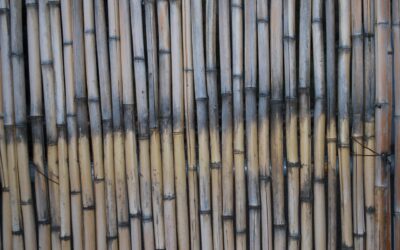
Strips of bamboo are laid flat and bonded together with adhesive. The result shows the characteristic bamboo knuckle pattern — the nodes where segments join. Horizontal bamboo has a warm, natural look but is the softest type, rating around 1,180 on the Janka hardness scale.
Vertical Bamboo
Strips are turned on edge and laminated together, creating a plank with a more uniform, linear grain pattern. Vertical bamboo rates slightly harder than horizontal, around 1,300 Janka, comparable to red oak.
Strand-Woven Bamboo
Bamboo fibers are shredded, mixed with resin, and compressed under extreme pressure and heat. The result is an incredibly dense and hard material that rates between 3,000 and 5,000+ on the Janka scale — harder than most exotic hardwoods. Strand-woven bamboo is the premium option and the one most professionals recommend.
Bamboo Flooring Pros
Eco-Friendly and Sustainable
Bamboo grows to harvest maturity in five to seven years, compared to 20 to 60+ years for hardwood trees. It regenerates from the root system after cutting, eliminating the need for replanting. It absorbs more carbon dioxide and releases more oxygen per acre than an equivalent stand of trees. For environmentally conscious homeowners, bamboo’s renewability is its strongest selling point.
Impressive Hardness (Strand-Woven)
Strand-woven bamboo is among the hardest flooring materials available. Its Janka rating of 3,000+ means it resists dents, scratches, and wear far better than oak, maple, walnut, and most exotic hardwoods. For homes with pets, children, and heavy foot traffic, strand-woven bamboo provides exceptional performance.
Attractive Appearance
Bamboo offers a clean, contemporary aesthetic with warm tones that range from natural blonde to rich amber and espresso. Strand-woven bamboo has a distinctive marbled pattern that adds visual depth. The look is different from traditional hardwood but equally attractive and well-suited to modern interiors.
Affordable
Bamboo flooring costs roughly the same as mid-range hardwood, but strand-woven bamboo provides hardness comparable to premium exotics at a fraction of their price. This makes it one of the best performance-to-price values in the flooring market.
Easy to Maintain
Bamboo requires the same basic maintenance as hardwood — sweep regularly, damp mop with a compatible cleaner, and avoid excessive moisture. No special products or treatments are needed.
Can Be Refinished
Solid bamboo flooring can be sanded and refinished, though strand-woven bamboo’s extreme hardness makes sanding more challenging. Most bamboo floors can handle one to two refinishing cycles, extending their lifespan significantly.
Bamboo Flooring Cons
Quality Varies Dramatically
The bamboo flooring market includes products ranging from excellent to terrible. Cheap imports may use immature bamboo, inferior adhesives, and inadequate quality control. These budget products scratch easily, off-gas formaldehyde, and can delaminate. Quality bamboo from reputable manufacturers performs beautifully, but you have to be a careful shopper.
Moisture Sensitivity
Bamboo is more sensitive to humidity changes than many hardwoods. It can swell, warp, or cup in high-humidity environments and develop gaps in dry conditions. Maintaining indoor humidity between 35 and 55 percent is essential. Bamboo is not suitable for bathrooms, and kitchens require careful consideration.
Formaldehyde Concerns
The adhesives used in some bamboo flooring products contain formaldehyde, which can off-gas into indoor air. This is a particular concern with cheap imports. Look for products certified to CARB Phase II, FloorScore, or GreenGuard standards to ensure low VOC emissions.
Susceptible to Scratching (Non-Strand-Woven)
Horizontal and vertical bamboo floor types are relatively soft and scratch easily — even easier than red oak. Only strand-woven bamboo provides true scratch resistance. If you choose horizontal or vertical bamboo for a high-traffic area, expect visible wear within a few years.
Limited Color Options
Natural bamboo comes in a limited range of tones — natural blonde, carbonized (caramel/amber), and stained versions. While the range has expanded over the years, it still does not match the vast stain-color options available with oak or maple.
Carbonized Bamboo Is Softer
Carbonization is a heat treatment that darkens bamboo to an amber or caramel color. Unfortunately, it also softens the material by 20 to 30 percent. Carbonized horizontal or vertical bamboo is noticeably prone to denting and is not recommended for high-traffic areas.
Not Truly Waterproof
Despite being a grass, bamboo is not waterproof once processed into flooring. It reacts to water similarly to hardwood. For wet areas, waterproof flooring options like LVP or porcelain tile are better choices.
Cost of Bamboo Flooring
- Horizontal/vertical bamboo: $2 to $5 per square foot
- Strand-woven bamboo: $4 to $8 per square foot
- Engineered bamboo: $3 to $7 per square foot
- Professional installation: $3 to $6 per square foot
A 1,000-square-foot installation with strand-woven bamboo and professional installation typically costs between $7,000 and $14,000.
Bamboo vs. Hardwood
- Hardness: Strand-woven bamboo beats all common hardwoods. Horizontal/vertical bamboo is softer than white oak.
- Eco-friendliness: Bamboo is the more sustainable choice due to rapid regrowth
- Stability: Most hardwoods are more dimensionally stable than bamboo
- Refinishing: Hardwood can be refinished more times than bamboo
- Color range: Hardwood offers more stain and finish options
- Resale value: Hardwood generally commands a higher premium with buyers
- Cost: Comparable when comparing strand-woven bamboo to mid-range hardwood
Bamboo vs. Engineered Wood
Engineered wood flooring offers similar installation flexibility to engineered bamboo. The main difference is the surface species — engineered wood gives you oak, walnut, maple, or any hardwood veneer, while engineered bamboo provides the bamboo aesthetic. Both handle humidity changes better than their solid counterparts.
How to Choose Quality Bamboo Flooring
- Choose strand-woven bamboo for maximum durability
- Verify the product is CARB Phase II compliant for low formaldehyde emissions
- Look for FloorScore or GreenGuard certification
- Buy from reputable manufacturers with established track records
- Request and review the warranty — quality manufacturers back their products with 25-year or lifetime structural warranties
- Avoid the cheapest options — ultra-budget bamboo almost always disappoints
- Order samples and test them for scratch resistance and finish quality before committing
Maintaining Bamboo Floors
- Sweep or dust mop daily to prevent grit from scratching the surface
- Damp mop weekly with a pH-neutral hardwood or bamboo cleaner
- Never wet mop or use steam cleaners
- Maintain humidity between 35 and 55 percent
- Use felt pads under all furniture
- Place mats at entrances to trap dirt and moisture
- Protect the floor from prolonged direct sunlight to prevent fading
Final Thoughts
Bamboo flooring pros and cons are well-defined. The pros — sustainability, affordability, and exceptional hardness (in strand-woven form) — are genuine and compelling. The cons — quality inconsistency, moisture sensitivity, and VOC concerns in budget products — are manageable if you buy smart. The key is choosing strand-woven bamboo from a reputable manufacturer with proper certifications. Do that, and you get a beautiful, durable, eco-friendly floor that performs on par with the best hardwoods at a competitive price.
Prefer to explore on your own?
See how new flooring looks in your actual room in seconds — free, no signup.
Try the free Floor Studio →