Choosing the right bathroom floor covering is a decision you live with for a decade or more, and it has to balance beauty against constant moisture, splashes, and bare wet feet. The best bathroom floor covering resists water, grips underfoot when soaked, and shrugs off the daily humidity that destroys ordinary flooring. This guide breaks down every realistic material, its cost, and where it shines or fails.
- What Makes a Good Bathroom Floor
- Porcelain and Ceramic Tile
- Luxury Vinyl and Waterproof Plank
- Natural Stone
- Budget and Specialty Options
- Comparing Your Options at a Glance
- Installation and Care Tips
- Matching the Floor to the Bathroom Type
- Adding Warmth and Comfort Underfoot
- Frequently Asked Questions
What Makes a Good Bathroom Floor
A bathroom is the harshest room in the house for flooring. Standing water, steam, temperature swings, and dropped bottles all attack the surface daily. Three qualities matter above all else: water resistance so moisture never reaches the subfloor, slip resistance so a wet floor stays safe, and durability so the finish survives years of traffic and cleaning chemicals.
Comfort and warmth underfoot matter too, especially on cold mornings, which is why many homeowners pair a hard surface with a radiant heat mat or a plush bath rug. Keep resale value in mind as well; buyers scrutinize bathrooms closely.
Porcelain and Ceramic Tile
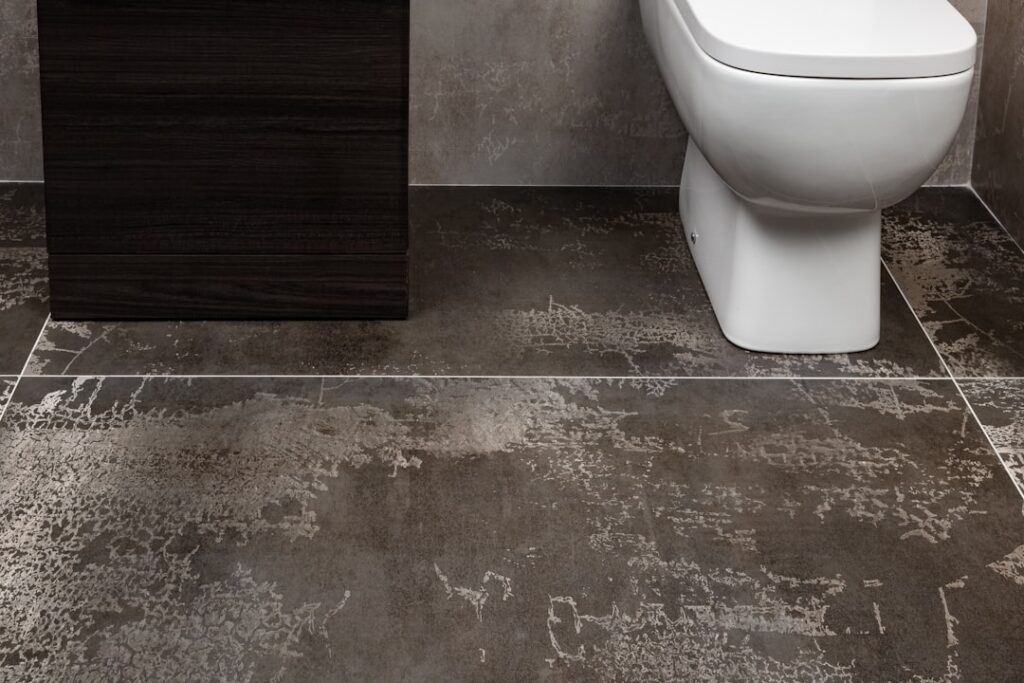
Tile remains the gold standard for good reason. Porcelain absorbs less than 0.5 percent water, making it effectively waterproof, and it handles standing puddles without complaint. Ceramic costs a little less and works well on walls and lighter-traffic floors.
Expect to pay $2 to $8 per square foot for the tile itself and $5 to $12 more for professional installation. Choose a tile with a slip rating, look for a DCOF value of 0.42 or higher for wet areas, and pick smaller tiles or a mosaic for shower floors, since the extra grout lines add grip. The main downsides are cold, hard footing and grout that needs sealing every year or two.
Luxury Vinyl and Waterproof Plank
Luxury vinyl tile and plank have taken over the mid-range bathroom market. Rigid-core products with a stone-polymer or wood-polymer core are fully waterproof, warmer underfoot than tile, and quiet to walk on. Many click together as a floating floor a confident DIYer can install in a weekend.
Pricing runs $2 to $7 per square foot, with installation adding $1 to $4 if you hire out. The wear layer, measured in mils, tells you how tough the surface is; look for 12 mil or more in a busy family bath. The catch is that cheaper flexible sheet vinyl can dent under heavy fixtures and may not add resale prestige.
Natural Stone
Marble, travertine, slate, and granite bring a spa-like richness no synthetic can fully copy. Slate offers natural slip resistance and hides water spots, while honed marble reads as pure luxury.
Stone is the premium tier at $5 to $20 per square foot plus skilled installation. It demands regular sealing because it is porous, and polished varieties get dangerously slick when wet. If you love the look, choose a honed or tumbled finish over a polished one for safer footing in a bathroom.
Budget and Specialty Options
Not every project calls for premium materials, and a few specialty coverings solve specific problems.
- Sheet vinyl: The most affordable fully waterproof option at $1 to $3 per square foot, with virtually no seams for water to penetrate. Ideal for rentals and quick refreshes.
- Laminate (water-resistant): Only certain waterproof-rated laminates belong in a bathroom; standard laminate swells when wet. Budget $2 to $5 per square foot.
- Cork: Warm, soft, and naturally antimicrobial, but it must be well-sealed and is best for half-baths without a shower.
- Concrete: Polished or micro-cement floors give a modern industrial look and are seamless, though they run cold and require sealing.
Comparing Your Options at a Glance
Weigh the trade-offs before you commit to a material.
Best for waterproofing
Porcelain tile, sheet vinyl, and rigid-core luxury vinyl top the list. Any of these can sit in a full bath with a shower and never worry you.
Best for budget
Sheet vinyl and water-resistant laminate deliver the lowest upfront cost, often finishing a small bath in materials for under $150.
Best for resale and luxury
Porcelain and natural stone signal quality to buyers and photograph beautifully in listings. They cost more but recoup value in higher-end homes.
Installation and Care Tips
Whatever material you choose, the subfloor and waterproofing beneath it decide how long the floor lasts. In a wet bath, install a waterproof membrane or backer board under tile, and always seal the perimeter and around the toilet flange with silicone caulk rather than grout.
For daily care, wipe standing water promptly, use pH-neutral cleaners on stone and vinyl, and reseal grout and natural stone on schedule. Add a quick-drying bath mat at the shower exit to catch drips and protect the finish. Ventilate the room with an exhaust fan for at least 20 minutes after every shower to keep humidity from working into seams.
Matching the Floor to the Bathroom Type
Not every bathroom carries the same demands, so tailor your choice to how the room gets used. A busy family bath and a powder room off the entry live very different lives.
Full bath with a shower or tub
This is the wettest scenario, so lean toward porcelain tile or rigid-core luxury vinyl with sealed seams. Standing water is a constant, and only a truly waterproof surface over a proper membrane will protect the subfloor across the years.
Half-bath or powder room
With no shower, you have more freedom. Water-resistant laminate, sealed cork, or even an engineered wood look-alike become viable here, letting you prioritize appearance over maximum waterproofing.
Kids’ and guest bathrooms
Splashes, spills, and heavy use call for slip resistance and easy cleaning. Textured luxury vinyl or matte porcelain wipes clean, hides water spots, and stands up to the chaos without showing wear.
Adding Warmth and Comfort Underfoot
Hard, waterproof floors solve moisture problems but feel cold on a winter morning, which is where a radiant heat system earns its keep. Electric mat systems install under tile or luxury vinyl for roughly $8 to $15 per square foot including the mat and thermostat, and they take the chill off in minutes each morning.
If radiant heat is out of budget, a thick, quick-drying bath mat and a well-placed runner deliver comfort where your feet actually land. Cork and luxury vinyl also read warmer underfoot than tile or stone, so material choice alone can soften the experience without any added system.
Frequently Asked Questions
What is the most waterproof bathroom floor covering?
Porcelain tile and rigid-core luxury vinyl are both effectively waterproof. Sheet vinyl is also fully waterproof and the cheapest of the three.
Can I install bathroom flooring myself?
Click-together luxury vinyl and floating floors are DIY-friendly. Tile and stone require more skill, mortar, and waterproofing know-how, so many homeowners hire a pro for those.
How do I make a bathroom floor less slippery?
Choose textured or matte finishes, smaller tiles with more grout lines, and materials with a DCOF of 0.42 or higher. Slate and honed stone grip better than polished surfaces.
How long does a bathroom floor covering last?
Porcelain tile and natural stone can last 25 years or more when installed and sealed properly. Rigid-core luxury vinyl typically lasts 15 to 20 years, while sheet vinyl runs 8 to 12 years before it starts to show wear.
Is laminate safe in a bathroom?
Only laminate specifically rated as waterproof belongs in a bathroom. Standard laminate uses a fiberboard core that swells and delaminates when water works into the seams, so check the label before you buy for a wet room.
Prefer to explore on your own?
See how new flooring looks in your actual room in seconds — free, no signup.
Try the free Floor Studio →