Choosing the right bathroom flooring materials comes down to one non-negotiable rule: it has to handle water. Bathrooms see splashes, steam, humidity, and the occasional overflow, and the wrong surface will warp, stain, or grow mold within a year. The good news is that several materials excel in wet rooms, each with its own balance of cost, comfort, and style. This guide breaks down the best options, what to avoid, and how to pick the right floor for your bathroom.
Whether you are remodeling a primary bath or refreshing a powder room, knowing how each material performs against moisture will save you from an expensive redo. Let’s walk through the contenders.
Porcelain and Ceramic Tile
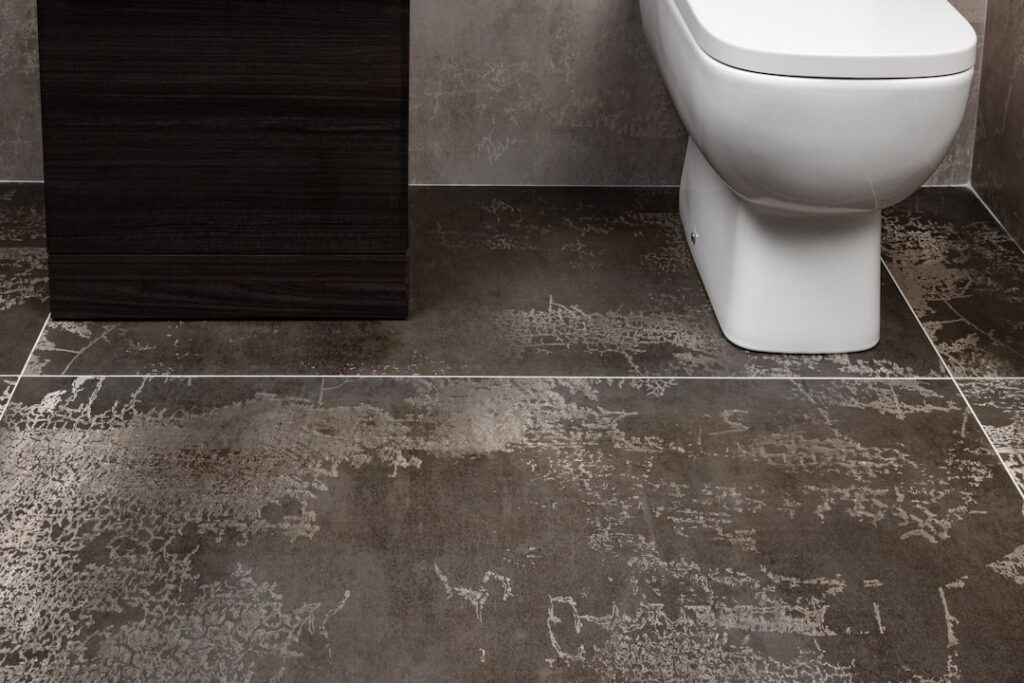
Tile is the gold standard for bathrooms, and porcelain leads the pack. Fired at higher temperatures than ceramic, porcelain absorbs less than 0.5 percent water, making it essentially waterproof. It resists stains, shrugs off scratches, and lasts 50 years or more. Ceramic costs a bit less and works fine in lower-traffic baths.
The trade-offs are real. Tile is hard and cold underfoot, though radiant floor heat solves the chill nicely. Grout lines need periodic sealing to stay stain-free, and professional installation runs $10 to $20 per square foot. For wet-prone bathrooms, that investment pays off in decades of worry-free service.
Luxury Vinyl and Sheet Vinyl
Vinyl has become a favorite for bathrooms because it is fully waterproof, warmer underfoot than tile, and far easier on the budget. Rigid-core SPC luxury vinyl plank mimics wood and stone convincingly, while sheet vinyl creates a nearly seamless surface that water cannot penetrate, the most economical waterproof option available.
- Luxury vinyl plank (SPC): $3 to $7 per square foot installed, realistic looks, comfortable, DIY-friendly.
- Sheet vinyl: $2 to $5 per square foot installed, seamless, ideal for kids’ baths and rentals.
The main limitation is that vinyl cannot be refinished and lower-end products may dent under heavy fixtures. For most homeowners, the waterproofing and comfort outweigh those concerns.
Natural Stone
Marble, travertine, slate, and granite bring unmatched luxury to a bathroom. Each tile is unique, and stone adds genuine resale appeal. But natural stone is porous and demands respect: it must be sealed regularly to resist water and stains, and some stones can etch from acidic cleaners or scratch more easily than porcelain.
Stone is also among the priciest options, often $15 to $30 per square foot installed, and it is slippery when wet unless you choose a honed or textured finish. If you love the look and commit to maintenance, stone delivers, but go in clear-eyed about the upkeep.
Materials to Avoid in Bathrooms
Some popular floors simply do not belong in wet rooms. Steer clear of these:
- Solid hardwood: Beautiful but vulnerable; steam and splashes cause cupping, staining, and rot.
- Standard laminate: Most laminate has a fiberboard core that swells when water seeps into the seams, though a handful of newer waterproof laminates are exceptions, verify the rating before buying.
- Carpet: Traps moisture and breeds mold and odor. A bath mat is the only carpet a bathroom needs.
Comparing Cost and Comfort
Budget and feel underfoot often decide the final call. Here is a quick comparison of the waterproof front-runners:
- Sheet vinyl: cheapest, warm, seamless, less premium look.
- Luxury vinyl plank: moderate cost, warm and comfortable, realistic appearance.
- Porcelain tile: higher cost, cold underfoot without heat, the most durable and waterproof.
- Natural stone: highest cost, luxurious, requires ongoing sealing and care.
For comfort, vinyl wins underfoot; for longevity and resale, tile and stone lead. Many homeowners split the difference by choosing porcelain with radiant heat to get durability without the cold-floor downside.
Installation and Safety Tips
Whatever material you choose, slip resistance matters in a wet room. For tile, look for a higher COF (coefficient of friction) rating or choose textured and small-format tiles, since more grout lines mean more grip. Always run a proper waterproof membrane under tile in showers and around tubs to protect the subfloor.
For vinyl, ensure the subfloor is clean, dry, and level before installing, and seal any gaps at the toilet flange and tub edge with silicone. Good prep and sealing are what keep a waterproof material genuinely waterproof over the long haul.
Heated Floors and Comfort Upgrades
The biggest knock against tile and stone, that they feel cold underfoot, is easily solved with radiant floor heating. Electric mat systems install under tile during a remodel and add gentle warmth that makes a winter bathroom genuinely comfortable. The mats are thin, run on a programmable thermostat, and cost roughly $8 to $15 per square foot installed including the tile work.
Radiant heat also helps a wet floor dry faster, reducing slip risk and discouraging mildew. If you are already tearing out a bathroom floor, adding radiant heat is far cheaper than retrofitting later. For vinyl, confirm the product is rated as compatible with radiant systems before pairing the two, since not all vinyl tolerates the added heat.
Special Considerations for Small Bathrooms
Powder rooms and compact baths have their own quirks. Large-format tiles with fewer grout lines make a small floor look bigger and cleaner, while busy patterns can overwhelm the space. Light colors reflect light and visually expand the room, a helpful trick in windowless half-baths.
Because small bathrooms involve little square footage, you can often afford a premium material you might skip in a larger room, splurging on natural stone or designer tile without breaking the budget. Just remember that even a tiny bathroom needs the same waterproofing fundamentals as a large one, proper membrane under tile, sealed edges, and slip-resistant surfaces around the toilet and sink.
Final Thoughts
The best bathroom flooring materials all share one trait: they keep water out. Porcelain tile offers unbeatable durability, luxury vinyl delivers warmth and value, and natural stone brings luxury for those willing to maintain it, while hardwood, standard laminate, and carpet have no place in a wet room. Match the material to your budget and comfort priorities, prep carefully, and your bathroom floor will perform for years.
Prefer to explore on your own?
See how new flooring looks in your actual room in seconds — free, no signup.
Try the free Floor Studio →