Choosing the right bathroom vanity sink shapes both the look and the daily usability of your bathroom. The vanity and its sink are the workhorses of the room, and the sink style you pick affects counter space, cleaning ease, splash control, and overall style. With options ranging from sleek undermount basins to dramatic vessel bowls to seamless integrated tops, it pays to understand the trade-offs before you buy. This guide walks through the main sink types, sizing, materials, costs, and installation so you can choose with confidence.
- Understanding the Main Sink Types
- Single vs. Double Vanity Sink
- Sizing Your Vanity Sink
- Sink Material Options
- What a Bathroom Vanity Sink Costs
- DIY vs. Professional Installation
- Cleaning and Maintenance Considerations
- Matching Sink to Bathroom Style
- Common Mistakes to Avoid
- Faucet Configurations to Know
- Storage and the Sink's Impact on the Cabinet
- Planning for a Successful Installation
Understanding the Main Sink Types
Vanity sinks generally fall into a handful of mounting styles:
- Undermount sink: Mounts beneath the countertop for a clean, seamless edge. Easy to wipe crumbs and water straight into the basin. Requires a solid countertop like quartz or granite. Very popular for modern and transitional baths.
- Drop-in (top-mount) sink: Sits in a cutout with a visible rim resting on the counter. Affordable and easy to install, works with any countertop, but the rim can catch grime.
- Vessel sink: A bowl that sits on top of the counter like a decorative basin. Bold, spa-like look, but sits high and can splash. Needs a taller faucet and lower vanity height to keep the rim usable.
- Integrated sink: The sink and countertop are one molded piece, often cultured marble, solid surface, or porcelain. Seamless, extremely easy to clean, and no caulk lines to mildew.
- Pedestal or wall-mount: Not part of a vanity cabinet, but worth noting for small baths where storage is sacrificed for space.
Single vs. Double Vanity Sink
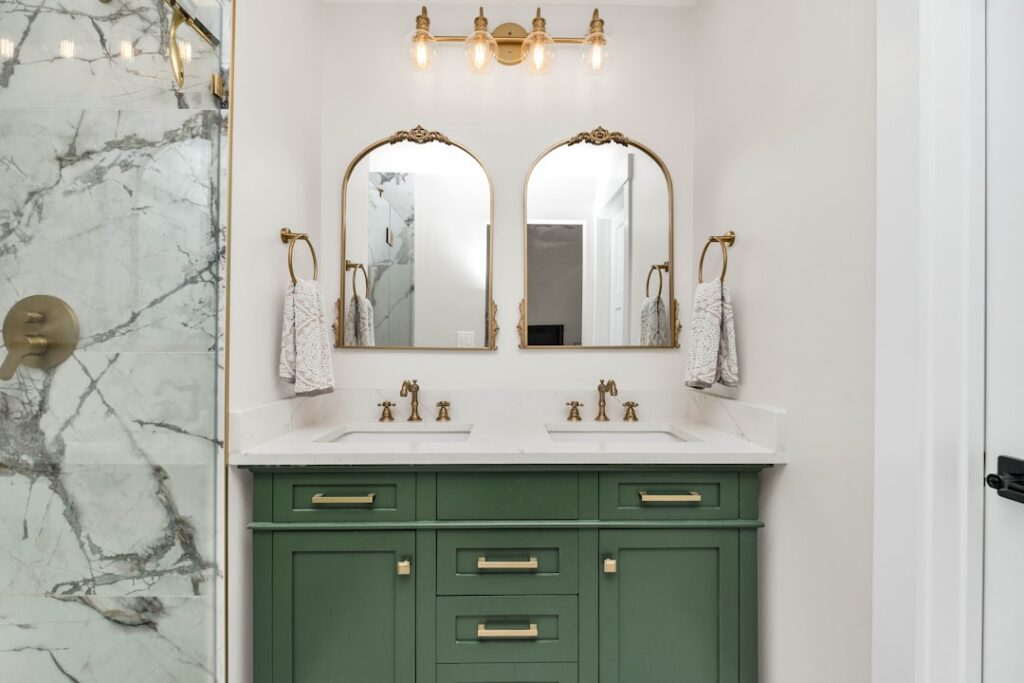
If space allows, a double-sink vanity is a major convenience for shared bathrooms, eliminating the morning traffic jam. Double vanities generally need at least 60 inches of width to fit two sinks comfortably with usable counter between them. Below that width, a single sink with more counter space is usually the better choice. Consider how the bathroom is actually used before sacrificing counter space for a second basin.
Sizing Your Vanity Sink
Fit matters as much as style. Keep these dimensions in mind:
- Vanity height: Standard vanities run 30 to 32 inches, but “comfort height” vanities at 34 to 36 inches (matching kitchen counters) are increasingly popular for adults. Remember a vessel sink adds several inches on top.
- Sink bowl size: Make sure the basin fits within the cabinet and leaves counter space on the sides. Oversized bowls crowd small vanities.
- Faucet clearance: Match faucet height to sink type; vessels need tall vessel faucets or wall-mounted spouts.
- Plumbing location: Confirm the drain and supply lines line up with your chosen sink and cabinet.
Sink Material Options
- Vitreous china / porcelain: The classic, glossy, easy-to-clean standard. Durable but can chip if something heavy is dropped.
- Cultured marble / solid surface: Common in integrated tops; seamless and repairable.
- Ceramic: Similar to porcelain, widely available in many shapes.
- Glass: Popular for vessel sinks; striking but shows water spots and needs gentle care.
- Stone (marble, granite): Luxurious vessel option, requires sealing.
- Stainless steel or copper: Less common in bathrooms but available for a distinctive look.
What a Bathroom Vanity Sink Costs
Prices vary by type and whether you buy the sink alone or a complete vanity:
- Sink basin only: $50 to $400, with glass and stone vessels at the high end.
- Complete vanity with sink and top (24-36 inch): $200 to $1,200 for most stock units.
- Larger double-sink vanities: $800 to $3,000-plus.
- Faucet: $50 to $400 separately.
- Professional installation: $200 to $600 for a straightforward swap; more if plumbing must be moved.
DIY vs. Professional Installation
Swapping a like-for-like vanity and sink where the plumbing already lines up is a reasonable DIY project for a handy homeowner. The steps involve shutting off water, disconnecting supply lines and the P-trap, removing the old vanity, setting and leveling the new cabinet, installing the top and sink, and reconnecting the faucet and drain. Where it gets tricky is moving plumbing, cutting stone countertops for undermount sinks, or dealing with old, corroded shutoff valves. If you are relocating the sink or the supply and drain lines, hire a licensed plumber.
Cleaning and Maintenance Considerations
Cleaning ease should factor into your choice. Undermount and integrated sinks are the easiest to keep spotless because there is no rim or seam to trap grime; you can wipe water straight in. Drop-in sinks have a caulked rim that needs occasional attention to prevent mildew. Vessel sinks look dramatic but the exposed exterior and the area behind them collect dust and water spots. Glass and polished stone show every drip. If low-maintenance is a priority, an undermount or integrated porcelain sink is hard to beat.
Matching Sink to Bathroom Style
Let the room guide the choice. Modern and transitional baths favor clean undermount basins or integrated tops. Traditional baths suit classic drop-in porcelain or a furniture-style vanity. Contemporary and spa-inspired designs are where vessel sinks shine. Powder rooms, where you want a wow factor and use is light, are a great place to splurge on a decorative vessel since heavy daily use is not a concern.
Common Mistakes to Avoid
A frequent regret is installing a tall vessel sink on a standard-height vanity, ending up with a rim so high it is uncomfortable to use; lower the cabinet or choose a shorter bowl. Another is buying an oversized basin that leaves no usable counter space. Homeowners also forget faucet compatibility, pairing a standard faucet with a vessel that needs a taller spout. And undermount sinks require a solid countertop, so pairing one with a laminate top invites water damage. Plan the sink, faucet, counter, and vanity height together as a system.
Faucet Configurations to Know
The sink and faucet must be chosen together, because the sink’s pre-drilled holes dictate what faucet fits. Sinks come drilled for different configurations: a single hole for a one-piece faucet, three holes spaced 4 inches apart for a centerset faucet, or three holes spaced 8 inches apart for a widespread faucet with separate handles. Vessel sinks usually have no faucet holes at all and pair with a tall vessel faucet mounted on the counter behind them or a wall-mounted spout. Before buying, confirm the sink’s hole configuration matches your intended faucet, or you may find yourself unable to install the faucet you wanted. If you love a particular faucet, choose a sink drilled to accept it, or a vessel and counter-mounted faucet combination designed to work together.
Storage and the Sink’s Impact on the Cabinet
The sink style affects how much usable storage the vanity offers, which matters in a small bathroom. A shallow drop-in or vessel sink leaves more room in the cabinet below, while a deep undermount basin intrudes into the storage space and often forces around the plumbing. Vanities with drawers rather than doors offer more organized storage but must be notched around the sink’s drain and trap. If storage is a priority, look for a vanity designed with U-shaped drawers that wrap around the plumbing, or choose a sink with a shallower bowl. Wall-mounted floating vanities free up floor space and feel modern but offer less storage than a full cabinet that reaches the floor.
Planning for a Successful Installation
A smooth vanity and sink installation starts with planning around the existing plumbing. Note the height and location of your drain stub-out and the hot and cold supply lines, then choose a vanity whose cabinet accommodates them; a common surprise is a new vanity’s back panel or drawers conflicting with the drain height. Before installation day, gather the parts you will need beyond the vanity and sink: a new faucet, a drain assembly and P-trap, flexible supply lines, plumber’s putty or silicone, and shims to level the cabinet on an uneven floor. Turn off the water and test the old shutoff valves; if they are corroded or will not fully close, plan to replace them while you have everything apart. Taking the time to level the cabinet precisely ensures the countertop sits true and drawers and doors operate smoothly for years.
The right bathroom vanity sink balances style, daily practicality, and your budget. Decide between undermount, drop-in, vessel, or integrated based on how easy you want cleaning to be and the look you are after, size the basin and vanity to your space and users, and coordinate the faucet to match. Get those pieces working together and your vanity will look great and function smoothly for years, whether it anchors a busy family bathroom or a showpiece powder room.