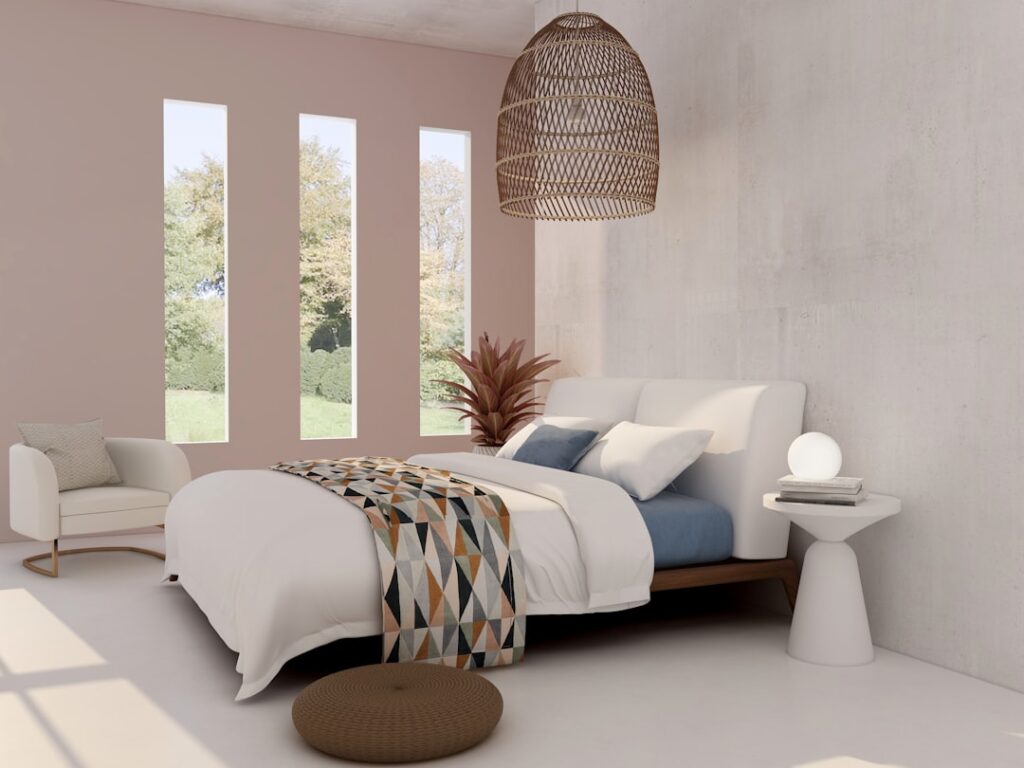
Older homes, converted attics, and many city apartments share one frustrating feature: a bedroom with no built-in closet. But a missing closet doesn’t have to mean clutter, the right bedroom with no closet ideas can actually give you more flexible, attractive storage than a cramped builder’s closet ever would. From freestanding wardrobes and open clothing racks to clever use of vertical space and furniture that does double duty, you have plenty of options at every budget. This guide walks through practical, good-looking solutions to store your wardrobe and keep the room feeling open and intentional rather than improvised.
Invest in a Freestanding Wardrobe
The most direct fix is to add the closet the room never had. A freestanding wardrobe or armoire provides hanging space, shelves, and drawers in a single enclosed piece, hiding clutter behind doors for a tidy look. These range from inexpensive flat-pack models to substantial vintage armoires that double as statement furniture.
Measure your ceiling height and choose a tall unit to maximize storage in the footprint it occupies. A mirrored wardrobe front doubles as a full-length mirror and bounces light around the room, making a small bedroom feel larger. For a custom look on a budget, a flat-pack wardrobe topped with crown molding or painted to match the trim reads as built-in.
Try an Open Clothing Rack
Open garment racks turn your wardrobe into part of the decor, a boutique-style display that works beautifully if you curate it. A freestanding rolling rack or a wall-mounted rail holds hanging clothes in the open, ideal for renters since many options need no permanent installation.
- Rolling racks: Move easily and suit renters; choose a sturdy metal frame for heavier wardrobes.
- Wall-mounted rails: Free up floor space and create a clean, minimal look.
- Pipe-style industrial racks: A DIY favorite built from plumbing pipe and fittings for a custom size.
The trick to making open storage look intentional rather than messy is editing. Display a cohesive, well-organized selection, add matching hangers, and store off-season or less attractive items elsewhere so the rack stays curated.
Use Vertical Space and Walls
When floor space is tight, build upward. Wall-mounted shelves, pegboards, and hooks turn empty vertical real estate into storage. A row of wall hooks holds bags, hats, robes, and frequently worn items, while floating shelves display folded sweaters or baskets of accessories.
Install a high shelf around the perimeter of the room for items you rarely need, or mount a tension rod across an alcove to create an instant hanging nook. Over-the-door organizers add shoe and accessory storage without taking any floor space at all. Thinking vertically is the single most effective strategy in a small no-closet bedroom.
Choose Furniture That Does Double Duty
Every piece in a no-closet bedroom should earn its place by storing something. Multi-functional furniture absorbs your belongings without adding clutter.
- Storage beds: Drawers built into the base, or a lift-up platform, swallow off-season clothing and linens.
- Under-bed bins: Inexpensive rolling boxes use the dead space beneath any bed frame.
- Storage benches and ottomans: Hold extra blankets and provide a spot to sit while doubling as a hidden hamper.
- Dressers and chests: A tall chest of drawers stores more in less floor area than a wide low one.
A storage bed paired with a tall dresser can hold an entire wardrobe between them, often eliminating the need for a separate closet solution entirely.
Create a Built-In Closet Nook
If you’re willing to do a small project, you can build a closet where none exists. Frame a simple alcove with a curtain or sliding barn door across the front to conceal a hanging rod and shelves. A wall-to-wall closet system, just a rod, brackets, and a few shelves, mounted in a corner and screened with a curtain costs little and looks custom.
A curtain is the cheapest, most renter-friendly way to hide an open clothing area; hang it from a ceiling-mounted track to enclose a corner. For a more finished result, freestanding closet kits with fabric or wire shelving assemble in an afternoon and can be reconfigured anytime.
Maximize Whatever Space You Have
Smart organization stretches any storage solution further. Use slim velvet hangers to fit more clothes in less space, and add shelf dividers and drawer organizers so nothing gets lost. Store off-season clothing in labeled bins under the bed or on a high shelf, rotating items as the weather changes so your active wardrobe stays compact and accessible.
Decant shoes into clear boxes or a vertical shoe rack, and corral small items like belts and scarves on hooks or in baskets. The less you keep in active rotation, the easier any no-closet setup is to maintain. Periodically declutter, since the simplest solution to limited storage is simply owning less.
Style It So It Looks Deliberate
The difference between a charming no-closet bedroom and a cluttered one is styling. Choose storage pieces in finishes that complement the room, a painted wardrobe that matches the trim, matching baskets on open shelves, uniform hangers on a visible rack. Coordinating colors and materials makes a collection of separate storage pieces look like an intentional design choice rather than a series of stopgaps.
Add a few decorative touches, a framed print above the dresser, a plant on a shelf, a nice runner on top of the wardrobe, so the storage zone feels like part of the room’s design. When everything looks coordinated and curated, no one will miss the closet at all.
The Bottom Line
A bedroom with no closet is an opportunity, not a flaw. Add a freestanding wardrobe or armoire for hidden storage, an open rack for a boutique feel, vertical shelving and hooks to use wall space, and double-duty furniture like storage beds to absorb the rest. Build a curtained nook if you want a closet alternative, organize ruthlessly, and style every piece to coordinate. With these solutions, a closetless bedroom can be more flexible, more attractive, and more personal than any standard closet.