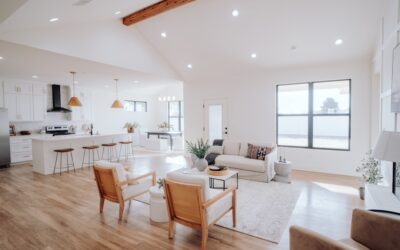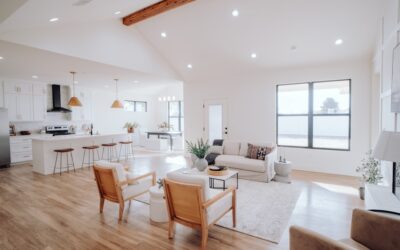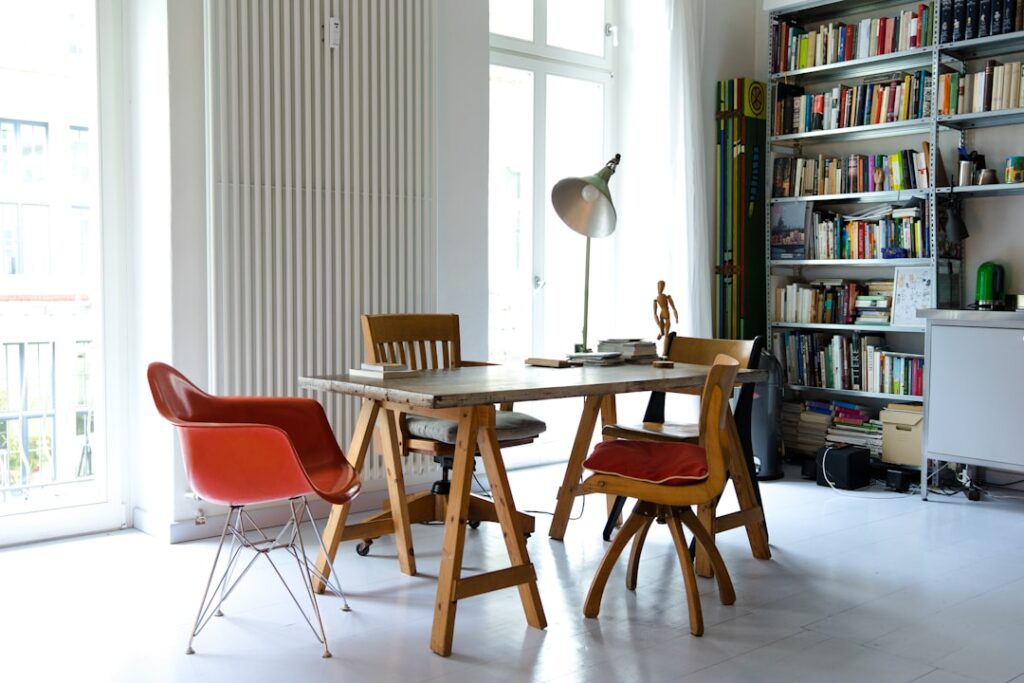
European beech is the species you’ve walked on a thousand times without recognizing — it’s the floor in countless German bowling alleys, IKEA showrooms, and Scandinavian schools because it’s harder than oak and cheaper than maple in much of the world. Beech flooring brings a clean, pale-pink-to-cream tone, an unusually fine and uniform grain, and a Janka hardness rating of 1,300 — slightly above red oak. The catch is that beech moves more with humidity than almost any other commercial hardwood, which is why North American homeowners need to think carefully about where and how they install it. Done right, it’s one of the most distinctive light wood floors available.
What Beech Looks Like and How to Identify It
Beech grain is famously uniform — small, tight pores with very few mineral streaks or character marks. The heartwood ranges from creamy white to pale pink, and steamed beech (the most common commercial form) takes on a warmer rosy-tan tone. Compared to maple, beech has slightly more visual depth; compared to birch, the grain is finer and more controlled.
Steamed beech versus unsteamed matters at the showroom level. Steaming homogenizes the color and softens the contrast between sapwood and heartwood, producing the pale-pink Euro-style flooring most commonly sold. Unsteamed beech has more dramatic color variation and reads more rustic — popular in cabin and farmhouse projects.
The Janka Hardness Story
At 1,300 lbf on the Janka scale, beech beats red oak (1,290) and white oak (1,360 is the published number for many species, but Eastern white oak averages around 1,360). It’s not as hard as hickory (1,820) or Brazilian cherry (2,820), but it dents far less than walnut (1,010) or pine (380 to 870, depending on species). For most residential applications, beech offers more than enough surface durability.
What hardness doesn’t tell you is dimensional stability — and beech’s biggest weakness lives there. The species has a high tangential shrinkage rate (about 11.9%), meaning it cups and gaps with humidity swings more than oak or hickory. This single fact drives most installation decisions.
Solid vs. Engineered Construction
Because of beech’s movement, engineered construction is the smarter choice in most US homes. A 4mm to 6mm beech veneer over a multi-ply birch core stays flat through 30% to 60% relative humidity swings without trouble. Solid 3/4-inch beech demands tightly controlled HVAC year-round and is risky in basements or above unconditioned crawl spaces.
Quality engineered beech runs $7 to $11 per square foot installed; premium 6mm wear-layer goods from European mills (Boen, Junckers) push toward $13 to $16. Solid beech is rare in the US market — when available, expect $9 to $14 installed and plan on a humidifier in winter and a dehumidifier in summer.
Color Considerations and Light Behavior
Beech reflects light beautifully — about 70% reflectance compared to mid-tone oak’s 45 to 55%. That brightens dark rooms and pairs especially well with cool gray and white wall palettes. The downside is that the pale surface shows every drop of dog-paw mud, every spilled glass of red wine, and every coffee spot.
UV exposure causes more dramatic color shift in beech than in most species. Steamed beech can amber to a warm honey tone within 12 to 24 months in sunny rooms. Rotate area rugs every three to four months in the first year to even out the change.
Pros of Beech Flooring
- Higher Janka hardness than oak — better dent resistance for heavy furniture
- Bright, light-reflecting surface ideal for north-facing rooms
- Fine, uniform grain reads modern and minimalist without trying
- Less expensive than maple in many import markets
- Takes stain and clear finishes evenly with minimal blotching
- Closed-grain surface resists dust and spill penetration
Cons and Honest Trade-Offs
- High dimensional movement — cups, gaps, and crowns with humidity swings
- Pale color shows every spill, footprint, and pet stain
- Significant UV ambering in sunny rooms over 1 to 2 years
- Limited US availability outside of engineered import lines
- Solid beech is risky in basements, sunrooms, and uncontrolled climates
- Color matching for repairs years later is difficult once the floor has aged
Buying Guide: Picking the Right Beech Product
For US installs, default to engineered beech with a 4mm or thicker wear layer over Baltic birch multi-ply. Verify the surface is real beech veneer, not photographic film — some budget products labeled “beech-look” are printed laminate. Check the finish system: aluminum oxide UV-cured urethane is durable and low-maintenance; hardwax oil offers a more authentic matte feel but needs annual upkeep.
Order all material from one production batch and 8% extra for cuts. Acclimate planks flat in the install space for 5 to 7 days at occupied conditions — beech’s high movement makes this step non-negotiable. Plan on $9 to $14 per square foot turnkey for a quality engineered beech flooring install in 2026, including underlayment and basic prep on a 600 sq ft floor.
Frequently Asked Questions
How does beech flooring compare to maple?
Similar in tone but beech has slightly more grain visibility and runs a touch warmer. Maple is more dimensionally stable; beech is slightly harder. For modern minimalist rooms, beech often photographs better thanks to its subtle grain.
Can I install beech in a kitchen?
Yes, with engineered construction and immediate cleanup of spills. Steamed beech tolerates kitchen humidity better than solid plank but still requires vigilance — wipe up water within minutes, not hours.
Does beech work over radiant heat?
Engineered beech, yes, with a 4mm or thicker wear layer and a glue-down install. Solid beech is risky over radiant heat because the species moves so much with temperature swings — plan on visible gaps every winter.
Why is solid beech rare in US flooring stores?
The species’ high movement rate makes it unpopular with American distributors who serve climates with wide humidity swings. European homes typically run more stable indoor humidity, which is why beech is far more common there.
What finish should I use on a beech floor?
For maximum durability, factory-applied UV-cured urethane with aluminum oxide. For an authentic Old-World matte feel, hardwax oil (Rubio Monocoat, Pallmann) — but plan on annual maintenance oil to keep the surface protected.
Prefer to explore on your own?
See how new flooring looks in your actual room in seconds — free, no signup.
Try the free Floor Studio →