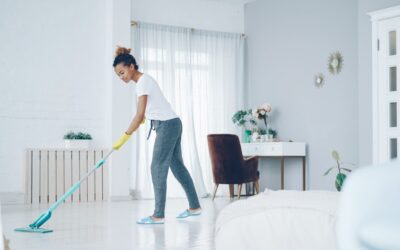
A stiff beater-bar brush spinning across your hardwood can scatter debris and, over time, scuff the finish. That is why the best cordless stick vacuum for hardwood floors is not simply the most powerful one, it is the one with the right cleaning head for hard, smooth surfaces. Cordless sticks are perfect for quick, cord-free cleanups on wood, but the head design, suction, and runtime all matter. This guide covers the features that actually make a difference so you buy the right machine.
- Head Design Is the Deal-Breaker
- Suction and Sealed Airflow
- Runtime and Battery
- Filtration Matters on Hard Floors
- Weight and Maneuverability
- Handy Features Worth Having
- Which Type Fits Your Home
- Bin Size and Maintenance
- Corded Stick and Robot Alternatives
- Protecting Your Floors While You Clean
- The Bottom Line
Head Design Is the Deal-Breaker
On hardwood, the cleaning head matters more than raw power. The two best options for wood are:
- Soft roller (fluffy roller) heads: a plush cylindrical brush that glides over hard floors, sweeping up fine dust and larger crumbs without flinging them, while being gentle on the finish.
- Adjustable or switchable brush rolls: heads that let you turn the stiff bristle brush off or switch to a hard-floor mode, so you avoid the scattering a carpet-style beater bar causes.
Avoid running an aggressive carpet beater bar on bare wood. Either choose a dedicated soft roller or a vacuum whose brush can be switched to a hard-floor setting.
Suction and Sealed Airflow
Wood floors show fine dust, pet hair, and crumbs, so you want strong, consistent suction. Look for a vacuum with good sealed airflow rather than just a big headline wattage number, because a well-sealed system pulls fine debris from between planks and along baseboards. Many cordless sticks offer multiple power modes; a lower eco mode is plenty for daily hardwood pickup and stretches the battery, while a boost mode handles heavier messes.
Runtime and Battery
Runtime determines whether you finish the house on one charge. Consider:
- Total runtime: lighter cleaning modes commonly run much longer than max power. Match the runtime to your square footage.
- Removable batteries: swappable packs let you keep cleaning by dropping in a fresh one, a big advantage in larger homes.
- Charge time and docking: a wall dock that charges between uses keeps the vacuum ready to grab.
Be realistic about the max-power runtime, which is always the shortest. For hardwood, you rarely need full power, so real-world runtime is usually better than the worst-case number on the box.
Filtration Matters on Hard Floors
Hard floors let fine dust settle and become airborne easily, so good filtration keeps that dust in the bin instead of blowing back into the room. A sealed HEPA-style filtration system is worth prioritizing if anyone in the home has allergies. Check whether the filter is washable, since reusable filters lower long-term cost and keep suction strong when maintained.
Weight and Maneuverability
A stick vacuum lives or dies by how easy it is to grab and use. Lighter models are less fatiguing for whole-house cleaning and for lifting overhead to convert into a handheld for stairs and shelves. A swiveling head that lays flat reaches under furniture, and a low-profile head slides beneath cabinets and beds where dust collects on wood. Balance matters too; some heavier machines carry weight in the handle, which tires your wrist.
Handy Features Worth Having
Beyond the basics, a few extras earn their keep on hardwood:
- LED headlights on the cleaning head reveal fine dust and hair invisible on wood in normal light.
- Easy-empty bins that release straight into the trash without touching debris.
- Handheld conversion for stairs, upholstery, and car interiors.
- Anti-tangle brush designs if you have long hair or pets.
These conveniences are what make a vacuum something you actually reach for daily.
Which Type Fits Your Home
If your home is mostly or all hardwood, prioritize a soft roller head above everything else. If you have a mix of wood and rugs, choose a model with a switchable brush or interchangeable heads so one vacuum handles both. For large homes, favor removable batteries and strong runtime. For small spaces, a lightweight model with a docking charger is ideal. Prices span a wide range across brands and tiers, so set a budget and match the features to your floors rather than chasing the most expensive machine.
Bin Size and Maintenance
A stick vacuum’s small dust bin is the trade-off for its slim, cordless design, so consider how often you are willing to empty it. Larger homes benefit from a bigger bin, while a compact bin is fine for daily quick passes. Beyond capacity, think about upkeep: filters need periodic cleaning or replacement to keep suction strong, and the brush roll should be cleared of hair and thread. A model with tool-free access to the brush and a washable filter costs less to live with over time. Neglected filters are the most common reason a once-powerful stick vacuum loses suction, so factor maintenance into your choice.
Corded Stick and Robot Alternatives
A cordless stick is not the only way to clean hardwood, and it helps to know where it fits. A corded stick vacuum never runs out of battery and can suit a single-level home where an outlet is always close, though the cord limits reach and convenience. Robot vacuums with hard-floor modes handle daily maintenance dust automatically, but they lack the power and precision for a real deep clean and struggle with larger debris. For most homeowners, a cordless stick strikes the best balance of grab-and-go convenience and cleaning power on wood, with a robot as an optional helper for light daily upkeep between thorough passes.
Protecting Your Floors While You Clean
Even the right vacuum can mark hardwood if you are careless. Check the wheels and the base of the cleaning head periodically for trapped grit that could scratch as it rolls. Keep the head flat and glide it rather than pressing down hard, since a soft roller does its job with light contact. If your model has a hard-floor setting or a brush-off mode, use it on bare wood so the bristles are not scrubbing the finish. These small habits, combined with a gentle head, keep your floors looking new while the vacuum keeps them clean.
The Bottom Line
The best cordless stick vacuum for hardwood floors pairs a gentle soft-roller or switchable head with strong sealed suction, honest runtime, and good filtration, all in a package light enough that you use it often. Focus on the cleaning head first, then suction and battery, and you will keep your wood floors spotless without scattering debris or risking the finish. When you compare specific models, read the fine print on the cleaning head rather than trusting the marketing headline, because “multi-surface” does not always mean a true soft roller. If a listing is vague, look for confirmation that the brush can be switched off or that a dedicated hard-floor head is included. That single detail matters more than an extra few minutes of runtime or a bigger suction number, since it is the difference between gently sweeping your hardwood and scattering crumbs across it. Get the head right and the rest of the vacuum simply supports a job it can now do properly.
Prefer to explore on your own?
See how new flooring looks in your actual room in seconds — free, no signup.
Try the free Floor Studio →