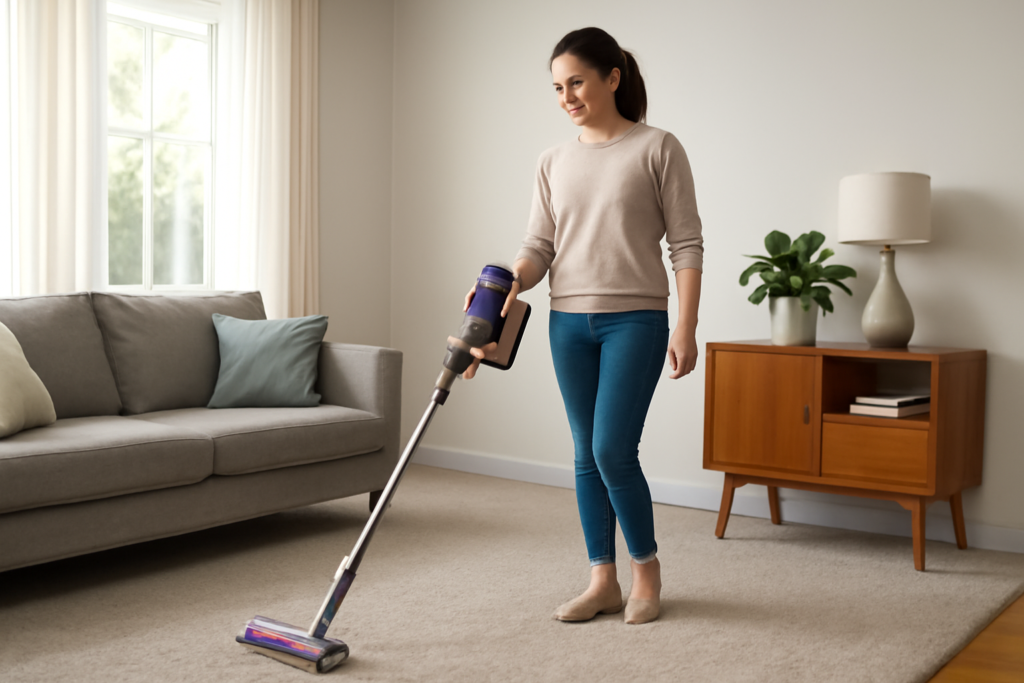
Deep-pile carpet is where cheap vacuums go to fail, and it is also where a good Dyson earns its price. Choosing the best Dyson for carpet comes down to two things most shoppers overlook: how the motorized cleaner head grips the pile, and whether the suction holds up once the bin fills. Dyson built its reputation on strong, consistent airflow and torque-driven brush bars, which is exactly the combination that pulls embedded grit out of dense carpet fibers. But the lineup is broad, and the right pick depends on your carpet type, your budget, and whether you want a cord or not.
This guide explains how Dyson’s vacuum families differ for carpet, what actually matters in the specs, and how to match a model to your home.
Why Dyson Works Well on Carpet
Carpet cleaning is a battle against embedded soil, and it is won by agitation plus suction. Dyson’s cleaner heads use a motor-driven brush bar (the company calls its versions torque-drive and high-torque heads) that spins stiff bristles into the pile to loosen grit, while strong sealed suction lifts it into the bin. That agitation is the key difference from a bare-floor vacuum that only relies on airflow.
The other advantage is filtration. Dyson vacuums use whole-machine HEPA-style sealed filtration on current models, which matters on carpet because deep pile traps allergens, pet dander, and fine dust that get stirred up during cleaning. A sealed system captures that fine debris rather than blowing it back into the room, a real benefit for allergy sufferers.
Cordless Stick Vacuums: The V Series
Dyson’s cordless stick vacuums, known broadly as the “V” series, are the most popular choice for modern homes. They pair a motorized cleaner head with a lightweight, tube-style body and a removable battery. For carpet, the appeal is convenience without giving up the torque-driven brush bar that does the deep work.
The higher-tier cordless models add useful carpet features: automatic suction adjustment that ramps power when sensors detect denser pile, and a boost or “max” mode for a concentrated deep clean. The honest trade-off is runtime. On the highest power setting, battery life drops significantly, so plan on using boost mode in short bursts on the dirtiest areas rather than for a whole-house session. For most homes with a mix of low-to-medium pile carpet and hard floors, a mid-to-upper cordless V-series model is the sweet spot of performance and convenience.
Upright Vacuums: The Ball Series
If your home is mostly wall-to-wall carpet, especially thick or high-pile, Dyson’s corded upright “Ball” series deserves a serious look. Because it draws continuous power from the wall, an upright never fades on the highest setting the way a battery does, so you get sustained maximum suction across a large carpeted area. The self-adjusting cleaner head on these models raises and lowers to seal against different pile heights.
Uprights are heavier and less nimble than a stick vacuum, and dragging a corded machine up stairs is a chore. But for a big house with lots of carpet where you want the deepest, most consistent clean without watching a battery gauge, a Ball-series upright is arguably the best Dyson for carpet in raw cleaning terms.
Matching the Best Dyson for Carpet to Your Floors
Pile height should drive your decision more than the model name:
- Low-pile and Berber: nearly any Dyson with a torque-drive head excels; a mid-range cordless is plenty.
- Medium plush (most family homes): an upper-tier cordless with auto-suction adjustment, or an entry upright.
- Thick or high-pile shag: a corded upright for sustained power, or a cordless run in boost mode in short passes.
- Mixed carpet and hard floors: a cordless stick for the versatility of quick head swaps and easy carrying.
Pet owners should prioritize models sold in “Animal” configurations, which include a mini motorized tool that digs pet hair out of carpeted stairs, upholstery, and car seats. That small tool solves the single most common carpet-cleaning frustration.
What to Weigh Before You Buy
Dyson is a premium brand, and current carpet-capable models generally run from a few hundred dollars into the $500-to-$800 range for flagship cordless and upright machines. Before committing, weigh these real trade-offs:
- Cord vs. cordless: uprights give unlimited runtime and steady power; cordless gives freedom and lighter handling but limited high-power runtime.
- Weight: sticks are far easier on stairs and overhead; uprights are heavier but stable on big carpeted floors.
- Battery replacement: cordless batteries are consumable and degrade over years, so factor eventual replacement cost.
- Bin size: uprights hold more, meaning fewer emptying stops on large carpeted areas.
- Filter maintenance: washable filters need periodic rinsing and full drying to keep suction strong.
A pro tip that applies to every model: empty the bin before it reaches the max line and wash the filter on schedule. Suction loss on carpet is far more often a full bin or a clogged filter than a worn-out machine.
Attachments That Matter for Carpet
The cleaner head does most of the work, but the right attachments turn a good carpet vacuum into a great one. The single most useful tool for carpeted homes is the mini motorized brush, a compact powered head that spins bristles like the main floor head but at a size that fits stairs, upholstery, and car interiors. It is the difference between a vacuum that only handles open floor and one that cleans the whole house.
Two other attachments earn their keep on carpet. A crevice tool reaches the compressed grit along baseboards and stair edges where the main head cannot seal, and a stiff-bristle upholstery tool lifts dander from carpeted risers and pet beds. When you compare models, check which tools are bundled in the box, because buying them separately later often costs more than choosing the better-equipped configuration up front.
Care Tips to Keep Suction Strong
A Dyson only cleans carpet as well as it is maintained, and neglected upkeep is the most common reason people think their vacuum has lost power. Because these are bagless cyclonic machines, a bin filled past the max line chokes airflow and drags performance down long before anything mechanical wears out.
Build a simple routine and the machine holds its deep-clean ability for years:
- Empty the bin before it reaches the max fill line, not after.
- Wash the filter about once a month, and let it air-dry a full 24 hours before reinstalling, since a damp filter starves the motor.
- Check the brush bar for wrapped hair and threads, which stall the agitation that carpet depends on, and cut them free with scissors.
- Inspect the wand and hose for clogs whenever suction drops suddenly.
Follow that short list and you protect both the cleaning power and the lifespan of a machine that was not cheap to begin with.
The Bottom Line
There is no single winner, only the right match for your floors. If your home is mostly carpet and you want the deepest, most consistent clean, a corded Ball-series upright is the best Dyson for carpet on pure cleaning power. If you value convenience, easy stair cleaning, and a mix of surfaces, an upper-tier cordless V-series with auto-suction and a pet tool is the smarter everyday pick. Match the machine to your pile height and your tolerance for cords, keep the bin and filter clean, and a Dyson will keep your carpet genuinely deep-cleaned for years.