Laminate looks like wood but behaves nothing like it when you clean it, and that catches a lot of homeowners off guard. The best laminate floor cleaner liquid is a streak-free, pH-neutral, quick-drying formula that lifts dirt without letting water reach the seams, because laminate’s biggest weakness is its fiberboard core. Get moisture into those joints and the planks swell and warp permanently. Use the wrong soapy cleaner and you get a dull, sticky film. This guide covers the liquid cleaners that clean laminate safely and the technique that keeps it looking new.
- Why Laminate Needs a Special Approach
- What to Look For
- Top Liquid Laminate Cleaners
- 1. Bona Hardwood and Laminate Floor Cleaner — Best Overall
- 2. Black Diamond Wood & Laminate Floor Cleaner — Best Value Concentrate
- 3. Zep Hardwood and Laminate Floor Cleaner — Best for High Traffic
- 4. Method Squirt + Mop Wood Floor Cleaner — Best Natural Option
- 5. Pledge Floor Care Multi-Surface — Convenient but Watch for Buildup
- DIY Laminate Cleaner That Works
- What to Avoid on Laminate
- How to Clean Laminate Floors the Right Way
- Tackling Stubborn Spots
- Keeping Laminate Looking New
- How Much Should You Spend?
- Spray Mops and Steam: What to Know
- How Often to Clean Laminate
- Frequently Asked Questions
- The Bottom Line
Why Laminate Needs a Special Approach
A laminate plank is a printed photographic layer over a high-density fiberboard (HDF) core, topped with a clear wear layer. The surface is sealed and tough, but the core underneath is essentially compressed wood fiber that acts like a sponge if water gets past the seams. That is why the rules for laminate are: minimal moisture, no wax, no oil, and no abrasive scrubbing. The right liquid cleaner does the work with barely any water and dries almost instantly.
What to Look For
- pH-neutral. Neither acidic nor alkaline, so it will not dull the wear layer.
- No-rinse and residue-free. Leaves no film that attracts dirt or turns hazy.
- Fast-drying and low-moisture. Evaporates before water can seep into seams.
- Streak-free formula. Laminate’s smooth surface shows streaks badly, so this matters more than on wood.
Top Liquid Laminate Cleaners
1. Bona Hardwood and Laminate Floor Cleaner — Best Overall
Bona’s laminate formula (and its stone/tile/laminate line) is water-based, pH-neutral, no-rinse, and dries fast with no streaks. It comes ready-to-use as a spray or refill cartridge and is GREENGUARD Gold certified. At around $6 to $10 for 32 ounces, it is the reliable default recommendation for sealed laminate.
2. Black Diamond Wood & Laminate Floor Cleaner — Best Value Concentrate
A budget-friendly, streak-free cleaner that many owners swear by for restoring a clean matte finish without residue. It is gentle, affordable, and widely available for under $10.
3. Zep Hardwood and Laminate Floor Cleaner — Best for High Traffic
A slightly stronger cleaner that handles busier households and tougher grime while still drying quickly. Use it as directed and it clears scuffs and traffic film well.
4. Method Squirt + Mop Wood Floor Cleaner — Best Natural Option
Plant-based and biodegradable with a pleasant light scent, this works nicely on lightly soiled laminate and is easy on the environment. Good for routine, everyday cleaning.
5. Pledge Floor Care Multi-Surface — Convenient but Watch for Buildup
Sprays easily and cleans well, but some multi-surface products can leave a slight shine buildup over time. Use sparingly if you choose it, and avoid any product labeled as adding wax or gloss.
DIY Laminate Cleaner That Works
If you would rather mix your own, a safe, streak-free solution is one part rubbing alcohol, three parts water, and a couple drops of dish soap in a spray bottle. The alcohol helps the mixture flash off quickly so water does not linger. A splash of white vinegar (about a quarter cup per gallon of water) is sometimes used for degreasing, but keep it dilute and dry the floor promptly, since too much acid over time can dull the wear layer. Always spray onto the mop, never flood the floor.
What to Avoid on Laminate
- Steam mops. Heat and forced moisture are the fastest way to swell the core and delaminate planks. Nearly every laminate warranty prohibits them.
- Wax, polish, and oil soaps. They cannot penetrate the sealed surface and just build a dull, sticky film.
- Abrasive pads and scouring powders. They scratch the wear layer permanently.
- Soaking-wet mops and buckets. Standing water at the seams is the number-one cause of laminate failure.
- Undiluted bleach or ammonia. Too harsh; they can discolor and cloud the finish.
How to Clean Laminate Floors the Right Way
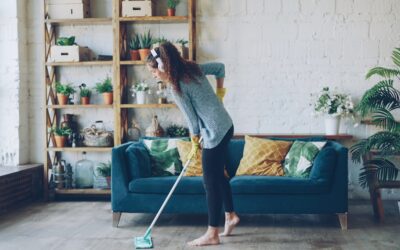
- Dust and vacuum first. Remove grit with a dust mop or a vacuum on the hard-floor setting with the beater bar off. Grit scratches the surface, so this step protects your floor.
- Spray onto the mop, not the floor. Lightly mist a microfiber flat mop pad so it is damp, not wet.
- Mop in the direction of the planks. Work with the grain of the boards for a streak-free finish.
- Go section by section. Clean small areas so the cleaner dries quickly and nothing pools at the seams.
- Dry any wet spots immediately. Follow with a dry microfiber cloth on stubborn streaks or standing droplets.
Tackling Stubborn Spots
For dried spills, sticky residue, or scuffs, dampen a cloth with your cleaner and let it sit on the spot for a minute to soften before wiping. Nail polish, tar, or crayon usually comes off with a little acetone on a cloth, wiped and then cleaned again. A pencil eraser or a melamine sponge used gently lifts many scuff marks. Never scrape laminate with anything metal.
Keeping Laminate Looking New
Prevention beats cleaning. Put walk-off mats at entrances to catch grit and moisture, use felt pads under furniture, and wipe up spills the moment they happen. Trim pet nails and keep the floor dust-mopped between wet cleanings. With a damp-mop maybe once a week in busy areas and immediate spill cleanup, laminate stays crisp for years.
How Much Should You Spend?
Laminate cleaners are inexpensive, so cost should not drive your choice as much as formula and format do. Ready-to-use sprays run about $5 to $10 for 32 ounces and are the easiest option. Concentrates cost a little more up front, around $10 to $15, but dilute into several gallons and work out cheaper per cleaning for a big house. A quality microfiber flat mop, the tool that matters most, is a one-time $15 to $30 purchase. Avoid anything marketed as a laminate wax, polish, or shine-restorer, regardless of price, because laminate’s sealed wear layer cannot absorb these products and they only build a hazy film you will eventually have to strip.
Spray Mops and Steam: What to Know
Refillable spray mops are excellent for laminate because they meter out a fine mist and keep you from over-wetting the floor. Fill them only with a laminate-safe, pH-neutral cleaner or a compatible cartridge, never a homemade vinegar-heavy mix. Steam mops are a different story entirely. Even models advertised as safe for sealed floors force hot vapor into the micro-gaps between planks, and once moisture reaches the fiberboard core, the damage, swelling, lifting, and delamination, is permanent and not covered by warranty. If you own laminate, skip steam cleaning completely no matter what the mop box promises.
How Often to Clean Laminate
Match your routine to traffic. Dust-mop or vacuum high-traffic zones like entryways and kitchens every couple of days to keep abrasive grit off the wear layer. Do a full damp-mop weekly in busy households, or every two weeks in low-traffic bedrooms. Wipe spills the instant they happen, since standing liquid at a seam is the fastest way to ruin a plank. Twice a year, pull out entryway mats and clean underneath, where trapped grit and moisture tend to collect unseen.
Frequently Asked Questions
Can I use vinegar on laminate? Only heavily diluted, about a quarter cup per gallon of water, and dried promptly. Straight or frequent vinegar is acidic enough to gradually dull the wear layer, so a pH-neutral cleaner is the safer everyday choice.
Why is my laminate cloudy or filmy? Almost always residue from too much cleaner, a soap-based product, or a wax or polish. Damp-mop with plain water or a properly diluted pH-neutral cleaner to strip the buildup, then use less product going forward.
What removes scuff marks from laminate? A pencil eraser or a melamine sponge used gently lifts most rubber scuffs. For stubborn marks, a dab of your regular cleaner on a cloth works. Never use abrasive powders or metal scrapers.
The Bottom Line
The best laminate floor cleaner liquid is a pH-neutral, no-rinse, streak-free product like Bona used with a barely damp microfiber mop. Skip the steam mop, skip wax and oil soaps, and above all keep water away from the seams. Dust first, spray onto the mop, work with the plank direction, and dry any lingering moisture. Follow that routine and your laminate will keep its clean, wood-look finish without the swelling and streaking that plague floors cleaned the wrong way.
Prefer to explore on your own?
See how new flooring looks in your actual room in seconds — free, no signup.
Try the free Floor Studio →