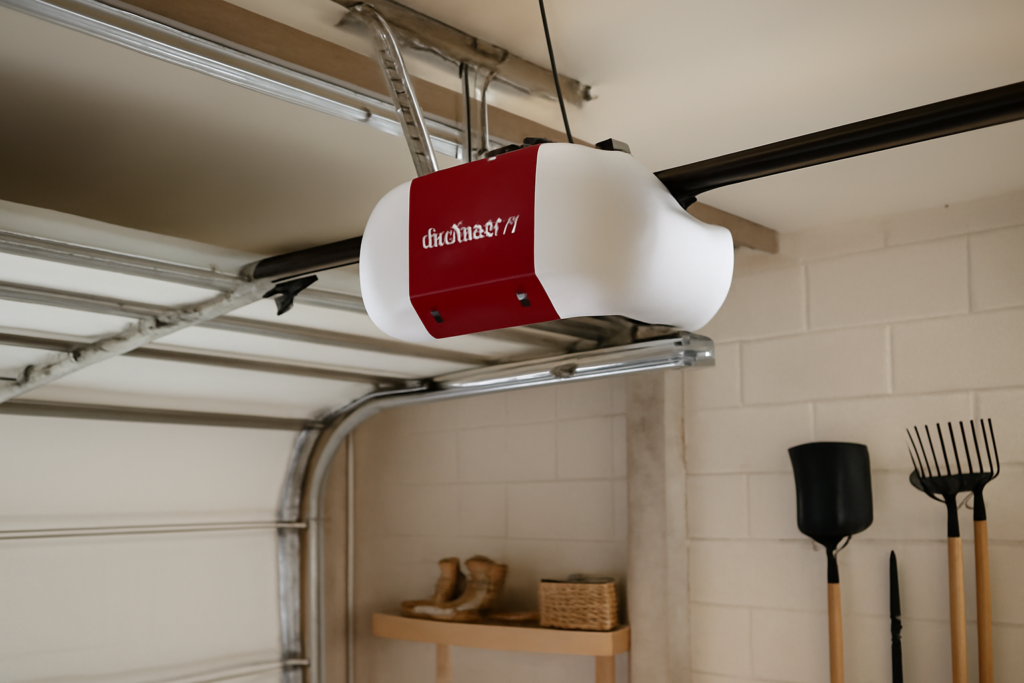
If your garage sits below a bedroom, the difference between a chain-drive opener and a belt-drive one is the difference between being jolted awake every time a teenager comes home and never hearing the door at all. Choosing the best LiftMaster garage door opener is less about finding one “best” model and more about matching the drive type, horsepower, and smart features to your garage’s layout and your household’s needs. LiftMaster is one of the most trusted names in the category, and its lineup spans quiet belt drives, rugged chain drives, and space-saving wall-mount units. Here is how to pick the right one.
Understanding the Drive Types
The drive system is the single most important choice because it dictates noise, maintenance, and cost. LiftMaster offers three main types.
- Belt drive: Uses a reinforced rubber belt to move the door. It is the quietest option, ideal for attached garages and homes with rooms above or beside the garage. Smooth, low-vibration operation with minimal maintenance.
- Chain drive: Uses a metal chain, like a bicycle chain, to pull the door. It is the most durable and budget-friendly but noticeably louder, best for detached garages where noise does not matter.
- Wall-mount (jackshaft): Mounts on the wall beside the door rather than on the ceiling, freeing up overhead space and running very quietly. Ideal for garages with high, low, or obstructed ceilings, or when you want a clean overhead look.
For most attached homes, a belt drive is the sweet spot of quiet and reliability. Wall-mount is the premium pick when ceiling space or ultra-quiet operation is a priority.
Quiet and Reliability Positioning
LiftMaster has built its reputation on reliable, quiet operation, and its higher-end belt and wall-mount models are consistently praised for smooth, near-silent cycles. Many models include DC motors, which run more quietly than older AC motors, offer soft start and stop to reduce jarring, and provide battery backup so the door still works during a power outage, a feature required by law in some states.
Reliability is where the brand distinguishes itself from bargain openers. The build quality, motor longevity, and consistent smart-feature support tend to justify the higher price over years of daily use, since a garage door opener may cycle several thousand times a year.
myQ Smart Technology
Nearly all current LiftMaster openers include myQ, the brand’s smart-home platform, and it is a genuinely useful feature. With the myQ app on your phone you can:
- Open and close the door remotely from anywhere.
- Receive alerts when the door opens or closes, so you know if you left it up.
- Grant access to family members or schedule automatic closing.
- Integrate with smart-home ecosystems and, on some plans, package delivery inside the garage.
If you value knowing your garage is secure while you are away, myQ alone can make LiftMaster worth choosing over a basic opener.
Horsepower and Door Weight
Horsepower, or its DC equivalent (often rated in newtons or as “HPc,” horsepower comparable), determines how much door the opener can lift smoothly. Match it to your door.
- 1/2 HP (or equivalent): Handles a standard single or lightweight double door. Adequate for many homes but works harder on heavy doors.
- 3/4 HP: The recommended sweet spot for most double-car doors and heavier insulated or wood doors, offering longer life through less strain.
- 1 to 1.25 HP: For oversized, solid-wood, or carriage-style doors that demand extra lifting power.
When in doubt, size up. A slightly more powerful motor runs with less effort and typically lasts longer than an underpowered one straining against a heavy door.
Matching an Opener to Your Garage
Put the factors together based on your situation. For an attached garage with living space nearby, choose a belt-drive model with a DC motor and battery backup for quiet, reliable operation. For a detached garage where noise is a non-issue and budget matters, a chain drive delivers rugged value. For garages with awkward ceilings or a desire for a clean, open overhead and the quietest possible operation, a wall-mount jackshaft is the upgrade to make.
Also confirm your door’s springs are properly balanced and in good shape before installing any opener, since the opener is designed to move a counterbalanced door, not to lift dead weight.
Key Features Worth Paying For
Beyond the drive type and horsepower, several features separate a basic opener from one you will appreciate every day. Battery backup tops the list, keeping the door operable during a power outage and legally required in some states; it is a genuine convenience and a safety feature. A DC motor with soft start and stop reduces noise and mechanical stress, extending the opener’s life.
- Built-in Wi-Fi and myQ: Remote control and alerts without add-on modules.
- Integrated LED lighting: Brighter, longer-lasting garage illumination built into the unit.
- Automatic reverse and photo-eye sensors: Standard safety that stops and reverses the door if something is underneath.
- Rolling-code and security features: The remote code changes each use to prevent code theft.
- Timer-to-close: Automatically closes the door after a set period if you forget.
Most current LiftMaster models bundle these, but confirm which are included versus optional on the specific model you are considering, since the feature set varies across price tiers.
Installation and Maintenance Considerations
Even the best opener depends on proper installation and a well-maintained door to perform reliably. The opener only moves a door that is correctly balanced by its torsion or extension springs; if the springs are worn or mismatched, the opener strains and fails early. Before installing a new opener, have the door’s balance checked, and never adjust torsion springs yourself, as they store enough energy to cause serious injury.
Professional installation is worth considering for wall-mount jackshaft units in particular, which require correct spring and cable setup, though many homeowners successfully install belt and chain drives themselves over a few hours. Once running, a little routine maintenance keeps it quiet and dependable: lubricate the rollers, hinges, and chain or screw a couple of times a year, test the auto-reverse safety feature monthly by placing an object in the door’s path, and keep the photo-eye sensors clean and aligned. These small habits protect your investment and keep the opener operating smoothly for many years.
Making Your Choice
The best LiftMaster garage door opener for you is the one whose drive type suits your garage’s noise and space needs, whose horsepower matches your door’s weight, and that includes myQ and battery backup for convenience and code compliance. Belt drive for quiet attached garages, chain drive for budget detached setups, and wall-mount for space-constrained or premium installs. Match those to your home and you will get years of dependable, quiet operation from a brand built to deliver it.