
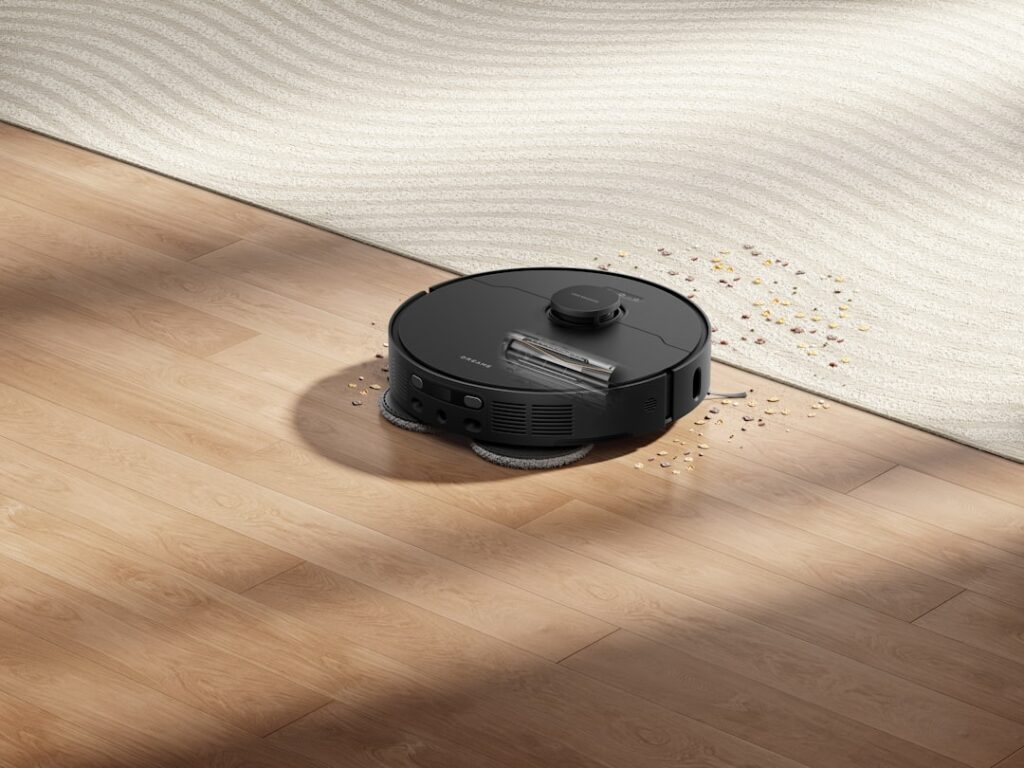
Pet hair on carpet is one of the hardest cleaning challenges a robot vacuum can face, and choosing the best robot vacuum for pet hair and carpet means looking past marketing claims to the handful of features that actually determine whether hair gets pulled out of the pile or just pushed around. Fur weaves deep into carpet fibers, tangles around spinning brushes, and refills a small dustbin in a single run through a shedding household. A vacuum that glides over hardwood may struggle badly on a plush carpet full of golden retriever undercoat. This guide skips the fake star ratings and walks you through what genuinely matters, from suction power and brush design to auto-empty docks and price tiers, so you can match a machine to your home instead of overpaying for features you will not use.
Suction Power Is the Foundation
For carpet and pet hair, raw suction is the single most important spec. Suction is usually measured in pascals (Pa), and while the number is not the whole story, it is a useful comparison point. Budget robots often deliver around 2,000 to 3,000 Pa, which handles hard floors and light debris but struggles to lift embedded hair from medium and thick carpet. Mid-range and premium pet-focused models push 4,000 to well over 8,000 Pa, and that extra power is what actually pulls fur out of the pile rather than skimming the top.
Just as important is carpet boost, a feature where the vacuum automatically detects carpet and ramps suction to maximum. Without it, a robot may cruise across your rugs on a low, battery-saving setting and leave hair behind. If you have thick or high-pile carpet, prioritize both high peak suction and automatic carpet boost, and be realistic: very deep shag carpet defeats most robots, and no robot fully replaces an occasional pass with an upright.
Brush Design Makes or Breaks It
The brush roll is where pet-hair vacuums succeed or fail, because long hair loves to wrap around a traditional bristle brush and choke it within days. The best pet robots use anti-tangle brush designs, often rubber or silicone finned rollers, or dual counter-rotating brushes, that grab hair and feed it into the bin instead of letting it coil around the axle. Some brands engineer specific tangle-free systems precisely for pet owners.
- Rubber or silicone rollers: resist hair wrap far better than bristle brushes
- Dual roller systems: two counter-rotating brushes lift and channel hair efficiently
- Side brushes: sweep hair from edges and corners into the path; look for tangle-resistant designs here too
- Easy-clean brushes: removable rollers you can clear in seconds save weekly frustration
Whatever the design, plan to check and clear the brush regularly in a pet home. The difference a good anti-tangle roller makes is dramatic; it is often the deciding factor between a robot you love and one you unplug in frustration after two weeks.
Bin Size, Filtration, and Auto-Empty Docks
Pets fill a dustbin fast, so capacity and emptying convenience matter more than they do in a pet-free home. A small onboard bin might fill halfway through cleaning a shedding household, cutting the run short. Larger bins help, but the game-changer is a self-emptying dock: the robot returns to its base after each run and vacuums its own bin into a large sealed bag that you only empty every few weeks. For heavy shedders, an auto-empty dock is worth the premium for the hands-off convenience alone.
Filtration matters too, especially if anyone in the home has allergies. Look for a sealed system with a high-efficiency filter that captures fine dander and dust rather than blowing it back into the air. A HEPA-style filter combined with a well-sealed bin genuinely reduces airborne allergens over time, which is a real benefit in a pet household.
Navigation and Smart Features
How a robot finds its way around determines whether it methodically cleans your whole floor or bumps randomly and misses spots. Basic models use bump-and-random navigation, which is cheap but inefficient and leaves gaps. Better robots use lidar or camera-based mapping to build a floor plan, clean in efficient rows, and let you set no-go zones through an app, so you can keep the robot away from pet food bowls, litter areas, and cords.
Useful pet-oriented smart features include app scheduling so the vacuum runs while you are out, room-specific cleaning so you can send it to the spot where the dog naps, and obstacle avoidance that helps it dodge pet toys and, importantly, solid pet waste, which some premium models now detect and steer around. Mopping combos exist, but for a pet-and-carpet priority, focus your budget on vacuum performance rather than paying extra for mediocre mopping.
Price Tiers and How to Choose
Robot vacuums span a wide price range, and knowing what each tier buys helps you spend wisely. Budget models under about $250 offer basic suction and bump navigation; they can help on hard floors and low-pile rugs but underperform on thick carpet and tangle-prone hair. Mid-range models from roughly $300 to $600 add smart mapping, stronger suction, anti-tangle brushes, and often a self-empty dock, which is the sweet spot for most pet owners with mixed flooring.
Premium models from $600 to $1,200 and up bring the highest suction, the best obstacle avoidance, the largest auto-empty bins, and refined app control. To choose, start with your carpet: the thicker the pile and the heavier the shedding, the more you should prioritize peak suction, carpet boost, an anti-tangle roller, and an auto-empty dock, even if it means stepping up a tier. Match those core features to your home and you will land on the best robot vacuum for pet hair and carpet for your situation, without paying for gimmicks that do nothing for the fur on your floor.
Maintenance That Keeps It Working
A robot vacuum in a pet home only performs if you maintain it, and neglect is the top reason owners think their machine has stopped picking up. Plan to clear the brush roll of wrapped hair regularly, even with an anti-tangle design, since a bound roller cannot agitate carpet. Empty the bin often unless you have a self-emptying dock, and even then, check that the dock bag is not full. Wash or tap out the filter on the manufacturer’s schedule, because a clogged filter chokes suction dramatically; a spare filter kept on hand makes this painless. Wipe the drop sensors and charging contacts so the robot navigates and docks reliably, and check the wheels for trapped hair that can bog down movement. Ten minutes of upkeep a week keeps a pet vacuum performing like new, while a neglected one will seem to fail long before its actual lifespan is up.


