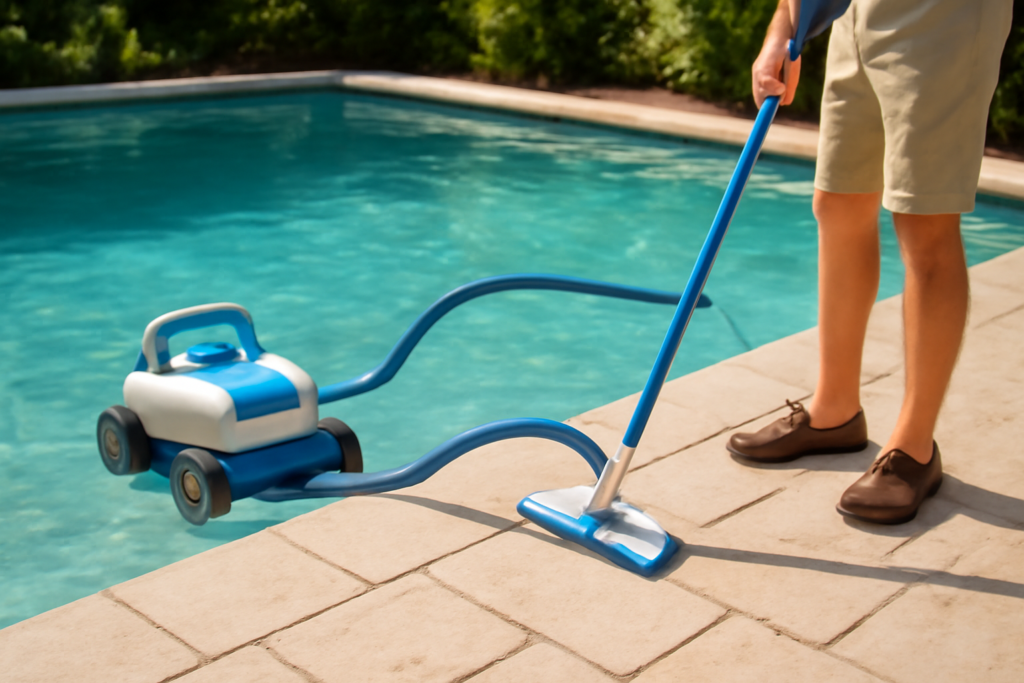
The single biggest factor in keeping a pool clean with less work is matching the vacuum to your pool, not buying the most expensive model on the shelf. Finding the best swimming pool vacuum starts with understanding the four main types, manual, suction-side, pressure-side, and robotic, because each cleans differently and suits different pools and budgets. Pick the wrong type and you will fight your equipment; pick the right one and your pool practically maintains itself. This guide breaks down each option and the features that separate a good cleaner from a frustrating one.
Why Type Matters More Than Brand
Pool vacuums are not one-size-fits-all. Your pool’s size, shape, surface, and the kind of debris you battle, fine sand versus leaves versus algae, all point toward a different type of cleaner. An above-ground vinyl pool surrounded by trees has different needs than an in-ground gunite pool in an open yard. Before comparing models, decide which category fits your situation.
Manual Pool Vacuums
A manual vacuum is the simplest and cheapest option. You attach a vacuum head to a telescoping pole and a hose connected to your skimmer or a dedicated suction line, then push it across the floor by hand like vacuuming a carpet. It uses your existing pump and filter for suction.
Manual vacuums excel at spot-cleaning and tackling stubborn algae or a specific dirty patch, because you control exactly where the head goes. The downside is labor, since cleaning a whole pool by hand takes 30 minutes to an hour. They cost roughly $30 to $100 for the head, hose, and pole, making them a smart backup even if you own an automatic cleaner.
Suction-Side Cleaners
Suction-side cleaners attach to the pool’s suction line, usually the skimmer, and use the existing pump to move themselves around and pull in debris. They are essentially automatic versions of the manual vacuum, wandering the pool floor and walls on their own.
- Pros: Affordable (often $100 to $400), few moving parts, good at picking up fine dirt and small debris.
- Cons: They rely on your pump and filter, so they add load to your system and can reduce skimmer performance. They handle leaves and large debris poorly.
Suction-side cleaners are a solid value for pools with mostly fine debris and an adequately sized pump.
Pressure-Side Cleaners
Pressure-side cleaners connect to the return line, the jet that pushes water back into the pool, and use that pressure to drive themselves and to power their own collection bag. Because they trap debris in their own bag rather than in your filter, they keep your filter cleaner.
These cleaners shine at handling larger debris like leaves, acorns, and twigs, which makes them ideal for pools near trees. Many require a separate booster pump, which adds cost and energy use. Expect to pay roughly $300 to $700, plus the booster pump if needed. Their own debris bag means less strain on your main filtration.
Robotic Pool Cleaners
Robotic cleaners are self-contained units that run on low-voltage electricity, completely independent of your pool’s pump and filter. They have their own motor, drive system, and internal filter basket, and the smartest models map the pool and scrub floors, walls, and the waterline.
- Pros: Best overall cleaning, energy efficient, scrub surfaces, reduce strain on your pool system, and many are programmable.
- Cons: Highest upfront cost, typically $500 to $1,500-plus, and the electronics require careful storage out of the sun.
For homeowners who want hands-off cleaning and the best results, a robotic cleaner is usually worth the investment. You simply drop it in, let it run, and empty the basket afterward.
Key Features to Compare
Within any category, certain features separate a great cleaner from a mediocre one:
- Pool surface compatibility: Some cleaners are tuned for vinyl, others for gunite, tile, or fiberglass. Check the rating before buying.
- Pool size and shape: Confirm the cleaner is rated for your pool’s length and can handle steps, slopes, and deep ends.
- Debris type: Fine dirt favors suction or robotic; heavy leaf load favors pressure-side or a robot with a large basket.
- Cleaning coverage: Floor-only versus floor, walls, and waterline. Wall and waterline scrubbing keeps the whole pool cleaner.
- Filter or bag capacity: Bigger capacity means fewer empties between runs.
- Energy use: Robotic units typically draw far less power than running a booster pump for a pressure cleaner.
Care and Maintenance
Whatever you buy, a little upkeep keeps it working. Empty the bag or filter basket after every cycle so suction stays strong. Rinse debris collection components and check for clogs in the hose or intake. Store robotic and electronic units out of direct sun and away from chemicals, since UV and chlorine fumes degrade plastics and electronics. Inspect hoses, wheels, and brushes seasonally and replace worn parts before they affect cleaning.
Above-Ground vs. In-Ground Pools
The type of pool you own narrows your choices more than any other factor. Above-ground pools, usually with vinyl liners, need cleaners rated as liner-safe and sized for their flatter floors and shallower depths. Many manual, suction-side, and robotic units are made specifically for above-ground use; pressure-side cleaners are less common here. In-ground pools, with their varied depths, slopes, steps, and surfaces, benefit from cleaners that climb walls and handle the deep end, where robotic and pressure-side units excel. Always confirm a cleaner is rated for your pool type and surface before buying, since the wrong match can damage a liner or simply fail to clean properly.
Manual vs. Automatic: Which Do You Need?
Even if you buy an automatic cleaner, owning a manual vacuum is wise. Automatic cleaners excel at routine maintenance, the daily and weekly removal of dust, dirt, and debris, but they struggle with concentrated messes. After a storm dumps leaves, or when you spot a patch of algae, a manual vacuum lets you target the problem directly and thoroughly. Think of the automatic cleaner as your everyday workhorse and the manual vacuum as your tool for problem-solving. Together they cover every situation a pool throws at you.
Budgeting Beyond the Purchase Price
The sticker price is only part of the cost. Suction-side cleaners are cheap to buy but add load to your pump, raising energy use. Pressure-side cleaners may require a separate booster pump, which adds both upfront and ongoing electricity costs. Robotic cleaners cost the most upfront but run on low-voltage power independent of your pool system, often making them the most energy-efficient over time. Factor in replacement parts too, brushes, wheels, hoses, and filter bags wear out and need occasional replacement on every type.
The Bottom Line
There is no single best swimming pool vacuum, only the best one for your pool. Choose a manual vacuum for cheap spot-cleaning and backup, a suction-side cleaner for fine debris on a budget, a pressure-side cleaner for leaf-heavy yards, and a robotic cleaner for the most thorough, hands-off results. Match the type to your pool’s surface, size, and debris, weigh the running costs as well as the price, keep the filter or bag empty, and the right cleaner will save you hours every week.