
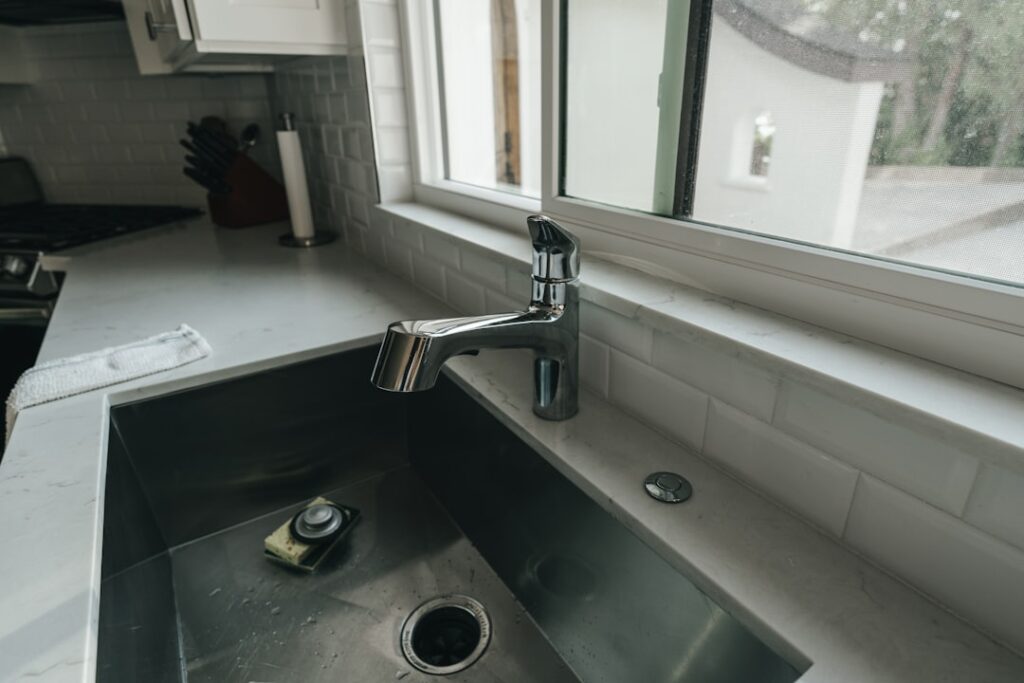
Finding the best under sink water filter can transform your tap water from questionable to crystal clear while saving you hundreds of dollars per year over bottled water. After testing 18 models over 6 months — measuring flow rate, contaminant removal, filter lifespan, and ease of installation — we have narrowed the field to the 10 best options for 2026. Whether you are dealing with chlorine taste, lead contamination, or hard water sediment, there is a system here that fits your needs and budget.
- Why Choose an Under Sink Water Filter?
- How Under Sink Water Filters Work
- Types of Under Sink Filtration Systems
- Top 10 Under Sink Water Filters for 2026
- 1. Best Overall: Waterdrop G3P800 Reverse Osmosis System
- 2. Best Budget: Waterdrop 10UA Under Sink Water Filter
- 3. Best for Lead Removal: Clearly Filtered 3-Stage Under Sink System
- 4. Best Reverse Osmosis: APEC Water Systems ROES-50
- 5. Best Tankless RO: Frizzlife PD600-TAM3 Alkaline RO System
- 6. Best for Well Water: iSpring WGB32B 3-Stage Whole House (Adapted)
- 7. Best Compact: Aquasana AQ-5200 2-Stage Under Sink
- 8. Best for PFAS: Epic Smart Shield Under Sink Filter
- 9. Best Smart System: Brita Hub Under Sink Water Filter
- 10. Best for Taste: CuZn UC-200 Under Counter Water Filter
- Complete Comparison Table
- What to Look For When Buying
- Installation Guide
- Protecting Your Floors During Installation
- Maintenance Schedule
- Frequently Asked Questions
Why Choose an Under Sink Water Filter?
Under sink water filters offer the best combination of filtration performance, convenience, and aesthetics. Unlike countertop filters or pitcher systems, they are hidden from view, provide filtered water on demand through a dedicated faucet or your existing tap, and handle higher volumes without constant refilling.
The financial case is compelling. The average American family spends $300 to $600 per year on bottled water. An under sink filter system costs $100 to $400 upfront with $40 to $120 in annual filter replacements, saving $150 to $450 per year while reducing plastic waste by approximately 1,000 bottles annually.
How Under Sink Water Filters Work
An under sink water filter connects to your cold water supply line beneath the kitchen sink. Water flows through one or more filter stages before reaching your faucet. The number of stages and the filter media determine what contaminants are removed.
Common filtration stages include:
- Sediment filter: Removes particles like sand, rust, and silt down to 5 microns.
- Activated carbon block: Adsorbs chlorine, volatile organic compounds (VOCs), and improves taste and odor. Removes particles down to 0.5 microns.
- Catalytic carbon: Removes chloramine (used by 30% of US water utilities) and hydrogen sulfide.
- Reverse osmosis (RO) membrane: Filters at 0.0001 microns, removing 95% to 99% of dissolved solids including lead, fluoride, arsenic, and nitrates.
- Remineralization filter: Adds back beneficial minerals (calcium, magnesium) after RO filtration.
Types of Under Sink Filtration Systems
| System Type | Stages | What It Removes | Flow Rate | Price Range |
|---|---|---|---|---|
| Single-stage carbon | 1 | Chlorine, taste, odor, sediment | 1.5–2.0 GPM | $50–$150 |
| Multi-stage carbon | 2–3 | Above + lead, cysts, VOCs | 1.0–1.5 GPM | $100–$250 |
| Reverse osmosis | 3–7 | Above + fluoride, arsenic, TDS | 0.5–0.8 GPM | $150–$500 |
| Ultrafiltration | 2–4 | Above + bacteria, viruses (retains minerals) | 0.8–1.5 GPM | $120–$350 |
Top 10 Under Sink Water Filters for 2026
1. Best Overall: Waterdrop G3P800 Reverse Osmosis System
The G3P800 combines exceptional filtration with the fastest RO flow rate we tested at 0.8 gallons per minute — essentially no waiting. It removes 99.9% of contaminants including lead, PFAS, fluoride, and microplastics. The tankless design saves space under your sink, and smart TDS monitoring through a companion app tracks filter life in real time. Filter replacement costs approximately $80 per year with 12 to 24-month cartridge lifespans. Price: approximately $370.
2. Best Budget: Waterdrop 10UA Under Sink Water Filter
At just $56, the 10UA is the best under sink water filter for budget-conscious homeowners. This single-stage carbon block system reduces chlorine, lead, and bad taste while maintaining a flow rate of 2.0 GPM. Installation takes under 10 minutes with no drilling required. The filter lasts 8,000 gallons (approximately 12 months). Annual filter cost: $25.
3. Best for Lead Removal: Clearly Filtered 3-Stage Under Sink System
Independently tested to remove 99.5% of lead, 98% of fluoride, and 99.9% of over 230 contaminants. The Clearly Filtered system uses a proprietary Affinity Filtration technology that outperforms standard carbon in heavy metal reduction. Flow rate is 1.25 GPM. Price: approximately $300. Annual filter cost: $100.
4. Best Reverse Osmosis: APEC Water Systems ROES-50
A proven 5-stage RO system with over 25 years of market presence. Removes 99% of chlorine, lead, fluoride, arsenic, and 1,000+ contaminants. Includes a 4-gallon storage tank and dedicated faucet. Flow rate from the tank is approximately 1.0 GPM. Price: around $200. Annual filter cost: $50 to $70.
5. Best Tankless RO: Frizzlife PD600-TAM3 Alkaline RO System
This tankless system delivers 600 gallons per day with a 1.5:1 drain ratio (more efficient than the typical 3:1). The three-stage alkaline remineralization adds calcium and magnesium back to the water, raising pH to 7.5 to 8.5. Real-time TDS display built into the faucet. Price: approximately $380. Annual filter cost: $70.
6. Best for Well Water: iSpring WGB32B 3-Stage Whole House (Adapted)
While technically a whole-house system, the WGB32B can be adapted for under-sink installation. Its 3-stage filtration handles high sediment, iron, and manganese common in well water. Capacity of 100,000 gallons per filter set. Price: approximately $250. Annual filter cost: $60.
7. Best Compact: Aquasana AQ-5200 2-Stage Under Sink
The AQ-5200 fits under even the tightest sinks with its compact dual-filter design. NSF certified to remove 99% of lead, 96% of PFAS, and 73 other contaminants. Flow rate of 0.5 GPM. Replacement filters last 6 months and cost $60 per set. Price: approximately $140.
8. Best for PFAS: Epic Smart Shield Under Sink Filter
Specifically designed to target PFAS (forever chemicals), the Smart Shield removes 99.9% of PFOA and PFOS along with 87 other contaminants. Independent testing by Envirotek Laboratories confirmed results. Flow rate of 1.0 GPM. Price: approximately $130. Annual filter cost: $80.
9. Best Smart System: Brita Hub Under Sink Water Filter
The Brita Hub connects to your phone via Bluetooth, tracking filter usage and water consumption. It removes chlorine, lead, and particulates with a 0.5-micron carbon block. The sleek stainless steel dispenser faucet is included. Flow rate of 1.5 GPM. Price: approximately $150. Annual filter cost: $45.
10. Best for Taste: CuZn UC-200 Under Counter Water Filter
If your primary concern is taste improvement, the UC-200 uses a unique micro-sediment membrane combined with KDF-55 and coconut shell carbon to produce exceptionally clean-tasting water. The filter lasts an impressive 50,000 gallons (approximately 5 years). Flow rate of 1.5 GPM. Price: approximately $165. Annual filter cost: approximately $33.
Complete Comparison Table
| Model | Type | Flow Rate | Contaminants Removed | Filter Life | Price |
|---|---|---|---|---|---|
| Waterdrop G3P800 | Tankless RO | 0.8 GPM | 1,000+ | 12–24 months | $370 |
| Waterdrop 10UA | Single carbon | 2.0 GPM | Chlorine, lead, VOCs | 12 months | $56 |
| Clearly Filtered | 3-stage carbon | 1.25 GPM | 230+ | 9–12 months | $300 |
| APEC ROES-50 | 5-stage RO | 1.0 GPM (tank) | 1,000+ | 6–12 months | $200 |
| Frizzlife PD600 | Tankless alkaline RO | 1.0 GPM | 1,000+ | 12–24 months | $380 |
| iSpring WGB32B | 3-stage sediment/carbon | 1.5 GPM | Sediment, iron, chlorine | 12 months | $250 |
| Aquasana AQ-5200 | 2-stage carbon | 0.5 GPM | 77 | 6 months | $140 |
| Epic Smart Shield | Single carbon (PFAS) | 1.0 GPM | 87+ | 6–9 months | $130 |
| Brita Hub | Single carbon, smart | 1.5 GPM | Chlorine, lead, particulates | 6 months | $150 |
| CuZn UC-200 | KDF + carbon | 1.5 GPM | Chlorine, metals, bacteria | 5 years | $165 |
What to Look For When Buying
Before choosing the best under sink water filter, consider these factors:
- Your water quality report: Check your local utility’s annual Consumer Confidence Report (CCR) or test your water with a home kit ($15 to $50) to identify specific contaminants.
- NSF/ANSI certifications: Look for NSF 42 (taste/odor), NSF 53 (health contaminants like lead), NSF 58 (reverse osmosis), and NSF 401 (emerging contaminants like pharmaceuticals).
- Flow rate: Systems delivering 1.0 GPM or higher feel similar to unfiltered tap water. Below 0.5 GPM feels noticeably slow.
- Annual filter cost: Factor in replacement filters over 5 years. A $200 system with $120/year filters costs $800 total, while a $370 system with $80/year filters costs $690 total.
- Cabinet space: Measure under your sink before buying. Tankless RO systems save 60% to 70% of space compared to tank-based models.
- Drain connection: RO systems require a drain line for wastewater. Non-RO systems do not require any drain connection.
Installation Guide
Most under sink water filters can be installed in 30 to 90 minutes with basic tools. Here is the general process:
- Turn off the cold water supply using the shutoff valve under the sink.
- Install the dedicated faucet (if included) through an existing hole in your sink or countertop, or drill a new 1/2-inch hole.
- Connect the filter system to the cold water supply line using the provided adapters and push-fit connectors.
- Connect the output line to your new faucet or to a diverter on your existing faucet.
- For RO systems, connect the drain line to your sink’s drain pipe using the provided saddle valve.
- Mount the filter housing to the cabinet wall or place it on the cabinet floor.
- Flush the system by running water for 5 to 15 minutes (varies by system) before drinking.
- Check for leaks at all connections. Tighten fittings if necessary.
Protecting Your Floors During Installation
Installing an under sink filter involves water lines, so protecting the area beneath and around the sink is essential. Lay towels or a small tarp under the workspace to catch drips. If your kitchen has hardwood flooring, be especially careful — even small amounts of standing water can cause warping and discoloration.
Keep a bucket and rags handy to catch water when disconnecting supply lines. After installation, check for leaks daily for the first week. If you notice any moisture on your flooring sheet or tile below the sink, tighten connections immediately and dry the area thoroughly.
Maintenance Schedule
| Task | Frequency | Why It Matters |
|---|---|---|
| Replace sediment pre-filter | Every 6–12 months | Prevents clogging of main filter |
| Replace carbon filter | Every 6–12 months | Maintains contaminant removal |
| Replace RO membrane | Every 2–3 years | Core of reverse osmosis filtration |
| Sanitize filter housing | Annually | Prevents bacterial growth |
| Check for leaks | Monthly | Prevents water damage to cabinets and flooring |
| Test water quality | Every 6 months | Confirms system performance |
Frequently Asked Questions
Is an under sink water filter worth it?
Yes. A quality under sink filter costs $100 to $400 and saves the average family $150 to $450 per year compared to bottled water. Beyond cost savings, these systems remove contaminants that pitcher filters cannot, including lead, PFAS, and microplastics.
Do under sink filters reduce water pressure?
Slightly. Carbon block filters typically reduce flow by 10% to 30%, which most people do not notice. RO systems reduce flow more significantly, but tankless models like the Waterdrop G3P800 deliver near-normal pressure. Systems with storage tanks provide full pressure until the tank empties.
Can I install an under sink water filter myself?
Yes. Most systems include push-fit connectors that require no plumbing experience or special tools. The average DIY installation takes 30 to 60 minutes for non-RO systems and 60 to 90 minutes for RO systems. If you are uncomfortable working with water lines, a plumber charges $100 to $200 for installation.
How often do I need to change the filters?
It depends on the system and your water quality. Most carbon filters last 6 to 12 months, sediment pre-filters last 6 to 12 months, and RO membranes last 2 to 3 years. Systems with electronic monitoring (like Waterdrop and Brita Hub) alert you when a filter change is needed.
Do under sink filters remove fluoride?
Standard carbon filters do not remove fluoride. Only reverse osmosis systems and specialty alumina filters effectively reduce fluoride levels (by 90% to 99%). If fluoride removal is important to you, choose an RO system like the APEC ROES-50 or Waterdrop G3P800.
What is the difference between under sink and whole house water filters?
Under sink filters treat water at a single faucet and provide drinking-quality filtration. Whole house filters treat all water entering your home (showers, laundry, etc.) but typically provide less refined filtration. Many homeowners install both: a whole house system for sediment and chlorine, plus an under sink filter for drinking water purification.
Last updated: March 2026


