
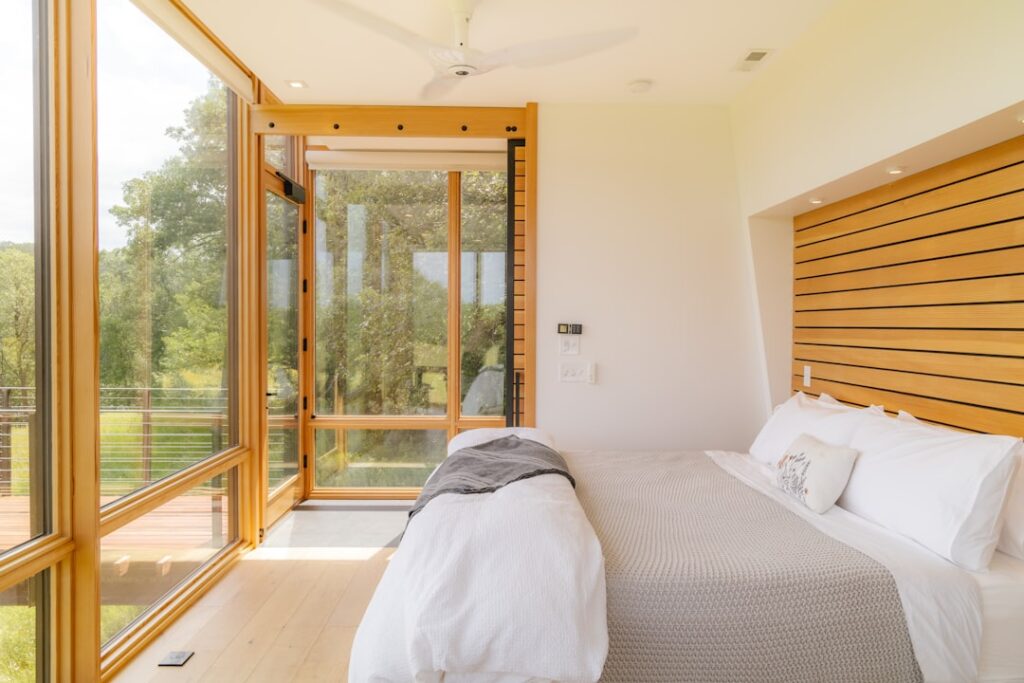
The difference between an amateur paint job and a professional one is not skill, it is process. Watch a pro paint a 12 by 14 bedroom and you will see the same sequence every time, executed in about 6 hours including cleanup. The best way to paint a room follows a deliberate order of operations that prevents drips, lap marks, and the dreaded picture-framing effect that ruins so many DIY projects.
This guide walks through the exact sequence pro painters use, with specific products and prices. Plan to spend $100 to $250 on materials for a typical bedroom and 6 to 10 hours of total time across two days.
Tools and Materials Worth Buying
Cheap paint tools cost you twice. Bargain rollers shed lint into the wet finish, throwaway brushes leave bristle marks, and contractor-grade tape pulls paint off when removed. Spend a little more once and reuse the same kit for years.
- Purdy XL Glide 2.5-inch angled brush: $18, the only brush you need for cutting in
- Wooster 9-inch microfiber roller covers: $9 each, lint-free finish
- Wooster Sherlock roller frame: $14, locks covers tight
- FrogTape Multi-Surface 1.41-inch: $9, prevents bleed under edge
- Behr Premium Plus Ultra paint: $42 per gallon, primer included
- Heavy canvas drop cloth: $25 for 9×12, reusable for decades
Skip plastic drop cloths entirely. They tear, slide underfoot, and let drips bleed through to the floor. A canvas drop cloth lasts 20+ years.
Wall Preparation Sets the Final Quality
The single biggest mistake DIYers make is rushing past prep to get to the fun part. Pros spend roughly half the total project time on prep because every defect in the wall shows through fresh paint, magnified by lighting.
- Remove outlet covers, switch plates, and curtain hardware
- Move furniture to the center of the room and cover with plastic
- Lay canvas drop cloth wall-to-wall along baseboards
- Wipe walls with damp cloth to remove dust and cobwebs
- Patch nail holes with lightweight spackle, sand smooth at 220 grit
- Spot-prime patches with stain-blocking primer like Kilz
- Tape off ceilings, baseboards, and trim with FrogTape
Run a fingernail along every taped edge to seal it tight. Air gaps under the tape are where bleed-through happens.
Cutting In: The Edge Work
Cut in all edges before rolling. Pros use a 2.5-inch angled brush loaded one-third deep into the paint. Tap the brush against the can rim rather than wiping it on the edge to keep more paint on the bristles.
Start in a corner and work along the ceiling, drawing the brush in a smooth sweep with the long bristles touching the corner. Apply a band 2 to 3 inches wide around all ceilings, baseboards, windows, doors, and corners. Cut in one wall at a time and roll it before the cut-in dries to prevent visible lap lines.
Rolling Technique That Eliminates Streaks
The classic W or M pattern that home improvement shows demonstrate is a starting point, not the finishing technique. Load the roller fully (until it stops absorbing), distribute paint with a W pattern across a 4-foot square section, then smooth in straight overlapping vertical strokes from ceiling to floor.
- Always maintain a wet edge by working in 4-foot sections
- Final strokes should always be top-to-bottom in one direction
- Overlap each pass by about 1 inch
- Apply medium pressure, let the roller do the work
- Reload roller before it starts dragging
Two coats are standard for any color change. Allow 4 hours between coats with most modern latex paints, longer in cool or humid conditions.
Painting Order Within the Room
The best way to paint a room follows a top-down sequence to prevent splatter from contaminating finished surfaces. Skip the order and you will repaint sections that got speckled.
- Ceiling first, in two coats with a flat ceiling paint
- Trim and doors second (use semi-gloss or satin)
- Walls last, in two coats of your chosen color and sheen
Some pros reverse trim and walls if the trim color is already correct. The advantage of trim-second order is that you can be sloppier with wall paint near baseboards because trim paint covers any over-spray.
Choosing the Right Sheen
Sheen affects both appearance and washability. Match the sheen to the room’s use, not just personal preference.
- Flat or matte: Hides wall imperfections, hard to clean. Best for ceilings and adult bedrooms
- Eggshell: Slight sheen, moderate washability. Best for living rooms and dining rooms
- Satin: Subtle gleam, good wash. Best for kids rooms, hallways, and bathrooms
- Semi-gloss: Reflective, very washable. Best for trim, doors, and kitchen walls
- High gloss: Mirror finish. Best for accent doors and cabinetry only
Glossier sheens highlight every wall imperfection while flatter sheens hide them. If your walls have texture or patches, lean toward eggshell at the highest sheen.
Removing Tape Without Tearing the Paint
Pull tape while the final coat is still slightly tacky, about 30 to 60 minutes after rolling. Tape removed from fully cured paint can pull dried paint off in strips along the edge.
Pull tape at a 45-degree angle to the wall, slowly and steadily. If paint starts to lift, score the edge lightly with a utility knife to break the bond before continuing. Remove all tape before leaving the room for the day.
Cleanup That Saves Your Tools
Quality brushes and roller covers last 50+ jobs if cleaned properly. The trick is washing them within an hour of finishing while paint is still soft.
- Roll excess paint back into the can or onto cardboard
- Rinse brushes and rollers in warm water until water runs clear
- Spin or wring out water completely
- Wrap brushes in original packaging to maintain bristle shape
- Hang roller covers to dry, never store wet in plastic
For oil-based paints, use mineral spirits instead of water. Dispose of solvent waste at a hazardous waste facility, never down drains.
Frequently Asked Questions
Do I need primer before painting?
Only when covering dramatic color changes, stained surfaces, or fresh patches. Modern paint-and-primer-in-one products handle most repaints without separate primer.
How much paint do I need?
One gallon covers about 350 square feet in one coat. Multiply room perimeter by ceiling height, subtract doors and windows, then multiply by 2 for two coats.
Should I paint the ceiling the same color as the walls?
For low ceilings, yes. The visual continuity makes the room feel taller. For tall ceilings, white or a lighter shade keeps the room feeling open.
Can I paint over wallpaper?
Only if the wallpaper is firmly bonded with no peeling edges. Skim coat seams and prime with shellac-based primer like Zinsser BIN before painting.
How long should I wait between coats?
Most modern latex paints recoat in 2 to 4 hours. Wait the full recommended time on the can label, longer in cool or humid weather.


