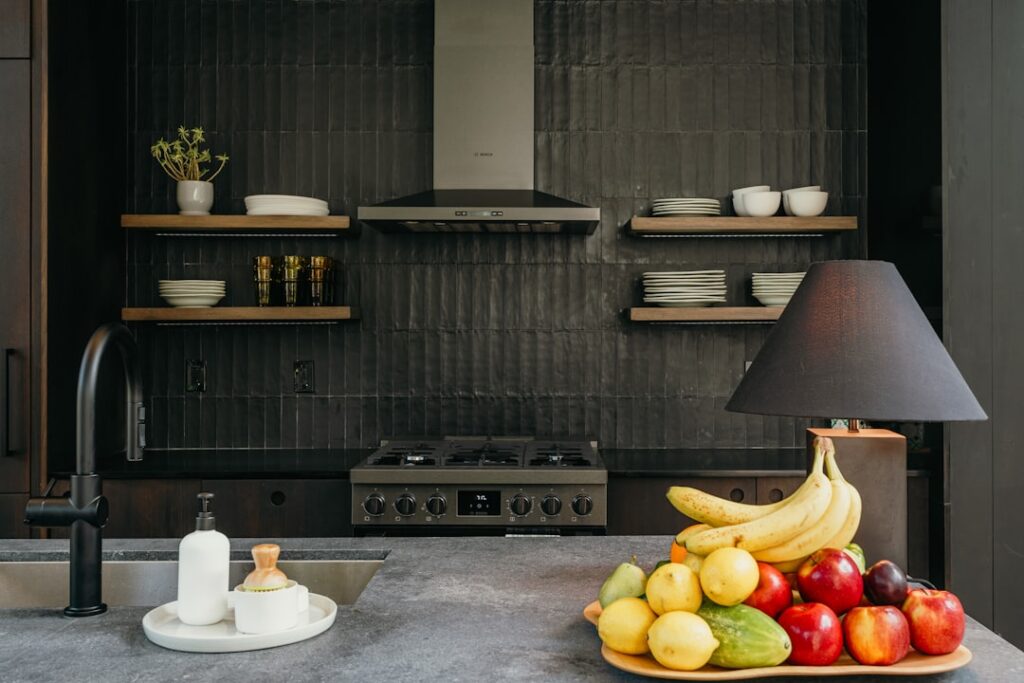
Black backsplash tile turns the wall behind your counters into a design statement. Where a neutral backsplash quietly recedes, black draws the eye, grounds the room, and makes cabinetry, countertops, and brass or chrome hardware pop with contrast. It is one of the fastest ways to give a kitchen or bathroom a modern, high-end feel.
It is also a finish that rewards planning. Black shows fingerprints, water spots, and grout lines differently than lighter tile, so the right material and layout make all the difference between dramatic and dingy.
Why Homeowners Choose Black
Contrast is the headline benefit. Against white or light wood cabinets, a black backsplash creates a crisp, graphic look that reads as intentional and contemporary. Paired with dark cabinets, it produces a moody, monolithic effect that designers love right now.
Black also hides certain stains better than light tile, masking coffee splatters and sauce splashes that would show plainly on white subway tile. It flatters warm metals, marble countertops with bold veining, and pendant lighting, all of which stand out more sharply against a dark field.
Popular Materials
The material you choose shapes both the look and the upkeep.
- Ceramic and porcelain: The workhorses. Affordable, durable, easy to clean, and available in countless shapes from subway to hexagon. Porcelain is denser and better for heavy-use kitchens.
- Glass: Reflects light, which keeps a black wall from feeling heavy, and wipes clean instantly. Slightly pricier and shows water spots.
- Natural stone: Black granite, slate, or soapstone bring depth and unique variation but are porous and need sealing.
- Marble: Black marble like Nero Marquina offers striking white veining and luxury appeal, though it requires careful sealing and gentle cleaners.
Finish Matters More Than You Think
Black comes in glossy, matte, and textured finishes, and each behaves differently. Glossy tile bounces light around, making a small kitchen feel larger and brighter, but it shows every fingerprint and water droplet. Matte black is sophisticated and forgiving of smudges, though it can read flat in a poorly lit room. Textured or three-dimensional tile, like fluted or zellige styles, adds shadow and craftsmanship but collects more grease near the cooktop.
For a busy cooking zone, matte or satin hides daily mess best. For a statement wall in good light, glossy delivers maximum drama.
Choosing the Right Grout
Grout color quietly controls the entire result. Three approaches work well.
- Black grout: Creates a seamless, monolithic look where individual tiles nearly disappear. Sleek and modern, and it hides kitchen grime.
- Gray grout: A middle path that softens the grid without the harshness of white. Practical and forgiving.
- White or light grout: Maximizes contrast and shows off tile shape, ideal for subway or geometric patterns, but demands regular cleaning to stay sharp.
Use a stain-resistant epoxy or a quality sealed cement grout in kitchens to keep lines looking fresh.
Design Tips to Avoid a Heavy Look
Black absorbs light, so balance is key. Pair a dark backsplash with lighter countertops and cabinets, or with strong under-cabinet lighting, to keep the space from closing in. In smaller kitchens, glossy or glass tile reflects what light you have and prevents a cave-like feel.
Carry a hint of black elsewhere, in cabinet hardware, a faucet, or bar stools, so the backsplash feels like part of a scheme rather than an isolated dark patch. A little repetition makes the whole room feel curated.
Patterns and Layouts That Shine in Black
Layout shapes how a black backsplash reads. The classic horizontal subway pattern keeps things timeless and is the safest bet for resale. Stacked vertical or horizontal layouts feel sharper and more contemporary, while a herringbone or chevron arrangement adds movement and a custom, designer look that suits a focal wall.
Geometric shapes turn black into a feature in their own right. Black hexagons, picket pickets, and fish-scale tile create texture and rhythm, especially with a contrasting grout that traces the shape. For a seamless, ultra-modern effect, large-format black slabs or porcelain panels minimize grout lines entirely, giving a sleek, almost continuous surface behind the range.
How Black Works in Different Rooms
Kitchens are the obvious home for a black backsplash, but the same tile transforms other spaces. In a bathroom, black tile behind a vanity or floating sink reads as spa-like and dramatic, particularly with warm metal fixtures and good task lighting. A black accent strip or full wall in a powder room makes a small space feel intentional and rich rather than cramped.
Consider the room’s natural light before committing. A north-facing kitchen that gets little sun benefits from glossy or glass black tile that reflects what light there is, while a bright, sun-filled room can carry matte black beautifully. Matching the finish to the available light is the difference between a backsplash that feels luxurious and one that feels dim.
Cost Expectations
Black backsplash tile spans a wide range. Basic ceramic subway tile starts around $2 to $5 per square foot, porcelain and glass typically run $7 to $20, and premium marble or specialty zellige can reach $25 to $50 or more. Professional installation usually adds $10 to $20 per square foot depending on tile size and pattern complexity.
Since most backsplashes cover only 20 to 40 square feet, even a splurge tile stays affordable as a project, which is part of why a backsplash is such a high-impact upgrade for the money.
Keeping It Clean
Dark tile shows water spots and soap film more readily than light tile, simply because the contrast is greater, so a quick daily wipe keeps it looking sharp. Use a microfiber cloth and a streak-free cleaner rather than abrasive pads. Avoid harsh acidic cleaners on natural stone and marble; use a pH-neutral stone cleaner instead, and reseal porous materials once or twice a year. Glass and glazed ceramic need nothing more than routine wiping, which is one reason they remain the easiest black backsplashes to live with day to day. With the right material, finish, and grout, a black backsplash tile delivers years of bold, low-maintenance style that anchors the whole room.
Prefer to explore on your own?
See how new flooring looks in your actual room in seconds — free, no signup.
Try the free Floor Studio →