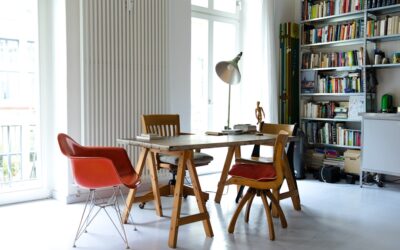
Few timber species split opinion the way blackbutt does. The pale, almost butter-yellow heartwood looks nothing like its smoky common name suggests, and homeowners chasing a Scandinavian-leaning palette keep coming back to it. Blackbutt engineered flooring takes that distinctive Australian eucalyptus and bonds it to a multi-ply substrate, which solves the cupping and gapping problems that plague solid blackbutt in dry, conditioned US homes. If you have been comparing it to white oak or hard maple, the differences run deeper than color.
What Blackbutt Engineered Flooring Actually Is
Blackbutt (Eucalyptus pilularis) is a hardwood native to the east coast of Australia, with a Janka rating around 2,160 lbf — meaningfully harder than red oak (1,290) and roughly on par with hickory. Engineered planks pair a 2mm to 6mm blackbutt wear layer with a birch, eucalyptus, or HDF core, finished with a UV-cured polyurethane or natural oil top coat.
Most boards arrive in widths of 7 to 9 inches and lengths up to 75 inches, with micro-bevels on all four sides. Total thickness usually sits between 14mm and 21mm, and the better products carry a tongue-and-groove or 5G click profile rated for floating, glue-down, or staple-down installation over plywood.
Color, Grain, and Visual Character
Color ranges from pale straw to a soft golden brown, with occasional pinkish streaks in the heartwood. Grain is mostly straight, the texture is medium and even, and gum veins show up as fine dark threads — not the dramatic cathedrals you get with oak. That subtlety is the selling point. Designers spec it for minimalist kitchens, coastal builds, and any room where you want timber warmth without the floor stealing focus.
Grades matter. Select grade hides most knots and color variation; standard or feature grade leans into the gum veins and small tight knots that give the species its personality. Order a sample box and lay 10 to 15 boards out before you commit.
The Real Pros
- Hardness: A 2,160 Janka rating shrugs off pet claws, dropped pans, and chair legs better than oak or walnut.
- Dimensional stability: The engineered build keeps movement under 0.5% across seasonal humidity swings, where solid blackbutt can move 1.2% or more.
- Light reflectance: Pale tones bounce daylight, making rooms feel taller and brighter without going stark white.
- Bushfire resistance: Blackbutt is one of seven Australian timbers approved for BAL-29 bushfire zones — a niche perk, but real.
The Drawbacks Worth Knowing
Sourcing is the first hurdle. Most US distributors carry European oak, hickory, or American walnut as their staple species, so blackbutt typically arrives by special order from importers like Hurford Hardwood, Australian Sustainable Hardwoods, or boutique resellers in California and Florida. Expect 6 to 12 week lead times.
Color shift is the second issue. Fresh blackbutt photographs pale, but UV exposure ambers the surface noticeably within the first 12 months. If you cover part of the floor with a rug for a year and pull it up, the contrast will be obvious. Rotate rugs every quarter for the first year to even things out.
Finally, repair work is harder than with mainstream species. A board damaged five years in may need to be sourced from a different lot, and color matching can be frustrating.
Pricing in 2026
Material costs run $9 to $16 per square foot for 14mm boards with a 3mm wear layer, climbing to $18 to $24 for 21mm products with a 6mm wear layer that can be sanded twice. Installation adds $4 to $7 per square foot for floating click systems, or $6 to $10 for full glue-down on slab. Plan another $2 to $4 per square foot for a moisture-cured urethane adhesive like Bostik GreenForce or Mapei Ultrabond ECO 995.
For a 600 sq ft open-plan area, an installed blackbutt engineered flooring project lands somewhere between $11,000 and $19,000 — comparable to mid-range white oak from Mirage or Lauzon.
Installation Notes from the Field
Acclimate the boxes flat-stacked in the install room for at least 72 hours, with HVAC running at the home’s normal year-round setpoints (68 to 72 °F, 35 to 55% RH). Test slab moisture with a calcium chloride or in-situ probe — readings need to fall under 4.5 lbs/1,000 sq ft/24 hours for glue-down.
Use a vapor-retarding underlayment (6-mil poly or a foil-faced foam) over slab. For floating installs above grade, leave a 1/2-inch perimeter expansion gap and break long runs over 30 feet with a transition.
Care and Long-Term Maintenance
Sweep or microfiber-mop weekly. For deeper cleaning, use a pH-neutral hardwood cleaner like Bona Pro or Loba Cleaner — never vinegar, ammonia, or steam. Felt pads under furniture and a walk-off mat at exterior doors are non-negotiable, and a humidifier in winter keeps the boards from contracting.
Oil-finished boards can be spot-repaired with a maintenance oil; UV-cured polyurethane finishes need professional screen-and-recoat every 7 to 10 years.
Comparing Blackbutt to Other Pale Hardwoods
White oak (Janka 1,360) is the obvious comparison and the floor most homeowners will look at first. Oak runs $6 to $11 per square foot in engineered form, takes stain in any direction, and is repairable with stock from any local distributor. Blackbutt costs roughly 50 percent more, hardness is 60 percent higher, and the natural color sits warmer and more saturated than oak’s cool grey-tinged base. Hard maple (Janka 1,450) is harder than oak but tends paler and grain-poor, suiting transitional looks more than coastal modern.
European beech and ash both come in around 1,300 Janka with similar pricing to oak. Neither matches blackbutt for hardness or for the distinctive sun-aged caramel tone that develops over the first 12 months.
Who Should Choose It
Blackbutt engineered flooring rewards homeowners who want a pale, tactile hardwood with serious durability and don’t mind paying a premium for something neighbors won’t have. If you need fast turnaround, broad availability, or budget pricing, white oak or hickory will serve you better. But for the right project — coastal modern, Japandi, minimalist contemporary — nothing else hits quite the same note.
Prefer to explore on your own?
See how new flooring looks in your actual room in seconds — free, no signup.
Try the free Floor Studio →