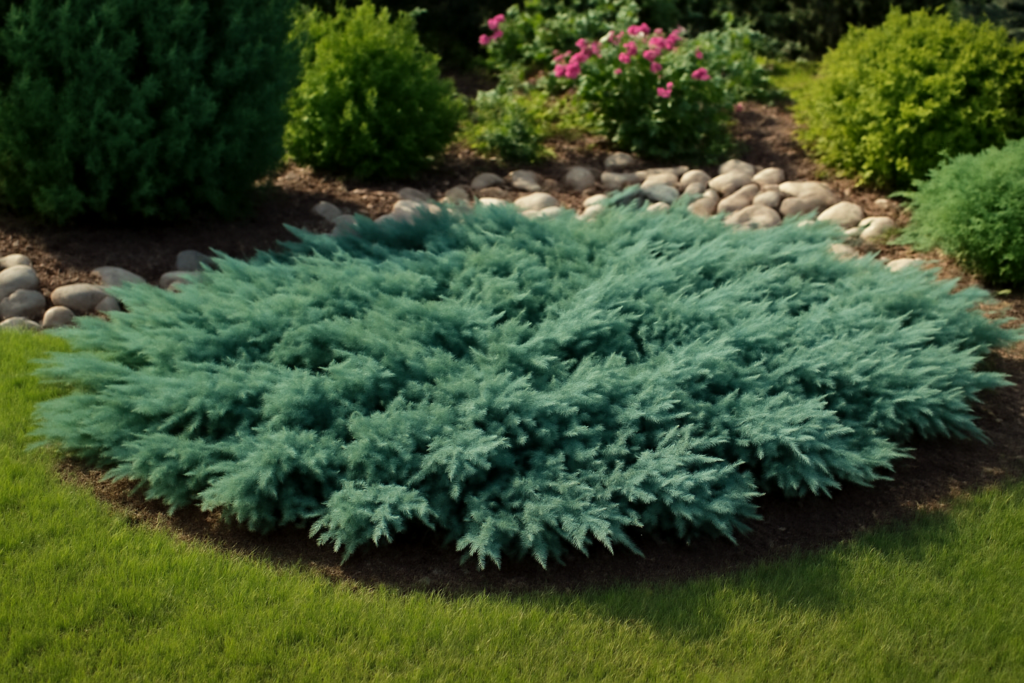
If you have a sunny slope, a rock garden, or a stretch of bare ground that erodes every time it rains, few plants solve the problem as gracefully as this low evergreen. Blue carpet juniper (Juniperus squamata ‘Blue Carpet’) is a fast-spreading, mat-forming ground cover prized for its dense, silvery blue-green needles that hold color year-round. It hugs the earth at just 8 to 12 inches tall while spreading 4 to 5 feet wide, smothering weeds and locking down soil on banks that mowers cannot reach. Despite the name, this is a hardy landscape shrub, not flooring, and once established it is about as low-maintenance as a living plant gets.
What Blue Carpet Juniper Looks Like
This cultivar forms a dense, flat mat of soft-textured foliage in a striking steel-blue to silver-blue shade that intensifies in cool weather and full sun. Mature plants stay low, rarely exceeding a foot in height, while spreading outward to roughly 4 to 5 feet. The needle-like foliage is evergreen, so the silvery color provides winter interest when most of the garden has gone dormant. It is hardy across USDA zones 4 through 8, tolerating temperatures well below 0°F.
Where to Plant It
Blue carpet juniper demands one thing above all: full sun. Give it at least six hours of direct sunlight daily, and ideally more, or the foliage thins, loses its blue cast, and becomes prone to disease. It thrives in:
- Sunny slopes and embankments for erosion control
- Rock gardens and gravel beds
- Borders and foundation edges as a spreading mat
- Containers and retaining-wall tops where it can cascade over the edge
The single most important requirement is well-draining soil. Junipers despise wet feet and will develop root rot in heavy, soggy clay. If your soil drains poorly, amend it with sand and gravel or build a raised berm.
Planting Step by Step
Plant in spring or early fall so roots establish before extreme heat or cold. Space plants 4 to 5 feet apart for full ground coverage, knowing they will fill in over two to three seasons. Dig each hole twice as wide as the root ball but no deeper, set the plant so the crown sits at or slightly above grade, backfill, and water in well. A 2- to 3-inch layer of mulch around (but not touching) the stems conserves moisture and suppresses weeds while the plants knit together.
Watering and Feeding
During the first growing season, water deeply once or twice a week to establish the root system, letting the top inch of soil dry between waterings. After the first year, blue carpet juniper is notably drought-tolerant and usually needs supplemental water only during prolonged dry spells. Overwatering is far more dangerous than underwatering. Feeding is minimal: a single application of a balanced slow-release fertilizer in early spring is plenty, and many gardeners skip it entirely once plants are established.
Pruning and Maintenance
One of this plant’s best features is how little pruning it needs. Trim only to control spread or remove dead, damaged, or diseased branches. When you do cut, prune back to a side branch within the green foliage; junipers do not reliably regenerate from old bare wood, so never cut back into the leafless interior expecting new growth. Spring is the ideal time for any shaping. Clear fallen leaves and debris off the mat in autumn to keep air circulating and discourage fungal issues.
Common Problems to Watch For
Healthy, sun-grown junipers in well-drained soil rarely struggle, but keep an eye out for a few issues. Root rot from soggy soil is the leading killer, so prioritize drainage. Spider mites can appear in hot, dry, dusty conditions, showing as stippled, bronzing foliage; a strong spray of water or horticultural oil controls them. Phomopsis and Kabatina tip blight cause browning branch tips, usually in damp, crowded plantings, and improve with better airflow and pruning of affected growth.
Companion Plants and Design Ideas
Blue carpet juniper plays well with a wide range of partners that share its love of sun and good drainage. Its cool silver-blue color contrasts beautifully against the warm tones of ornamental grasses like blue oat grass or feather reed grass, and against the chartreuse foliage of sedum or creeping jenny. In a rock garden, pair it with succulents, hens and chicks, and creeping phlox for a low-water tapestry. Along a foundation, it makes a tidy evergreen skirt beneath taller shrubs and roses. On a slope, mass-plant it in drifts for sweeping erosion control, or let it spill over the edge of a retaining wall or large container for a cascading effect that softens hard edges.
Propagation and Buying Tips
You can expand your planting cheaply by propagating from cuttings, though it takes patience. In late summer or fall, take 4- to 6-inch semi-hardwood cuttings, strip the lower needles, dip the cut end in rooting hormone, and insert into a well-draining mix of sand and perlite. Keep them humid and out of direct sun; rooting can take several months. For most homeowners, buying nursery stock is simpler. A 1-gallon container plant typically costs $15 to $30 and fills in within two to three seasons, while a larger 3-gallon plant gives quicker coverage for $30 to $50. When buying, choose plants with dense, evenly blue foliage and avoid any showing brown interior dieback or signs of pests.
Why Gardeners Love Blue Carpet Juniper
For a sunny, hard-to-plant area, blue carpet juniper checks nearly every box: evergreen color in all four seasons, excellent erosion control on slopes, strong weed suppression once filled in, deer resistance, and drought tolerance that means almost no watering after establishment. Pair it with ornamental grasses, sedums, or boulders for a low-water, low-maintenance landscape that looks intentional and stays attractive year-round. Plant it in the right sunny, well-drained spot, give it a season or two to spread, and this tough little juniper will quietly carpet your problem area for decades. The two non-negotiables are full sun and sharp drainage; get those right and the plant essentially takes care of itself, asking for nothing more than the occasional cleanup and a light spring trim. For homeowners tired of mulching, mowing, or replanting a troublesome slope every spring, few ground covers deliver this much year-round payoff for so little ongoing effort.