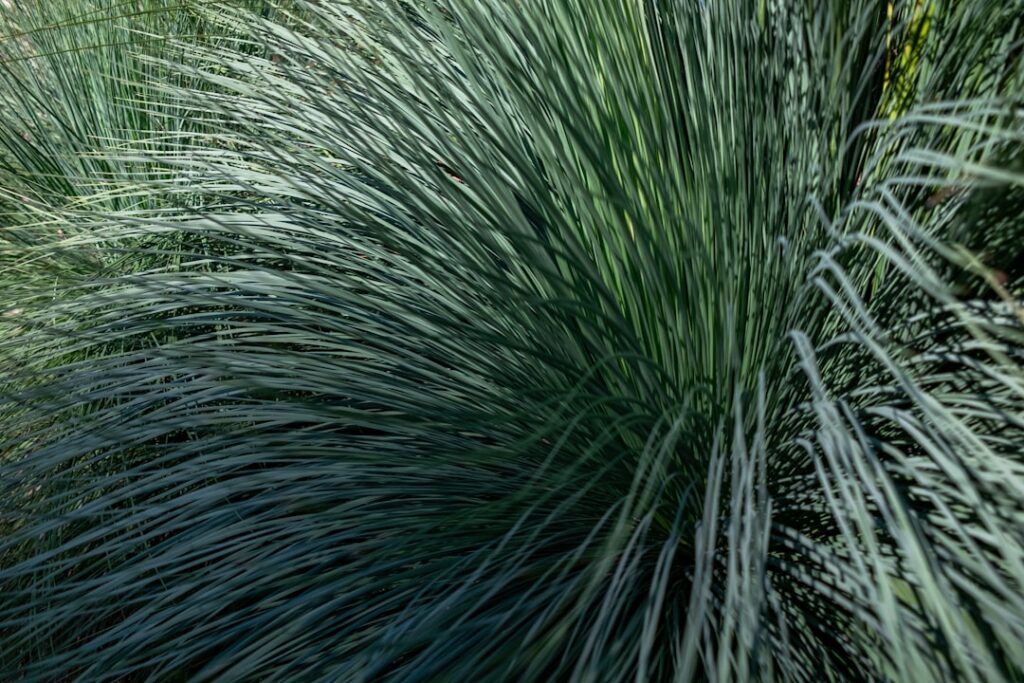
For a tidy pop of silvery-blue color that stays neat all season, blue fescue ornamental grass is one of the most useful small grasses you can plant. Known botanically as Festuca glauca, it forms compact, spiky mounds of fine, powder-blue foliage that look like little frosted pincushions dotted through a bed. It is drought-tolerant, deer-resistant, and low-maintenance, and its cool color pairs beautifully with almost anything. The one thing to understand up front is that blue fescue is a short-lived clumping grass that needs occasional division to stay vigorous and hold its best color.
- Hardiness and Climate
- Mature Size and Growth Rate
- Spacing
- Sun and Soil Requirements
- Planting Step by Step
- Watering and Feeding
- Keeping It Blue and Tidy
- Dividing to Refresh the Plant
- Best Cultivars for Reliable Color
- Growing Blue Fescue in Containers
- Pests and Common Problems
- Designing With Blue Fescue
Hardiness and Climate
Blue fescue is hardy in USDA zones 4 through 8, tolerating cold winters well. It is a cool-season grass, which shapes its whole growth pattern: it puts on most of its growth and shows its brightest blue in the cooler weather of spring and fall, and it can look tired or go semi-dormant during hot, humid summers. It performs best in climates with cool summers and struggles in the heat and humidity of the Deep South, where it often fizzles out. In the right climate, though, it is one of the most reliable little accent grasses available.
Mature Size and Growth Rate
This is a small, well-behaved grass. It forms neat clumps 8 to 12 inches tall in foliage, spreading 8 to 12 inches wide, with slender flower stalks pushing the height to about 12 to 18 inches in early summer. It grows at a moderate pace and, importantly, it clumps rather than spreading by runners, so it stays exactly where you plant it and never becomes invasive. That predictable, compact habit makes it perfect for edging, rock gardens, and mass plantings.
Spacing
Because the mounds stay small, space plants closely for a solid effect or a little farther apart to let each dome stand alone:
- As an edging or mass planting: space 8 to 12 inches apart for a continuous blue ribbon
- As individual accents: space 12 to 15 inches apart so each mound reads as a distinct dot
- In rock gardens and containers: single plants or tight clusters of three
Sun and Soil Requirements
Full sun is the key to the best blue color. Give it at least six hours of direct light a day; in shade the foliage turns greener and the plant grows loose and floppy. As for soil, blue fescue actually prefers lean, dry, well-drained conditions and resents rich, wet ground. Excellent drainage is essential, because the number one killer of blue fescue is soggy soil that rots the crown, especially over winter. It grows in sandy and gravelly soils that would starve other plants and tolerates a range of pH. If your soil is heavy clay, plant on a raised bed or mix in coarse grit to sharpen the drainage.
Planting Step by Step
Plant in spring or early fall. Dig a hole as deep as the root ball and twice as wide, set the crown at grade so it never sits in a depression that collects water, and backfill with native soil. Avoid piling on rich compost; lean soil produces the tightest, bluest plants. Water in to settle the roots, then water occasionally through the first season. Gravel mulch suits blue fescue especially well because it keeps the crown dry and shows off the blue color against the stone.
Watering and Feeding
Blue fescue is drought-tolerant once established and prefers to run on the dry side. Water new plantings occasionally through the first season to establish roots, then water only during extended dry spells. Overwatering is a far more common cause of failure than underwatering. Feeding needs are minimal to none; this grass thrives in poor soil, and fertilizer only pushes soft, floppy growth that loses the compact form and blue tone. Skip the fertilizer, or apply only a very light feeding in spring if the plants look weak.
Keeping It Blue and Tidy
A little seasonal grooming keeps blue fescue looking its best. In late winter or early spring, comb out or trim off the dead, tan foliage from the previous year to make room for fresh growth; you can shear the whole clump back to a few inches if it looks ragged. When the flower stalks appear in early summer, many gardeners cut them off, since some prefer the pure mound of blue foliage to the somewhat straw-colored flowers, though the flowers are attractive to others. Remove any brown, dead centers as clumps age.
Dividing to Refresh the Plant
This is the maintenance step that keeps blue fescue vigorous over the years. It is a short-lived grass, and clumps naturally die out in the center after two to three years, leaving a dead middle ring with living growth around the edges. The fix is division. Every two to three years, in spring or early fall, dig up the clump, discard the dead center, and split the healthy outer growth into several smaller divisions to replant. This rejuvenates the plant, multiplies your stock for free, and keeps the color at its brightest. Without division, blue fescue gradually thins and fades.
Best Cultivars for Reliable Color
Not all blue fescue is equally blue, so choosing a named cultivar bred for color intensity pays off. ‘Elijah Blue’ is the most popular selection, valued for its consistent powder-blue color and reliable performance; it is the one to look for if strong blue is your goal. ‘Boulder Blue’ offers an even more intense silver-blue tone, ‘Beyond Blue’ is noted for holding its color well through summer heat better than most, and ‘Golden Toupee’ breaks the mold with chartreuse-gold foliage for gardeners who want a different accent. Starting with a proven cultivar rather than a generic seed-grown plant gives you far more predictable color from the day it goes in the ground.
Growing Blue Fescue in Containers
This compact grass is a natural for container gardening, where its tidy size and cool color shine. Use a pot with excellent drainage and a gritty, fast-draining mix, since crown rot from soggy soil is just as much a threat in a container as in the ground. Place the pot in full sun for the best color, and water only when the mix has dried, treating it like the drought-tolerant plant it is. Blue fescue pairs beautifully in mixed containers with trailing plants and bright bloomers that pop against its silvery-blue foliage. Because container plants are exposed to more cold at the roots, in the colder end of its range move pots to a sheltered spot for winter, and refresh or divide the clump each spring to keep it vigorous.
Pests and Common Problems
Blue fescue is refreshingly free of serious pests and is notably deer-resistant, which makes it valuable in browsing country. Most problems are cultural rather than biological:
- Crown rot: from wet, poorly drained soil, the leading cause of death; fix with sharp drainage
- Dead centers: a normal sign the clump needs dividing
- Greening and flopping: caused by too much shade or overfeeding
- Summer decline: heat and humidity can make it look tired; it usually rebounds in fall
Designing With Blue Fescue
The cool blue color makes this grass a superb design partner. Use it as a crisp edging along a path or bed, mass it in drifts for a sea of blue, or dot it through a rock garden or gravel garden where its color plays off stone. It pairs strikingly with burgundy and gold foliage, with silvery companions, and with bright flowers that pop against the blue. In containers it adds fine texture and color that complements almost any other plant.
Blue fescue ornamental grass gives you a lot of style in a small, tough package. Plant it in full sun with excellent drainage, keep it on the lean and dry side, groom it each spring, and divide it every couple of years to refresh the color. Do that, and these little frosted-blue mounds will bring cool, clean texture to your garden season after season.