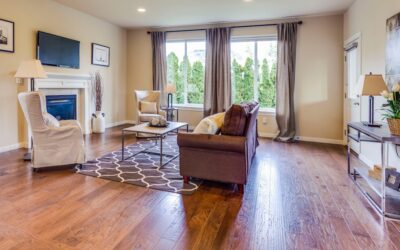
Brown is the single most requested color family in the luxury vinyl tile category, accounting for roughly 62% of US residential LVT sales tracked by Floor Covering Weekly in 2025. Brown LVT flooring covers a huge range of looks, from pale cappuccino oak through chestnut and walnut to nearly black espresso, and the visual quality you get for $2.79 to $7.99 per square foot now rivals engineered hardwood at three times the price. Pick the wrong wear layer or the wrong undertone, though, and you end up with a floor that yellows under west-facing windows or scratches the first time a chair drags across it.
Why Brown Dominates LVT Sales
Brown reads as warm and forgiving in almost any room. It hides crumbs, pet hair, and the occasional muddy paw print better than gray or white-washed planks, and it pairs naturally with white trim, oak cabinets, and most stone counters. Real estate agents in the Northeast and Midwest also report that brown LVT photographs better for listings than cool gray, which has started to feel dated after a decade of dominance.
Manufacturers know this, so the broadest design libraries sit in the brown family. Shaw alone catalogs over 80 brown SKUs across the Floorte Pro and Anvil lines, and COREtec offers more than 50 brown options across the Pro Plus, Premier, and Originals series. That depth gives you room to match an exact undertone rather than settling for the nearest color.
Undertones Matter More Than Stain Names
Most installation regrets come down to undertone, not shade. Brown LVT splits into three main families: red-brown (mahogany, cherry, hickory), neutral-brown (oak, walnut), and yellow-brown (pine, golden oak). Hold a sample next to your trim and cabinets in actual room light before ordering — fluorescent showroom lighting pushes nearly every plank toward warmer yellow, which is misleading once you get the box home.
For homes with a lot of natural cherry or pine, choose a neutral-brown plank to avoid a competing red cast. With white shaker cabinets, almost any undertone reads clean. With dark espresso cabinets, a mid-brown oak prevents the floor from disappearing into the lower wall.
Construction You Should Demand
- SPC core at 4mm to 7mm — the rigid stone-polymer base resists denting under heavy furniture better than WPC
- 20-mil wear layer minimum for households with kids, dogs, or rolling office chairs; 12-mil is fine for guest bedrooms
- Attached IXPE or cork underlayment at 1mm to 1.5mm to dampen footfall noise on second floors
- Painted bevel edges matching the plank color, not raw white core showing through
- Embossed-in-register texture so the grain lines align with the print pattern rather than running across it
Pros That Earn the Money
Waterproof construction is the headline benefit, and unlike laminate, modern LVT can sit in standing water for 72 hours without swelling. That makes brown LVT the default choice for kitchens, mudrooms, basements, and any bathroom that gets daily shower use. Pair it with a heavy-duty silicone seal at tub and toilet flanges and you have a genuinely worry-free floor.
Installation is faster and cheaper than nail-down hardwood. A two-person crew can lay 600 square feet in a single day using the click-lock system, and you can walk on it immediately. DIYers routinely tackle 200 square foot rooms over a weekend for around $1.50 per square foot in tools and prep materials.
Cons You Need to Plan Around
Brown LVT shows scratches more obviously than gray once the wear layer is breached. Chair feet need felt pads, pet nails need trimming, and grit at exterior doors will dull the surface within 18 months without rugs. Repair is also limited — you cannot sand and refinish like hardwood. A damaged plank gets replaced, which is why you should keep two unopened boxes from the original lot for future repairs.
Direct sunlight is the other watch-out. Some lower-grade prints fade noticeably after two summers in a south-facing room. Look for UV-cured urethane wear layers and check the manufacturer’s lightfastness rating before committing to a sunroom or sliding-door installation.
Cost Per Square Foot in 2026
- Builder-grade brown LVT, 12-mil wear layer, 4mm SPC: $1.99 to $2.99
- Mid-grade residential, 20-mil wear layer, 5mm SPC: $2.99 to $4.49
- Premium residential, 28-mil to 40-mil wear layer, 6.5mm SPC: $4.49 to $6.99
- Designer collections (COREtec Originals, Mohawk RevWood Plus): $5.99 to $8.99
- Professional installation labor: $1.49 to $3.49 per square foot
- Floor leveling and prep work: $0.79 to $1.99 per square foot
Best Brands and Collections for 2026
COREtec Pro Plus Enhanced in Crestline Oak and Davis Oak remains the benchmark for mid-priced brown LVT — 28-mil wear layer, attached cork underlayment, and a 7-inch plank width that scales well in larger rooms. Shaw Floorte Pro Endura Plus in Tawny Birch hits the same price point with slightly more red undertone. For luxury budgets, Karndean Knight Tile and LooseLay Longboard offer hand-finished looks that beat anything in the mass market.
Avoid no-name imports under $1.79 per square foot. Wear layers in that range are typically 6-mil to 8-mil, and the photographic film fails within 3 to 5 years. The savings rarely justify the early replacement.
Installation Tips That Save Money
Acclimate the boxes flat-stacked for 48 hours in the installation room — not 24, as the boxes claim, because cardboard insulates the planks. Use a 3/8 inch expansion gap at all walls and around pipes. Run planks perpendicular to floor joists in older homes to bridge any deflection, and stagger end joints at least 8 inches between rows.
Subfloor flatness is the single biggest installer skip. The spec is 3/16 inch over 10 feet for click-lock LVT. Skip this step and the floor will click apart at high-traffic seams within a year. Brown LVT flooring rewards careful prep with a decade of nearly maintenance-free service, and it forgives the occasional spill, pet accident, and dropped pan in ways no hardwood floor can match.
Prefer to explore on your own?
See how new flooring looks in your actual room in seconds — free, no signup.
Try the free Floor Studio →