If you want a patio, porch, or boat deck that looks good and forgives a little mud, brown outdoor carpet is one of the smartest surfaces you can buy. Brown sits in a sweet spot most homeowners overlook: it reads as warm and natural next to wood and stone, and it hides the dirt, pollen, and foot traffic that turn a beige or gray runner grimy within a season. I’ve installed and replaced a lot of outdoor carpet over the years, and the brown tones almost always outlast their owners’ patience rather than their looks.
This guide walks through the fiber types that actually survive sun and rain, how the backing changes where you can use it, and the real numbers on cost, sizing, and installation so you buy once instead of twice.
Why Brown Holds Up Better Than Lighter Colors
Color choice is not just cosmetic outdoors. Lighter carpet shows every leaf stain, every coffee spill, and every track of dirt off a wet boot. Brown, especially in the mid-to-dark range, camouflages organic debris because the debris itself is brown. That means fewer pressure-washes and a surface that still looks presentable between cleanings.
There’s a tradeoff worth knowing: very dark browns absorb more heat in direct sun and can get warm underfoot on a 90°F afternoon. If your space bakes all day, lean toward a medium walnut or tan-brown rather than near-black espresso. You’ll get the dirt-hiding benefit without the hot-deck problem.
Once your patio flooring is in place, think about how you’ll use the space. A gazebo adds shade and structure, while a good outdoor furniture set turns it into a spot you’ll actually want to hang out in. A deck box is also worth considering if you need somewhere to stash cushions and outdoor gear.
We may earn a commission when you purchase through our links.
Fiber Types That Survive the Elements
Nearly all true outdoor carpet is made from solution-dyed polypropylene (olefin). The color is locked into the fiber as it’s made, not painted on top, so UV light fades it far more slowly. That’s the single most important spec to confirm. “Solution-dyed” on the label is the phrase you want.
- Polypropylene (olefin): Fade-resistant, mildew-resistant, dries fast, and inexpensive. The default for patios, decks, and pool surrounds.
- Polyester outdoor blends: Softer underfoot and available in richer browns, but slightly less stain-proof than olefin.
- Nylon: The most durable fiber overall, but most nylon is meant for indoor-outdoor covered use, not full sun, unless specifically rated.
Avoid anything labeled simply “indoor carpet” for an uncovered area. It mildews, holds water, and breaks down within a year of real weather exposure.
Loop Pile vs. Cut Pile and Turf Styles
Outdoor carpet comes in a few textures. Low-loop pile is the workhorse: tight loops shed water and resist crushing under furniture legs. Needle-punch (the flat, felt-like style you see on boat docks and event ramps) is the cheapest and most rugged, ideal for stairs and high-traffic walkways. A short cut pile feels more like indoor carpet underfoot and suits a covered porch where comfort matters more than abuse resistance. For brown specifically, needle-punch and loop pile both come in convincing wood-tone and earth-tone shades.
Backing: Where You Can Actually Put It
The backing determines whether your carpet can live in standing water. Marine backing (a rubberized, perforated layer) lets water drain straight through, which is what you want on a deck, dock, or open patio. Closed or action-bac style backing is fine for covered porches and screened areas but will trap moisture if water pools on it. Always match the backing to your exposure, not just the fiber on top.
Sizing, Cost, and Where to Buy
Outdoor carpet sells two ways: cut from a roll (typically 6 ft and 12 ft widths) by the linear foot, or as bound area rugs and runners in fixed sizes. Roll goods give you wall-to-wall coverage with seams; bound rugs are simpler for a defined patio zone. Expect rough pricing in these ranges:
- Basic needle-punch roll goods: around $1 to $3 per sq ft
- Mid-grade loop pile with marine backing: roughly $3 to $6 per sq ft
- Premium textured outdoor carpet: $6 to $10+ per sq ft
Measure your space, add about 5 percent for trimming and seams, and round up to the nearest roll width to minimize waste. Big-box home centers, flooring outlets, and marine suppliers all stock brown tones; marine suppliers often carry the deepest, most fade-resistant browns.
Installation Basics
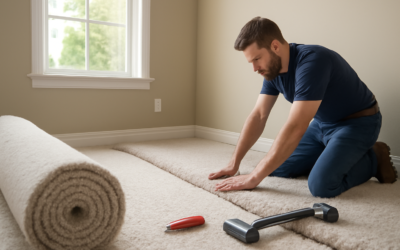
You can install most outdoor carpet yourself in an afternoon. The surface underneath must be clean, dry, and structurally sound. Concrete should be sealed and patched; wood decking should be free of loose boards and protruding fasteners.
- Dry-fit the carpet and let it relax flat for a few hours so it loses roll memory.
- Trim to shape with a sharp utility knife and a straightedge, leaving a slight overhang to cut precisely after it’s set.
- Adhere with outdoor carpet adhesive on concrete, or double-sided outdoor carpet tape on wood and removable applications.
- Work from the center outward, pressing down to push out air and seat the backing.
- Roll seams flat and weight them until the adhesive cures, usually 24 to 48 hours.
On open decks, leave small gaps at the board ends so water still drains rather than wicking under the carpet.
Cleaning and Maintenance
This is where brown earns its keep. Sweep or shake out loose debris weekly. For deeper cleaning, hose it down, scrub with a mild soap and a stiff brush, and rinse thoroughly. A pressure washer on a low setting works for needle-punch and loop pile, but keep the nozzle a foot back so you don’t fray the fibers. Let it dry fully before replacing furniture. Treat mildew spots with a diluted oxygen-bleach solution rather than chlorine bleach, which can lighten even solution-dyed fibers over time.
Is Brown Outdoor Carpet Right for You?
If you want a low-maintenance, weatherproof surface that looks warm against wood, stone, and greenery and forgives the dirt of real outdoor life, brown is hard to beat. Choose solution-dyed olefin, match the backing to your moisture exposure, pick a medium tone if your space gets full sun, and install it on a clean dry base. Do that, and a quality brown outdoor carpet will give you five to ten good years before it’s even worth thinking about replacing.