
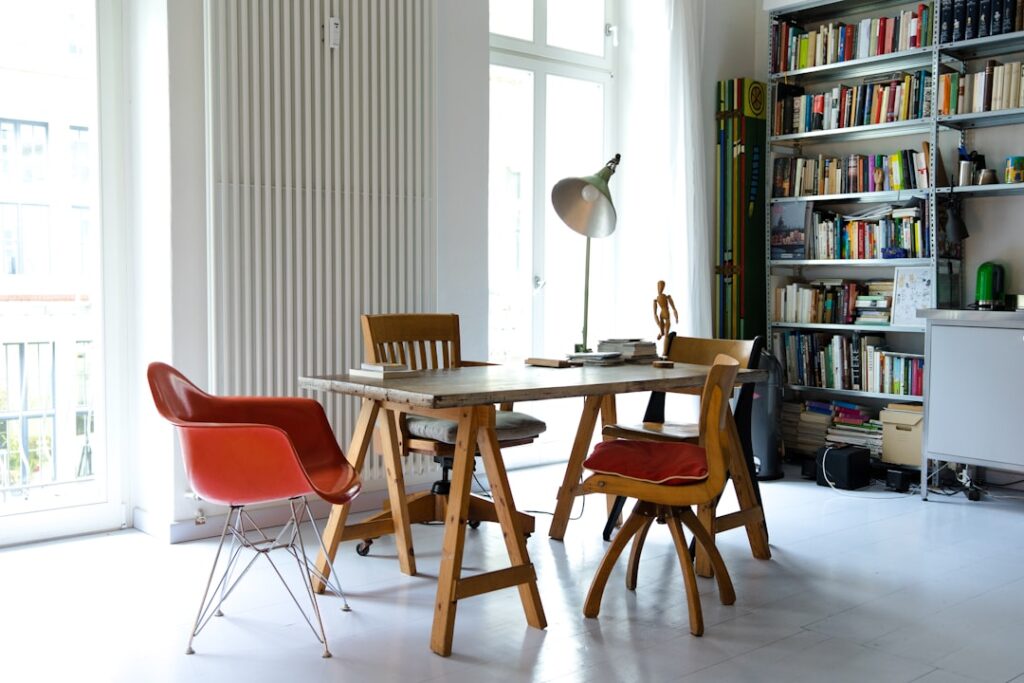
Most timber catalogs in the US lead with oak, hickory, and walnut, then maybe a token Brazilian cherry. Slip past those and you find species that almost no neighbor will recognize but every flooring obsessive remembers — brushbox is one of them. Brushbox flooring ranges from soft pink through caramel to a deep mahogany red, finishes to a glassy sheen because the grain is so fine, and brings real Australian hardwood durability into rooms that have been doing oak for 30 years. The trade-off is sourcing complexity and a price that climbs above mainstream species.
What Brushbox Actually Is
Lophostemon confertus, known commercially as brushbox or Brisbane box, grows along the east coast of Queensland and northern New South Wales. The heartwood is a pinkish-brown that deepens with light exposure, and the texture is so fine and uniform that the species takes finishes more cleanly than almost any other Australian timber.
Janka hardness sits around 2,030 lbf, well above red oak and white oak, similar to hickory. The grain is interlocked and tight, giving brushbox excellent abrasion resistance — historically it was the timber of choice for industrial flooring in shearing sheds and woolstores because it shrugged off dropped tools and dragged equipment.
Solid vs Engineered Format
You can buy brushbox in three formats. Solid tongue-and-groove (19mm thick, widths 80 to 130mm) is the traditional choice for homes with crawl spaces or plywood subfloors above grade. Engineered planks bond a 4mm to 6mm brushbox wear layer to a birch ply or HDF core in 14mm to 21mm total thickness — better for slab and below-grade applications. Overlay or top-nail solid (12mm to 14mm) drops in over existing particleboard subfloors, common in renovation work.
For US homes, engineered brushbox flooring is almost always the right call. Slab construction is more common here than in Australia, and the species responds well to dimensional stability provided by an engineered build.
Color, Grade, and Look
Standard or feature grade highlights the natural pink-to-mahogany range plus occasional gum veins, and many homeowners pick this grade specifically for its character. Select or premium grade restricts the color spread and minimizes knots and gum veins, giving a cleaner, more uniform appearance closer to a stained European oak.
Color shift is meaningful. Freshly milled brushbox can read pale and pinkish; six months of UV exposure typically deepens it into a richer terracotta or red-brown. If you stain over brushbox, the natural undertones can fight cool grays — most pros let it speak for itself with a clear oil or low-sheen polyurethane.
The Pros
- Excellent hardness: 2,030 Janka resists dents from heels, pet claws, and dropped objects.
- Fine, uniform grain: Takes finish exceptionally well, with very few knots in select grade.
- Distinctive color: Warm pink-to-red palette unlike anything in mainstream US species.
- Natural durability: Class 2 above-ground durability, naturally resistant to lyctus borer.
- BAL-19 rating: Approved for moderate bushfire zones in Australia, indicating real density.
The Cons
Sourcing is the biggest hurdle. US importers like Hurford and a handful of West Coast specialists carry brushbox, but lead times of 8 to 14 weeks are normal and minimum order quantities can run 250 to 500 sq ft. Repair boards five or seven years on may not match because brushbox color varies by harvest region.
Price reflects the import. Engineered brushbox runs $11 to $18 per square foot for material, against $6 to $10 for engineered white oak. Solid brushbox climbs higher still, $14 to $22 per square foot, plus crating and freight from Australia.
One more practical issue: brushbox dulls saw blades faster than oak. Carbide-tipped blades and frequent sharpening are essential. Plan for this if you are cutting on site.
Total Project Pricing in 2026
For 600 sq ft of engineered brushbox, plan on $6,600 to $10,800 for material, $400 for adhesive on a glue-down install, $600 for moisture testing and substrate prep, and $3,600 to $6,000 for installation labor. Total range: $11,200 to $17,800.
Installation Pointers
Acclimate boxes for 5 to 7 days in conditioned space at 35 to 55% relative humidity. Test slab moisture before committing — calcium chloride under 3 lbs or in-situ probe under 75% RH for glue-down. Use a urethane adhesive with built-in moisture suppression like Bostik UltraSet SingleStep2 or Mapei Ultrabond ECO 985, troweled with the manufacturer-specified notch.
For nail-down over plywood, predrill nail holes within 2 inches of board ends to prevent splitting — brushbox is dense enough that brad nails can wander. A pneumatic flooring stapler set to lower pressure (around 80 psi) usually works well.
Maintenance That Preserves the Color
Sweep or vacuum (hard floor head) weekly. Use a hardwood-specific cleaner like Bona Hardwood Floor Cleaner, applied via microfiber pad in a thin film — never wet-mop. Felt pads under all furniture, walk-off mats at exterior doors, and a humidifier in winter to keep RH above 35%.
Recoat oil-finished brushbox every 12 to 24 months with a maintenance oil like Loba 2K Invisible Protect or Rubio Monocoat Universal Maintenance Oil. Polyurethane-finished boards need a screen-and-recoat every 8 to 12 years depending on traffic.
How Brushbox Compares to Other Premium Imports
Brazilian cherry (jatoba) carries a similar exotic-import premium and a Janka rating of 2,820 — meaningfully harder than brushbox. The colour palette runs deep red to nearly black-red rather than brushbox’s gentler pink-mahogany. For homeowners who want bold, jatoba wins; for those who want warmth without drama, brushbox is the cleaner pick.
Australian spotted gum runs 11,000 lbf side hardness — almost identical to brushbox — but with greater colour variation, including chocolate browns and pale creams in the same plank. Tasmanian oak is softer (around 1,300 lbf) but more affordable, suitable for lower-traffic rooms where the Australian timber aesthetic matters more than maximum durability.
Bottom Line
Brushbox flooring is a specialist choice for homeowners who want a hardwood that feels distinctive, takes finish beautifully, and earns its premium price tag in durability and color. It is not a budget option and not a fast turnaround. But for the right project, it delivers a floor that mainstream species simply cannot match.
Prefer to explore on your own?
See how new flooring looks in your actual room in seconds — free, no signup.
Try the free Floor Studio →

