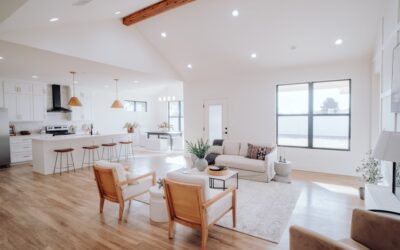
Nothing else quite matches a genuine plank floor cut from a single piece of timber, and if you plan to stay in your home for decades, the decision to buy solid wood flooring can be one of the best long-term investments you make in the house. A solid oak or maple floor can be sanded and refinished five or six times over a century, so it outlives every other flooring category by a wide margin. But solid wood also demands the right conditions and a bigger budget, and it is genuinely the wrong choice for some rooms. This guide walks you through exactly what you are buying, what it costs, and how to pick planks that reward you for generations.
What Solid Wood Flooring Is
Each plank is milled from one solid piece of hardwood, typically three-quarters of an inch thick, with a tongue on one edge and a groove on the other so the boards lock together. There is no plywood core, no printed film, no veneer, just the same wood species all the way through. That solid construction is what lets you sand the surface down repeatedly, because there is always more real wood beneath the finish.
Boards come either unfinished, to be sanded and coated on site, or pre-finished from the factory with a durable aluminum-oxide urethane. Pre-finished planks install faster and let you use the floor immediately, while unfinished boards let you match a custom stain and achieve a perfectly seamless surface with no micro-bevels between planks. Both are genuine solid wood; the choice is about process and look.
The Advantages That Justify the Cost
Longevity is the headline. A solid floor with a three-quarter-inch wear surface can be refinished roughly every 10 to 20 years, giving it a realistic lifespan of 75 to 100 years or more. No other flooring comes close, which is why century-old homes still walk on their original oak. When you buy solid wood, you are buying a floor your children may inherit.
Value follows longevity. Real hardwood is a genuine selling point that buyers recognize and pay for, and appraisers and agents consistently note it as a feature that helps a home move faster. You also get complete refinishing freedom: tired of the honey oak look, you can sand it and stain it espresso, gray, or natural without replacing a single board. And because it is solid timber, it feels warm and substantial underfoot and carries none of the hollow sound that betrays cheaper floating floors.
There is also a repairability advantage that homeowners rarely think about until they need it. If a section of solid floor is badly damaged by a flood or a dropped cast-iron pan, a skilled installer can cut out the affected boards, weave in new ones, and blend the repair into the surrounding floor during a refinish so the patch disappears. Floating floors and thin veneers rarely allow that kind of invisible board-level repair. A solid floor is genuinely serviceable for its entire life.
The Real Drawbacks and Limits
Moisture is the enemy. Solid wood expands and contracts significantly with humidity, so it cannot go in a below-grade basement, and it is a risky choice for full bathrooms and laundry rooms where standing water is a real threat. It also should not be floated or installed over most radiant heat systems, because the movement will cause gapping and cupping. If your project is a basement or a slab-on-grade addition, engineered wood is the better tool.
Installation is more demanding too. Solid planks are nailed or stapled down to a wood subfloor, which is more labor than a click-together floating floor and usually requires a pro with a flooring nailer. The boards also need to acclimate in the home for a week or more before install, and site-finished floors add days of sanding, staining, and curing before you can move furniture back. All of that adds time and cost to the project.
Choosing the Right Species
Hardness should guide your species choice, and the industry measures it with the Janka scale. Red oak, at about 1,290 on the Janka scale, is the North American benchmark and a reliable all-rounder that hides scratches in its open grain. White oak is slightly harder at around 1,360 and reads a touch cooler in tone. Hickory, near 1,820, is one of the hardest domestic woods and shrugs off heavy traffic and dog nails.
Softer species tell a different story. American walnut, around 1,010 Janka, is prized for its deep brown color but dents more easily, so it suits formal rooms over busy kitchens. Pine and fir are softer still and will show every dropped toy, which some homeowners love as rustic character and others cannot stand. Match the hardness honestly to your household: active families with pets belong on oak or hickory, while a quiet study can carry softer walnut.
Board grade and width shape the look as much as species. Select or clear grade gives you a clean, uniform floor with minimal knots and color variation, and it commands the highest price. Common or character grade shows knots, mineral streaks, and color swings that create a rustic, lived-in look for less money. Width matters too: 2 1/4-inch strip flooring reads traditional and hides movement well, while 5-inch and wider planks look contemporary but need a drier, more stable environment to stay tight. Think about the style you want and the humidity you can maintain before you settle on a width.
What It Costs to Buy and Install
Material pricing depends on species, grade, and board width. Common red oak strip flooring starts around $3 to $6 per square foot. Wider planks, premium species like walnut, and character-grade or wide-plank boards climb to $8 to $15 or more per square foot. Exotic and reclaimed woods can run higher still.
Installation adds meaningfully to the total. Professional nail-down installation typically costs $3 to $8 per square foot, and site-finishing an unfinished floor adds another $2 to $5 for sanding and multiple coats. All in, a solid wood floor commonly lands between $8 and $20 per square foot installed. For a 400-square-foot living room, plan on roughly $3,200 to $8,000, and always order 8 to 10 percent extra for waste, cuts, and future board matching.
Remember to price the whole project, not just the field. Subfloor prep can add cost if your existing plywood is uneven or squeaky and needs screwing down or leveling first. Removing and hauling away old flooring, moving furniture, and installing new baseboard or shoe molding all carry labor charges. On older homes I also budget a contingency for surprises under the old floor, because you never know what a tear-out will reveal until the boards come up.
How to Buy Smart
Start by confirming the room is right for solid wood, meaning it is on or above grade over a wood subfloor with stable humidity, ideally kept between 35 and 55 percent relative humidity year-round. If those conditions do not hold, redirect your budget to engineered wood and save yourself a callback. Then order samples and view them under your own daylight and evening lighting, because oak that looks warm in a showroom can read pink or gray at home.
Decide between pre-finished and site-finished early, since it shapes your timeline and cost. Choose a matte or satin sheen to hide daily wear rather than a high gloss that shows every footprint. Insist that the boards acclimate in the home for at least a week before install, and confirm your subfloor is dry and flat. Get the conditions and the species right, and the choice to buy solid wood flooring gives you a genuine hardwood floor that pays you back in beauty, resale value, and decades of service that no other product can match.
Prefer to explore on your own?
See how new flooring looks in your actual room in seconds — free, no signup.
Try the free Floor Studio →