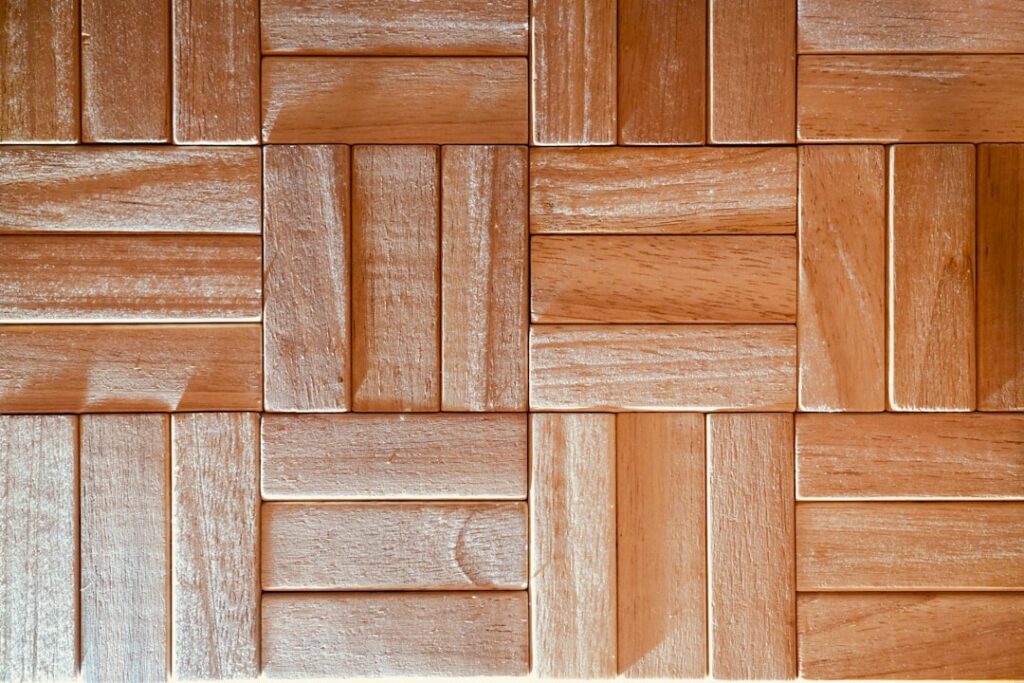
Cairo is not a wood species — it is a color and finish family built on European white oak, and it has become one of the most-searched wood flooring looks in North America over the last three years. Cairo oak flooring delivers the warm honey-amber tones people want from mid-century Scandinavian interiors without the orange cast that dates traditional red oak. The look reads modern but transitional, works with both cool grays and warm creams, and photographs beautifully. Whether it performs as well as it looks depends on which manufacturer, wear layer, and substrate you choose. This guide breaks down what the name actually means, what you pay for, and where it fits best in a real home.
What “Cairo Oak” Actually Means
The name describes a visual palette: a wire-brushed European white oak with a medium-warm reactive stain, finished with a matte oil-modified urethane or a low-sheen UV-cured poly. The color palette sits between a natural white oak and a walnut, landing in the honey-caramel range with subtle smoke undertones.
Multiple brands sell product under this name or near variations (Cairo, Cairo Classic, Cairo Oak Brushed). Karndean, Kahrs, Quick-Step, and several boutique European importers all have their own interpretations. The common thread is warm mid-tone oak with visible grain texture from light wire-brushing.
Typical Construction and Specs
Most Cairo oak flooring on the US market is engineered, not solid. A typical premium product looks like this.
- Total thickness: 5/8 to 3/4 inch (14 to 20 mm)
- Wear layer (real oak veneer): 3 to 6 mm
- Core: Baltic birch plywood or HDF
- Plank width: 7 to 10 inches
- Plank length: 48 to 86 inches
- Edge profile: Beveled or micro-beveled on all four sides
- Finish: UV-cured urethane or hard wax oil
- Install method: Float, glue-down, or nail-down (1/2 inch minimum)
A 3 mm or thicker wear layer matters because it is the number of times the floor can be sanded and refinished. Anything under 2 mm is effectively a one-time floor: when the finish wears through, you replace it rather than refinish.
Pricing and Where to Buy
Cairo oak flooring sits in the premium engineered bracket. Expect $7 to $14 per sq ft for material alone, with installation adding $3 to $6 per sq ft for glue-down or floating, and $4 to $7 for nail-down over a plywood subfloor. Total installed cost lands between $10 and $20 per sq ft.
Specialty flooring dealers and online importers like Carlisle, Stuga, and Ua Floors carry named Cairo lines. Quick-Step’s Palazzo collection and Kahrs’ Sand line include close visual equivalents at the $9 to $12 per sq ft range. Home Depot and Lowes sometimes carry similar-look products under house brands at $4 to $7 per sq ft, but wear layers are usually thinner and the color palette does not quite match.
Pros of Cairo Oak
Several things make this look a strong buy for the right home.
- Color palette hides dust, pet hair, and minor scuffs better than blonde or very dark floors
- European white oak is denser (1,360 Janka) than red oak, resisting dents better
- Wire-brushed texture hides scratches and daily wear
- Warm mid-tone pairs with both traditional and modern furniture
- Wide planks (7+ inches) look upscale and reduce visible seams
- Matte and low-sheen finishes age gracefully — minor imperfections blend in
- Engineered construction tolerates humidity swings better than solid
Cons and Real-World Drawbacks
The honest list of negatives matters before you commit $10,000 to a single floor.
- Premium pricing — a true Cairo-spec floor is rarely under $9 per sq ft installed
- Wire-brushed texture collects dust in the grain grooves, needing more vacuuming
- Reactive stains can vary plank to plank; open multiple boxes and blend during install
- Matte oil-finished versions need a maintenance recoat every 3 to 5 years
- Not waterproof; standing water still causes cupping
- Long lead times (4 to 8 weeks) on imported European products
Best Rooms and Worst Rooms
Cairo oak shines in living rooms, dining rooms, bedrooms, and main hallways. The mid-tone hides dog hair and day-to-day traffic wear better than either extreme end of the color spectrum. It pairs particularly well with white trim, warm beige walls, and black hardware.
Avoid it in bathrooms, laundry rooms, and full basements. Even a premium engineered oak will cup or warp when installed below grade without a rigorous moisture mitigation plan. For those spaces, a waterproof LVP in a similar color palette ($3 to $5 per sq ft installed) is the correct choice and maintains visual continuity with the wood in your main rooms.
Installation Considerations
Acclimate wood flooring for 5 to 7 days in the room before installation — not 48 hours like you see with LVP. Temperature should stay between 65 and 75°F and humidity between 35 and 55% during and after install. These are the conditions the floor will need to maintain long-term; move outside them seasonally and you will see gaps in winter and cupping in summer.
Over concrete slabs, run a calcium chloride test or ASTM F2170 RH probe. Most engineered oak lines allow install up to 75% RH with a compatible adhesive moisture barrier like Bostik Ultra-Set or Mapei Ultrabond ECO 975. Over wood subfloors, 3/4 inch tongue and groove or plywood rated for flooring is the baseline; staples or 16-gauge flooring nails at 6 to 8 inches on center.
Maintenance Routine That Preserves the Finish
Treat Cairo oak with the same care you would give any fine hardwood. Sweep or vacuum (bare-floor setting) daily in high-traffic areas, weekly elsewhere. Damp mop monthly with Bona Hardwood Floor Cleaner or the manufacturer-recommended product. Avoid wax, polish, and steam mops — they either build up and yellow or push moisture into the seams.
For hard wax oil finishes, plan to re-oil high-traffic areas every 18 to 36 months. Maintenance kits from Rubio Monocoat, Osmo, or WOCA run $35 to $75 and take about an hour per room. UV-cured urethane finishes don’t need re-oiling but will need a screen-and-recoat at roughly year 10 to 15 depending on foot traffic.
How Cairo Oak Compares to Other Warm Oaks
Shoppers often cross-shop Cairo against natural red oak, walnut, and French oak lines. Red oak is cheaper ($4 to $8 per sq ft) but reads more orange and shows wear more visibly. Walnut is darker and more dramatic but softer (1,010 Janka) and shows dents more easily. French oak is essentially the same species as European white oak, usually at similar or higher prices; the real differences come down to stain, brushing, and edge detail rather than the wood itself.
Final Recommendation
For a homeowner doing a main-floor engineered wood install and staying 10+ years, Cairo oak flooring is a strong pick — the color palette ages better than trend-driven options and the European white oak substrate is denser than domestic alternatives. Budget $12 to $16 per sq ft installed for a premium product with a 3+ mm wear layer, and get three quotes from dealers who carry different brands so you can compare finishes side by side. The look is proven, the materials are durable, and matched to the right room it is the kind of floor that still looks current in year fifteen.
Prefer to explore on your own?
See how new flooring looks in your actual room in seconds — free, no signup.
Try the free Floor Studio →