Small holes in a wool sweater and shed bristly skins along the baseboard are easy to dismiss, right up until you realize what is causing them. A carpet beetle infestation is one of the most common and most overlooked fabric pest problems in American homes, and the damage comes not from the adult beetles but from their hungry larvae. These pests feed on wool, silk, leather, feathers, pet hair, and other natural fibers, quietly chewing through carpets, clothing, and upholstery. Catching an infestation early and removing the food source is the key to stopping it.
How to Recognize the Problem
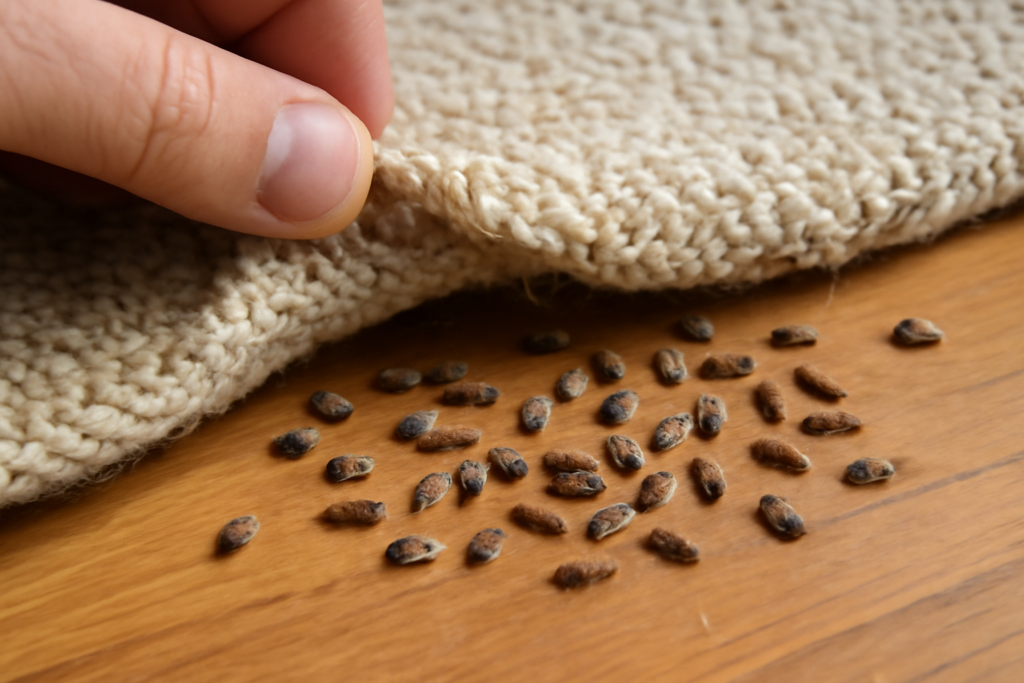
Adult carpet beetles are tiny, oval, and about an eighth of an inch long, often mottled black, brown, and white or solid dark. The larvae are the real culprits: small, carrot-shaped, and covered in bristly hairs, ranging from tan to dark brown. The signs of an active infestation are usually clearer than the bugs themselves.
- Irregular holes or thin, worn patches in wool rugs, sweaters, and upholstery.
- Shed larval skins, which look like tiny hollow bristly casings, in drawers, closets, and along baseboards.
- Small piles of sand-like fecal pellets near infested items.
- Adult beetles found on windowsills, since they are drawn to light.
- Damage concentrated in dark, undisturbed places like closets, under furniture, and beneath rug edges.
The Carpet Beetle Lifecycle
Understanding the lifecycle explains why these pests can persist. Females lay eggs near a food source such as a wool rug, lint buildup, or stored clothing. The eggs hatch into larvae, which is the only stage that feeds on fabric, and they can keep feeding for several months to over a year depending on conditions. The larvae then pupate and emerge as adults, which feed mainly on pollen outdoors and live only a few weeks while they mate and lay the next generation.
Because the destructive larval stage is long and the larvae hide in dark, still places, an infestation can build for a long time before you notice it. That is also why a single cleaning rarely solves the problem on its own.
Where Infestations Start
Carpet beetles often enter as adults flying in through open windows and doors, or hitchhike in on cut flowers, used furniture, secondhand clothing, or rugs. Once inside they seek out the natural fibers and protein-rich debris they need. Common hot spots include closets with wool or silk garments, the edges and undersides of wool rugs, stored woolens and blankets, upholstered furniture, and any place lint, pet hair, and dead insects accumulate, such as under heavy furniture and inside floor vents.
How to Get Rid of Carpet Beetles
Eliminating an infestation is mostly about removing the food source and the larvae through thorough cleaning. Work methodically through these steps.
- Find the source. Inspect closets, rug edges, stored fabrics, and dark corners to locate where the larvae are feeding.
- Vacuum thoroughly and often. Vacuum carpets, rugs (both sides), upholstery, closet floors, baseboards, and vents, then empty the canister or bag into an outdoor trash bin immediately.
- Launder or dry-clean infested items. Wash washable fabrics in hot water and dry on high heat; dry-clean delicate woolens and silks. Heat kills all life stages.
- Freeze items that cannot be washed. Sealing items in a bag and freezing them for about two weeks can kill larvae and eggs.
- Discard heavily damaged items that are beyond saving and continuing to feed the population.
- Clean and store seasonal clothing in sealed bins or garment bags after cleaning.
Repeat the vacuuming over several weeks to catch larvae that hatch from missed eggs.
Preventing a Return
Once the infestation is under control, a few habits keep it from coming back. Vacuum regularly, paying attention to the hidden, undisturbed areas pests prefer. Store wool, silk, and fur items clean and sealed. Keep window and door screens in good repair, and inspect cut flowers and secondhand fabrics before bringing them inside. Reducing lint, pet hair, and dead-insect buildup removes the food that lets a few stray beetles turn into a problem.
Carpet Beetles vs Clothes Moths
Because both pests damage natural fibers, homeowners often confuse them, but telling them apart helps you target your response. Carpet beetle damage tends to be irregular holes scattered across an item, and you will find shed bristly larval skins and gritty fecal pellets nearby. Clothes moths, by contrast, leave silken tunnels, webbing, or cocoon-like cases on the fabric, and the damage is often more concentrated. You may also see the small, golden clothes moths fluttering near closets, whereas adult carpet beetles gather at windows because they are drawn to light.
The good news is that the control measures overlap heavily. Thorough vacuuming, hot laundering or dry cleaning, freezing delicate items, and sealed storage work against both pests. If you are unsure which one you have, treating for carpet beetles as described will also knock back a moth problem, and a pest professional can confirm the identification if the damage continues.
Are Carpet Beetles Harmful to People?
Carpet beetles do not bite and are not dangerous in the way some pests are, but they are not entirely harmless to sensitive people. The bristly hairs on the larvae can irritate skin in some individuals, causing an itchy, red rash that is sometimes mistaken for bedbug bites. The hairs and shed skins can also aggravate allergies and asthma when they accumulate in dust. This is another reason thorough, repeated vacuuming matters: it removes not just the live larvae but also the allergen-laden debris they leave behind. Keeping the home clean and the infestation controlled protects both your fabrics and the comfort of anyone in the household who reacts to the larvae.
When to Call a Professional
A small, early infestation usually responds to diligent cleaning, but a widespread or recurring one warrants professional help. If you continue to find larvae and damage after weeks of thorough cleaning, or you cannot locate the source, a licensed pest control professional can identify the harborage areas and apply targeted treatments safely. Professionals are especially worth it for large homes, valuable textiles, or infestations that have spread across multiple rooms.
The Bottom Line
A carpet beetle infestation is driven by larvae feeding on natural fibers, so the cure is finding and removing their food source through thorough, repeated cleaning, laundering, and proper storage. Act early, vacuum diligently, protect your woolens, and bring in a pest professional for stubborn or widespread cases. With consistent effort you can clear these pests and keep your rugs, clothes, and fabrics safe.
Prefer to explore on your own?
See how new flooring looks in your actual room in seconds — free, no signup.
Try the free Floor Studio →