Those small holes in your wool sweater or the bare patches in your carpet may not be moths at all. Carpet beetle larvae quietly chew through natural fibers, and by the time you spot the damage, the population is often well established. The right carpet beetle insecticide, applied correctly and paired with thorough cleaning, breaks the cycle and protects your carpets, clothing, and upholstery. Chemicals alone rarely solve the problem, though. Real control comes from combining the right product with the right technique.
- Identifying a Carpet Beetle Problem
- Types of Insecticides That Work
- Where and How to Apply
- Cleaning Comes First
- A Step-by-Step Treatment Plan
- Preventing Reinfestation
- Protecting Specific Items From Damage
- When to Call a Professional
- Natural and Low-Toxicity Options
- How Long Treatment Takes
- The Bottom Line
Identifying a Carpet Beetle Problem
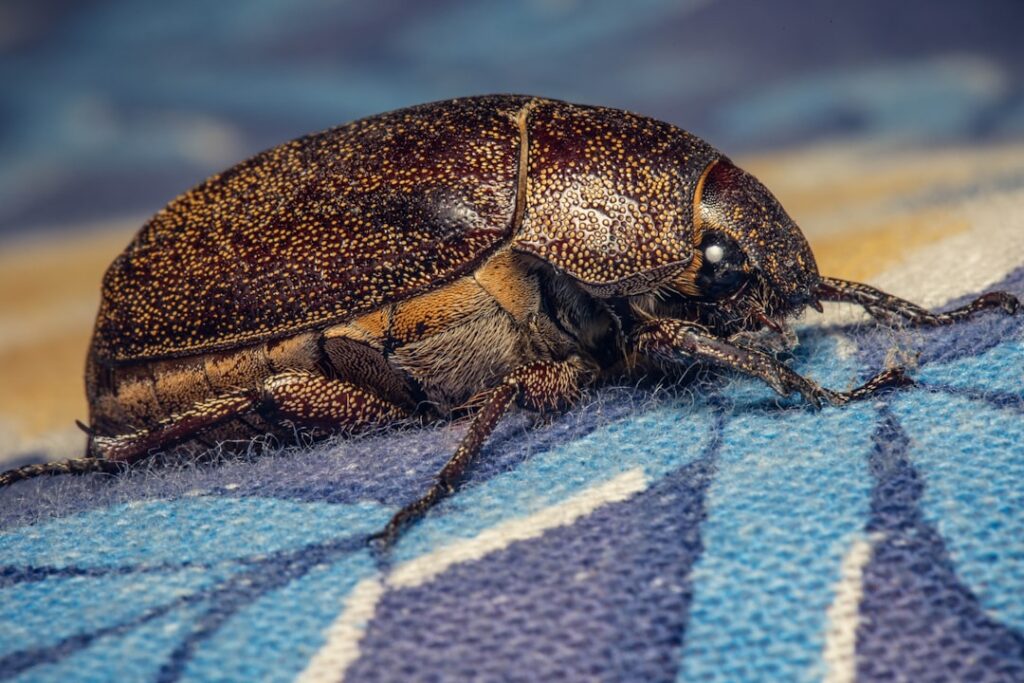
Before you spray anything, confirm you’re dealing with carpet beetles. The adults are small, rounded beetles about 1/8 inch long, often mottled black, brown, and white. The real culprits are the larvae, which look like tiny fuzzy or bristly worms. They feed on wool, silk, leather, feathers, pet hair, and other animal-based fibers, leaving irregular holes and shed skins behind.
Common signs include damaged natural-fiber items, shed larval skins in drawers or along baseboards, and adult beetles near windows, since they’re drawn to light. Identifying the source, often an undisturbed closet, rug edge, or vent, is half the battle.
Types of Insecticides That Work
Several active ingredients are effective against carpet beetles. Knowing the categories helps you choose a product suited to your situation.
- Pyrethroid sprays: active ingredients like deltamethrin, cyfluthrin, or permethrin offer fast knockdown and residual protection on surfaces
- Insect growth regulators (IGRs): disrupt the larvae’s development so they can’t mature or reproduce; excellent paired with a contact spray
- Boric acid powder: a slower-acting option for cracks, carpet edges, and voids where larvae hide
- Diatomaceous earth: a non-chemical dust that dehydrates larvae, useful in dry, hidden areas
- Residual aerosols and dusts: formulated to reach baseboards, carpet edges, and tight crevices
Where and How to Apply
Carpet beetles hide in the places you clean least, so target those zones. Focus treatment on carpet edges and under furniture, along baseboards and in cracks, inside closets and on shelving, and around vents and registers where lint accumulates. A combination spray-and-dust approach covers both open surfaces and the hidden voids where larvae develop.
Always read the label and follow it exactly. Spot-test sprays on an inconspicuous area of carpet first to check for staining. Keep children and pets off treated areas until everything is fully dry, and ventilate the room during and after application.
Cleaning Comes First
Insecticide is only as good as the cleaning that precedes it. Thorough vacuuming is the single most effective step, removing larvae, eggs, shed skins, and the lint and hair they feed on. Vacuum carpets, rugs, upholstery, and especially edges and under furniture, then empty the canister or bag outside immediately so anything you collected doesn’t crawl back out.
Launder or dry-clean infested clothing and linens. Washing in hot water above 120°F, or running items through a hot dryer cycle for 30 minutes, kills larvae and eggs. Items that can’t be washed can be sealed in bags and placed in a freezer for several days to kill the insects.
A Step-by-Step Treatment Plan
- Inspect and locate: find the damaged items and trace where larvae are concentrated
- Deep clean: vacuum thoroughly and launder or freeze affected fabrics
- Apply contact spray: treat baseboards, carpet edges, and hiding spots with a residual pyrethroid
- Add an IGR or dust: apply a growth regulator or boric acid in voids and along edges for long-term control
- Repeat: reapply per the product label, often after 2 to 3 weeks, to catch newly hatched larvae
- Monitor: keep checking for new damage or adult beetles over the following months
Preventing Reinfestation
Once you’ve cleared an infestation, prevention keeps it gone. Vacuum regularly, paying attention to the hidden spots beetles love. Store wool, silk, and other natural-fiber items in sealed containers or garment bags, ideally with cedar or another deterrent. Keep closets and storage areas clean and free of lint, pet hair, and dead insects, which all serve as food.
Seal cracks around baseboards and windows, and check secondhand furniture, rugs, and clothing before bringing them inside. Many infestations start with an item carried in from elsewhere.
Protecting Specific Items From Damage
Carpet beetles target animal-based fibers, so certain belongings need extra protection. Wool rugs, sweaters, and blankets, silk garments, feather pillows and down comforters, leather goods, and even taxidermy or natural-bristle brushes are all on the menu. Stored seasonal clothing is especially vulnerable because it sits undisturbed for months, giving larvae uninterrupted time to feed.
For long-term storage, clean items first, since body oils and food stains attract beetles, then seal them in airtight containers or vacuum bags. Cedar blocks and a few sachets of dried lavender act as natural deterrents inside the storage space. Pull out and inspect stored items periodically rather than leaving them sealed away and forgotten for years.
When to Call a Professional
If the infestation keeps returning despite your efforts, or if it has spread through multiple rooms, a licensed pest control professional has access to stronger products and can locate hidden sources you might miss. Persistent reinfestation often points to an unseen reservoir, such as a bird or rodent nest in a wall or attic, that needs to be removed before the beetles will truly disappear.
Natural and Low-Toxicity Options
If you’d rather limit chemical exposure, especially in homes with kids and pets, several lower-toxicity tools help. Diatomaceous earth dusted along baseboards and carpet edges dehydrates larvae mechanically without synthetic pesticides. Boric acid is more toxic but still a popular crack-and-crevice option. Sticky pheromone traps catch adult beetles and help you monitor whether the population is shrinking.
These approaches work best alongside aggressive cleaning. On their own they’re slower than a residual spray, but combined with frequent vacuuming and proper fabric storage, they can clear a light infestation without heavier insecticides.
How Long Treatment Takes
Patience matters with carpet beetles. Because eggs and hidden larvae survive an initial treatment, a single application rarely ends the problem. Expect the full process to span several weeks as you repeat treatments to catch newly hatched larvae. Continue monitoring for adult beetles near windows and checking natural-fiber items for fresh damage. Only after a few months with no new signs can you consider the infestation truly resolved.
The Bottom Line
A carpet beetle insecticide is most effective as part of a complete strategy. Identify the pest, clean aggressively, treat the hiding spots with the right product, and repeat to catch new hatchlings. Pair that with smart storage and regular vacuuming, and you’ll protect your carpets and natural-fiber belongings from one of the most persistent fabric pests around.
Prefer to explore on your own?
See how new flooring looks in your actual room in seconds — free, no signup.
Try the free Floor Studio →