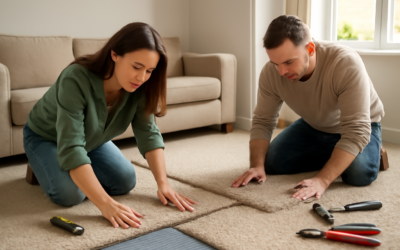
Wet carpet is a race against the clock, and household box fans lose that race every time. A carpet blower rental gives you the same commercial air movers that restoration crews use to dry a floor in hours instead of days, and picking one up for a weekend costs less than most people expect. Whether you over-shampooed the living room, had a slow dishwasher leak, or took on minor flood water, knowing how to rent, place, and run these machines can be the difference between a carpet that recovers and one that grows mold behind the pad.
Why a Box Fan Isn’t Enough
A household box fan moves air in a lazy, diffuse cloud. What wet carpet needs is high-velocity airflow directed across the surface to strip the boundary layer of humid air sitting right on the fibers. Commercial air movers, often called carpet blowers or snail-shell fans, are engineered exactly for that. They push a focused sheet of air at floor level, accelerating evaporation dramatically.
The other problem with box fans is that they don’t move enough air. A typical box fan produces maybe 1,500 to 2,500 CFM spread in every direction, while a proper carpet blower delivers 2,500 to 3,500 CFM in a concentrated stream. That directed volume is what actually lifts moisture out of both the carpet face and the pad beneath it.
Understanding CFM Ratings
CFM stands for cubic feet per minute, and it’s the number that matters most when you rent. For general carpet drying, a machine rated 2,500 to 3,000 CFM handles residential rooms well. Larger axial fans push 3,000 CFM or more and are better for open basements and big flooded areas.
Two common styles show up in rental fleets:
- Centrifugal (snail) air movers — the classic wedge shape. They direct a tight, powerful stream at a low angle and stack for storage. Ideal for carpet.
- Axial fans — drum-shaped and lighter, moving huge volumes of air across a wider area. Great for whole-room circulation and structural drying.
Most machines draw only 1 to 2.5 amps, so you can run several on a single household circuit, but do the math before you plug four into one outlet.
What a Rental Costs
Pricing is refreshingly reasonable. Expect a daily carpet blower rental to run roughly $25 to $40 per unit at Home Depot, Lowe’s, or a local tool-rental yard. Sunbelt Rentals and United Rentals cater more to contractors but rent to the public as well, often with weekly rates that work out cheaper per day if drying stretches out.
Typical rate tiers look like this:
- Daily: $25 to $40 per air mover
- Weekly: $90 to $150 per air mover
- Deposit: often a credit-card hold of $75 to $150 per machine
If you’re drying a single spill, one or two days is usually plenty. For a flooded basement, renting three or four units for a week and pairing them with a dehumidifier is money well spent against a mold remediation bill that can climb into the thousands.
How Many Blowers You Need
The restoration rule of thumb is one air mover for roughly every 10 to 16 linear feet of wet wall, or about one per 150 square feet of affected carpet. For a standard 12×12 foot bedroom, one strong 3,000 CFM unit is often enough; for a 20×15 foot living room, plan on two to three.
Placement is as important as quantity. Angle each blower at about 15 to 45 degrees against the carpet surface, aim them all in the same rotational direction around the room so the air circulates rather than colliding, and move them a few feet every few hours to hit every damp zone. If the pad underneath is soaked, lift a corner of the carpet and float a blower to push air beneath it, which dries the pad far faster than surface airflow alone.
Drying Times to Expect
How long is realistic? Here’s what I typically see once the machines are running around the clock:
- Lightly damp carpet (over-shampooed): 6 to 12 hours.
- Moderately wet from a clean-water leak: 12 to 24 hours.
- Saturated carpet and pad from flooding: 24 to 72 hours, sometimes longer.
Extract as much standing water as possible first with a wet/dry vacuum before the blowers go on, because air movers evaporate moisture, they don’t pump it. The more water you pull out mechanically, the faster the drying finishes. A moisture meter, which most rental yards also carry, tells you when the carpet is genuinely dry rather than just dry on top.
Pair a Dehumidifier for Real Results
Here’s the mistake DIYers make: they run blowers in a closed room and wonder why nothing dries. Air movers lift moisture off the carpet, but that water has to go somewhere. Without ventilation or a dehumidifier, the room’s humidity climbs to 80 or 90 percent and evaporation stalls.
A commercial LGR (low-grain refrigerant) dehumidifier pulls that airborne moisture out and keeps evaporation moving. Rent one alongside your air movers, close the windows and doors so the dehumidifier isn’t fighting outdoor air, and you create the same controlled drying chamber the pros use. This combination is what actually protects against mold, which can start colonizing within 24 to 48 hours in a warm, humid room.
Mold Prevention and When to Call a Pro
Speed is your best defense against mold. Get air moving within the first day, keep indoor temperature between 70 and 80 degrees Fahrenheit to encourage evaporation, and run the dehumidifier continuously. If the water was clean, drying promptly usually saves the carpet and pad.
Know your limits, though. If the water came from a sewage backup, a long-standing leak, or floodwater from outside, the pad is likely contaminated and should be removed rather than dried. Any carpet that has stayed wet longer than 48 hours, or shows a musty smell, deserves a professional assessment. A carpet blower rental is a powerful, affordable tool for clean-water incidents, but it is not a substitute for remediation when contamination or hidden moisture is involved.
Rent or Buy: The Break-Even Math
For a one-time spill, renting is a clear win. You pay $25 to $40, dry the room, and walk away with nothing to store. But if you own a rental property, live in a flood-prone area, or manage a building, the math shifts. A dependable consumer air mover from a brand like B-Air, Vacmaster, or XPOWER sells for $90 to $160. Two or three uses and you’ve matched the cost of renting.
Ownership also means the machine is on hand the moment water appears, which is the whole game with mold prevention. Those first few hours matter more than anything else, and a drive to the rental counter can cost you exactly the window you need. If you go the ownership route, store the units somewhere dry and run them once a season so the motor stays healthy.
A Quick Checklist Before You Start Drying
Before you flip the first switch, run through this short sequence to get the most out of your machines:
- Shut off the water source and remove any furniture from the wet area.
- Extract standing water with a wet/dry vacuum until no more comes up.
- Pull back the carpet and check the pad; discard it if it’s saturated or contaminated.
- Position air movers at a low angle, all facing the same rotational direction.
- Add a dehumidifier and close the room off from outside air.
- Check progress with a moisture meter and reposition blowers every few hours.
Follow that order and a modest carpet blower rental will do the work of a full restoration setup at a fraction of the cost. Move fast, keep the air circulating, and control the humidity, and you’ll dry the floor before mold ever gets a foothold.