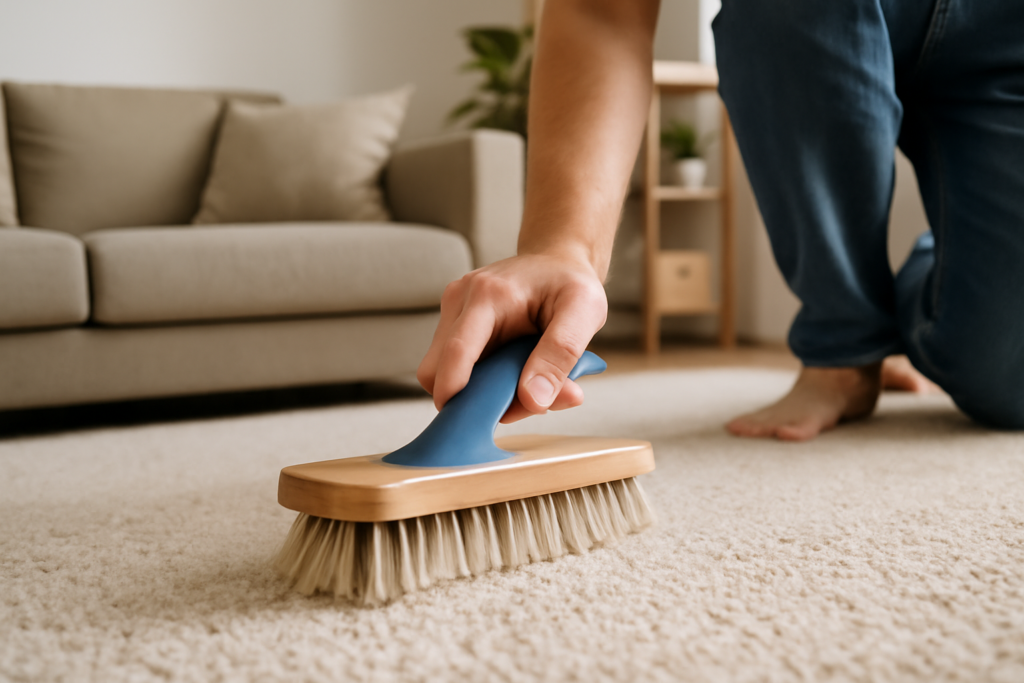
Your vacuum pulls up loose dirt, but it cannot revive crushed fibers or dig out the pet hair woven deep into the pile. A carpet brush is the simple, low-cost tool that fills that gap, agitating the fibers to loosen embedded grime, lift matted areas, and pull out hair a vacuum leaves behind. From a basic handheld brush to a long-handled rake, the right one makes carpets look fuller, cleans more thoroughly, and helps your carpet last longer. For a tool that often costs $10 to $30, it earns its place in the cleaning closet.
What a Carpet Brush Does
The core job is agitation. Brushing works the bristles down into the pile to break up packed dirt, lift fibers that traffic has crushed flat, and grab pet hair and lint that vacuums skim over. It also helps work cleaning solution evenly into the carpet during spot treatment and deep cleaning. After cleaning, brushing the pile back up restores the soft, even look of fresh carpet.
Think of it as the manual partner to your vacuum. The vacuum removes what is loose; the brush dislodges what is stuck and brings life back to the fibers themselves.
Types of Carpet Brushes
Different jobs call for different tools, and most homes benefit from owning more than one.
- Handheld scrub brush: A compact brush for spot cleaning stains and working solution into small areas. Stiff bristles for tough spots, softer for delicate fibers.
- Carpet rake: A long-handled tool with sturdy bristles or tines that lifts matted pile, fluffs high-traffic paths, and pulls up large amounts of pet hair. Easy on the back.
- Pet hair brush or rubber brush: Uses rubber bristles that create static to grab stubborn pet hair from carpets and upholstery.
- Grooming brush: A finishing brush used after cleaning to set the pile in one direction for a uniform look.
A carpet rake plus a handheld scrub brush covers most needs. Add a rubber pet-hair brush if you live with shedding animals.
Choosing the Right Bristles
Bristle stiffness should match your carpet. Stiff, firm bristles agitate aggressively and work well on durable, low-pile, and high-traffic carpets, but they can damage delicate fibers. Softer bristles are gentler and safer for plush, wool, or fine carpets where harsh brushing could fray or fuzz the pile. When in doubt, test the brush in an inconspicuous corner first and let the carpet manufacturer’s care guidance steer you, since some fibers like wool need a gentle touch.
For pet hair, rubber bristles outperform standard ones because the static cling pulls hair up that traditional bristles glide past.
How to Use a Carpet Brush
Good technique gets results without harming the carpet. Follow these steps for a deep refresh.
- Vacuum first to remove loose surface dirt so the brush is not just pushing it around.
- Brush in the direction of the pile for routine grooming and pile lifting, using long, even strokes.
- For deep agitation, brush against the grain and in different directions to loosen embedded dirt, especially before deep cleaning.
- Spot treat stains by applying a carpet-safe cleaner and working it in gently with a handheld brush, blotting rather than scrubbing hard.
- Vacuum again to pick up everything the brushing loosened.
- Finish by grooming the pile in one direction for a clean, uniform appearance.
Reviving Matted and High-Traffic Carpet
A carpet rake is the secret weapon for tired carpet. Crushed paths in front of the sofa or down a hallway often look worn but still have plenty of life. Raking lifts the flattened fibers back upright, instantly making the area look fuller. For stubbornly matted spots, lightly misting with water before raking can help the fibers stand back up. Regular raking of high-traffic zones slows the matting that makes carpet look old before its time.
Carpet Brush vs Vacuum Brush Roll
Homeowners sometimes assume their vacuum’s built-in brush roll makes a separate carpet brush unnecessary, but the two do different jobs. A vacuum’s beater bar agitates the surface briefly as it passes, mainly to loosen dirt for immediate suction, and it does little for deeply matted pile or stubborn embedded hair. A dedicated carpet brush or rake lets you work an area as long and as firmly as it needs, lifting crushed fibers and dislodging packed grime that a quick vacuum pass leaves behind.
The two work best together. Use the vacuum for routine, whole-room cleaning and quick agitation, then bring out the carpet rake or brush for high-traffic paths, matted spots, and pre-treatment before a deep clean. Thinking of the brush as a targeted, manual tool rather than a vacuum replacement is the right mindset, and it explains why even homes with powerful vacuums benefit from owning one.
Using a Carpet Brush for Pet Owners
Households with shedding pets get the most out of a good brush, because pet hair weaves into carpet fibers in a way vacuums struggle to remove. A rubber-bristled brush is the standout tool here: dragging it across the carpet builds a light static charge that lifts embedded hair into clumps you can then vacuum up. Work in short, firm strokes in one direction, gather the loosened hair, and vacuum the area. For furniture and stairs where hair collects heavily, the same rubber brush makes quick work of upholstery.
Regular brushing also helps with pet odor and dander by keeping hair and debris from building up deep in the pile. Pairing weekly rubber-brush passes in pet zones with prompt spot cleaning of accidents keeps carpets noticeably fresher between professional cleanings, and it extends the life of the carpet by preventing the abrasive grit that hair traps from grinding into the fibers.
Care and Maintenance Tips
Keep the brush itself clean. Pull hair and debris out of the bristles after each use and rinse a scrub brush you have used with cleaner, then let it dry fully before storing. Replace a brush once the bristles splay or wear down, since worn bristles stop agitating effectively. Brushing high-traffic areas weekly and the whole carpet occasionally, along with prompt spot treatment, keeps carpets looking their best between professional cleanings.
The Bottom Line
A carpet brush is an inexpensive tool that does what a vacuum cannot: revive matted pile, dig out embedded dirt, and pull stubborn pet hair from the fibers. Match the bristle stiffness to your carpet, use a rake for matting and a handheld brush for spots, and groom the pile to finish. With the right brush and a little technique, you can keep your carpets looking fuller and fresher for years.