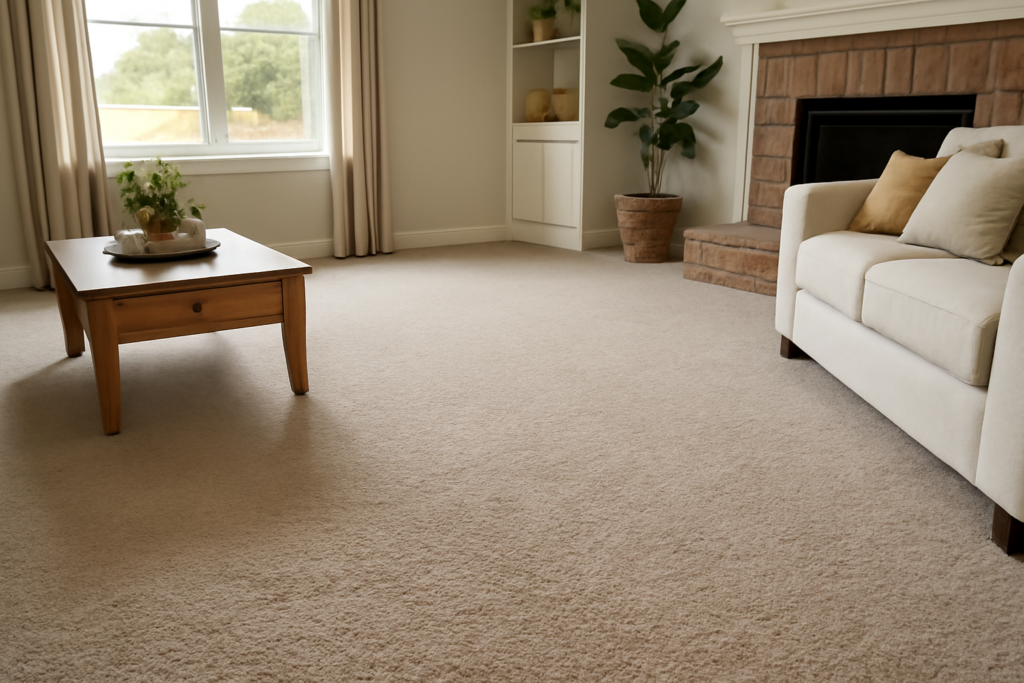
Carpet fell out of fashion for a while, but it is far from obsolete; in the right rooms, it beats every hard surface on comfort, warmth, and quiet. Deciding where to put carpet in your house is really about matching its strengths to the right spaces and avoiding the rooms where it struggles. Bedrooms love carpet; bathrooms hate it. This guide covers where carpet works best, where to skip it, and how to choose the fiber, padding, and color that suit each room and your household.
Where Carpet Shines
Carpet earns its place in rooms where softness, warmth, and sound control matter more than water resistance.
- Bedrooms: Warm and soft underfoot first thing in the morning, and quiet
- Stairs: Adds traction and muffles footsteps better than hard surfaces
- Living and family rooms: Cozy gathering spaces, especially in cold climates
- Home offices and dens: Carpet absorbs sound and reduces echo
- Basements: Warmer than concrete or tile, though moisture must be controlled first
Carpet’s sound absorption is an underrated benefit. In a two-story home, carpeting bedrooms and the upstairs hallway noticeably cuts the noise that travels to the floor below.
Where to Avoid Carpet
Some rooms are simply wrong for carpet, and forcing it leads to stains, odor, and mold. Skip carpet in bathrooms, kitchens, laundry rooms, mudrooms, and entryways, where moisture, spills, and tracked-in grit overwhelm it quickly. These areas are far better served by tile or luxury vinyl plank, which shrug off water and wipe clean.
Basements deserve a caveat: carpet can work, but only after you confirm the space stays dry and address any moisture from the slab. Laying carpet over a damp basement floor is a recipe for mildew.
Choosing the Right Fiber
Carpet fiber determines durability, stain resistance, and feel. The main options each suit different needs.
- Nylon: The most durable and resilient fiber, great for high-traffic areas and stairs
- Polyester: Soft and naturally stain resistant, with rich color, at a friendly price
- Triexta: Durable and stain resistant, a strong choice for busy family homes
- Wool: Natural, luxurious, and resilient, but the most expensive and care intensive
For a family room or stairs that see heavy use, nylon or triexta hold up best. For a guest bedroom that sees little traffic, a soft polyester delivers comfort and color at lower cost.
Do Not Skimp on Padding
The cushion under your carpet matters as much as the carpet itself. Quality padding, rated by thickness and density, supports the fibers, improves comfort, and extends carpet life by absorbing impact. A common mistake is buying nicer carpet over a thin builder-grade pad. Upgrading the padding is usually inexpensive relative to the carpet and pays off in how the floor feels and how long it lasts.
Match the pad to the room. Thicker, plush pad suits bedrooms, while firmer, denser pad performs better on stairs and high-traffic areas where a thick pad can cause the carpet to flex.
Color and Style Choices
Carpet color affects both mood and maintenance. Mid-tone, lightly flecked, or textured carpets hide dirt, foot traffic, and minor stains far better than solid light or very dark colors. Light beige shows every coffee splash, and dark carpet reveals lint and pet hair, while a multi-tone mid color camouflages everyday life.
Style matters too. Cut-pile plush feels luxurious in bedrooms, while loop and textured styles like Berber resist crushing in busy areas. For homes with pets, avoid high-loop carpets that snag claws and choose a stain-resistant, low-profile texture instead.
Living With Carpet
Carpet stays nice with simple habits. Vacuum high-traffic areas at least weekly and the whole house regularly to remove the grit that grinds down fibers. Treat spills immediately by blotting, not rubbing, and schedule a professional deep cleaning every 12 to 18 months. Place mats at entries and consider a no-shoes rule to dramatically cut the dirt that reaches your carpet in the first place.
Carpet, Allergies, and Indoor Air
A common worry is whether carpet is bad for allergies, and the answer is nuanced. Carpet does trap dust, pet dander, and allergens, but trapping them can keep them out of the air you breathe until you vacuum them away, whereas hard floors let particles become airborne with every footstep. The key is maintenance: a quality vacuum with a HEPA filter used regularly keeps trapped allergens under control.
If someone in the home has significant allergies or asthma, choose low-pile carpet that is easier to clean thoroughly, vacuum at least twice a week in active areas, and schedule professional extraction cleaning periodically. With diligent care, carpet can coexist with allergy concerns, though hard surfaces in bedrooms may be the better call for the most sensitive household members.
Carpet and Home Resale Value
Carpet’s effect on resale depends entirely on placement and condition. Fresh, neutral carpet in bedrooms is widely expected and viewed positively by buyers, who associate it with comfort in sleeping areas. Worn, stained, or dated carpet, on the other hand, drags down perceived value and can become a negotiating point against you.
Where carpet hurts resale is in the wrong rooms. Buyers increasingly expect hard surfaces in living rooms, dining areas, and especially anywhere near water, so wall-to-wall carpet throughout an entire home can read as dated. The resale-smart approach mirrors the comfort-smart one: keep carpet in bedrooms and stairs, use durable hard surfaces in main living and wet areas, and make sure any carpet you keep is clean and in good shape before listing.
One more practical note: if your existing carpet is past its prime but you are not ready for a full replacement, a professional deep clean can buy time and dramatically improve appearance for a fraction of the cost. Replacement is the right call once carpet is worn through, permanently stained, or holding odors, but a thorough cleaning often refreshes a tired-looking floor enough to keep it in service a while longer.
The Bottom Line
Carpet in a house is about putting comfort and quiet where they belong: bedrooms, stairs, living areas, and dens, while keeping it out of wet rooms and entries. Choose a durable fiber for high-traffic spots, never skimp on the padding, and pick a forgiving mid-tone color for busy households. Match carpet to the right rooms and care for it consistently, and it remains one of the most comfortable flooring choices you can make.