Carpet takes a beating in all the predictable places: under the desk chair, down the main hallway, in front of the sofa. By the time the wear shows, the fibers are already crushed and the color is gone. A carpet protector mat heads off that damage before it starts, shielding high-traffic zones and rolling-chair areas so the carpet underneath stays plush and clean for years longer.
These mats come in several forms for different jobs, from clear plastic chair mats to runners and adhesive films. Knowing which type fits your situation, and how to size it, keeps your carpet looking new and your investment protected.
Why Use a Carpet Protector Mat
Carpet wears out in a few specific ways. Foot traffic grinds in grit that cuts the fibers, rolling chair casters crush and fray the pile, and spills stain the surface. A protector mat addresses all three by creating a durable barrier that takes the abuse instead of the carpet.
The economics are simple. A quality mat costs a fraction of replacing or professionally cleaning carpet, and it extends the life of the flooring in exactly the spots that fail first. In rentals, it can also help you protect a deposit.
Types of Carpet Protector Mats
Choosing the right style depends on what you are protecting against.
- Office chair mats: Hard, clear plastic or polycarbonate mats with gripping studs underneath, sized for rolling desk chairs.
- Runners: Long, narrow plastic or vinyl strips that protect hallways and high-traffic paths.
- Plastic film protectors: Temporary adhesive films that shield carpet during painting, moving, or renovation.
- Entryway and area mats: Absorbent or rubber-backed mats placed over carpet near doors to catch grit and moisture.
Chair Mats: What to Look For
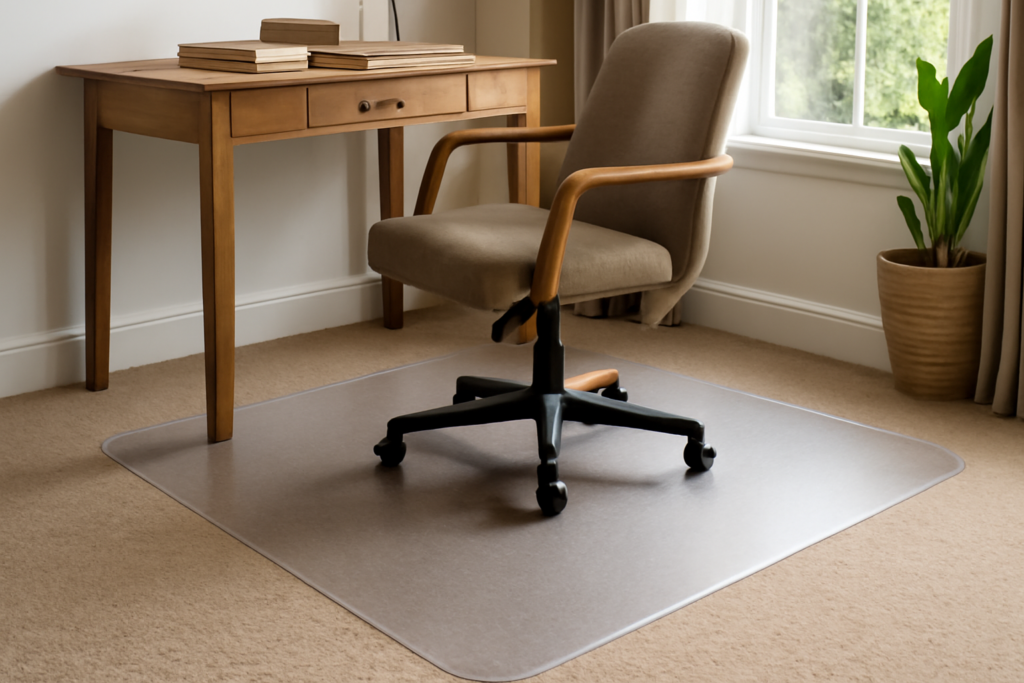
The most common protector is the office chair mat, and getting the right one matters. The single biggest factor is your carpet’s pile height. Mats are rated for low, medium, or high pile, and a mat that is too thin for thick carpet will flex, crack, and slide. For deeper carpet, choose a thicker mat with longer gripper studs on the underside.
Look for a mat large enough that the chair stays on it through its full range of movement, including when you push back from the desk. A common size is around 36 by 48 inches, with larger options for bigger work zones. A lip extending under the desk gives extra coverage where you roll most.
Materials and Durability
Chair mats come in several materials. Polycarbonate is the premium choice: it resists cracking, stays clear, and handles heavy use, typically running $40 to $120. PVC and vinyl mats are more affordable, often $20 to $50, but can crack or curl over time, especially in cold rooms. Tempered glass mats are extremely durable and modern looking but heavier and pricier.
For runners and entryway mats, look for a non-slip rubber or vinyl backing that grips the carpet without snagging the fibers, and a surface that is easy to wipe or vacuum clean.
Sizing and Placement Tips
Measure the area you want to protect before buying, and account for how far a chair rolls or how wide a walking path is. For a chair mat, place it so the casters never roll off the edge during normal use, since a wheel that drops off the lip can damage both the carpet and the mat edge.
For runners, position them to follow the actual traffic line rather than the wall, since people cut corners. In entryways, layer a protector over the carpet right where shoes land to intercept the most grit and moisture.
Care and Maintenance
Protector mats are easy to maintain, which is part of the point. Wipe plastic and glass chair mats with a damp cloth and mild cleaner to remove dust and scuffs. Lift the mat periodically to vacuum the carpet beneath, since grit can still migrate under the edges.
For fabric-topped runners and entryway mats, vacuum regularly and wash or hose them off according to the label. Replace any mat that has cracked, curled, or developed sharp edges, since a damaged mat can do more harm than good to both the carpet and your feet.
Protecting Carpet During Moves and Renovations
Some of the worst carpet damage happens not from daily use but from one-time events: moving furniture in, painting a room, or having contractors tracking through the house. Temporary plastic film protectors are made exactly for this. The self-adhesive film rolls out over the carpet, clings lightly to the fibers, and shields them from paint drips, dropped tools, and muddy boots, then peels away cleanly when the work is done.
For heavier protection during a move, sheets of hardboard or reusable floor protection film handle rolling appliance dollies and heavy foot traffic. Laying down protection before a project costs far less than a professional carpet cleaning or a replacement afterward. It is cheap insurance during exactly the moments when carpet is most likely to be ruined.
Protector Mats and Pet Households
Homes with pets put carpet through extra punishment, and the right mats help on several fronts. A washable, absorbent mat near food and water bowls catches splashes and stray kibble before they stain or soak into the carpet. Entryway protector mats intercept muddy paws and outdoor grit that pets track in. Runners along favorite pet pathways take the wear that claws and constant traffic would otherwise inflict on the carpet pile.
For pets that scratch or dig, a durable protector over their preferred spot saves the carpet underneath. Choose mats that are easy to wipe down or machine wash, since pet-area mats need frequent cleaning. The modest cost of a few well-placed mats is far less than repairing or replacing carpet worn down by daily pet activity.
Are Carpet Protector Mats Worth It?
For desk chairs, busy hallways, and renovation projects, the answer is an easy yes. The cost is modest, the installation is instant, and the payoff is carpet that stays looking new in exactly the spots that normally wear out first. Match the mat type and thickness to your carpet and your specific need, place it where the wear actually happens, and a simple carpet protector mat will quietly save you money and extend the life of your flooring for years.