Loose carpet on stairs is more than an eyesore; it is a tripping hazard waiting to happen. A carpet stapler is the tool that locks carpet, padding, and runners down tight, driving fasteners through dense fibers and into the subfloor where a hammer and tacks would only frustrate you. Whether you are securing a stair runner or fastening padding before a full install, the right stapler turns a fiddly job into a fast one.
- What a Carpet Stapler Does
- Types of Carpet Staplers
- Choosing the Right Staples
- How to Use a Carpet Stapler Safely
- Stair Runner Installation Tips
- Carpet Stapler versus Other Tools
- Avoiding Common Stapling Mistakes
- Maintenance and Care of the Tool
- Securing Carpet Padding
- What to Look For When Buying
- The Bottom Line
What a Carpet Stapler Does
A carpet stapler drives staples deep enough to grip the subfloor while pulling the carpet snug against it. It is built to punch through carpet backing and padding, which is far thicker than the paper a desk stapler handles. The most common jobs are stair runners, carpet padding, and securing carpet edges in closets and corners where stretching alone is not enough.
Types of Carpet Staplers
There are three main categories, and the best choice depends on how much carpet you are installing:
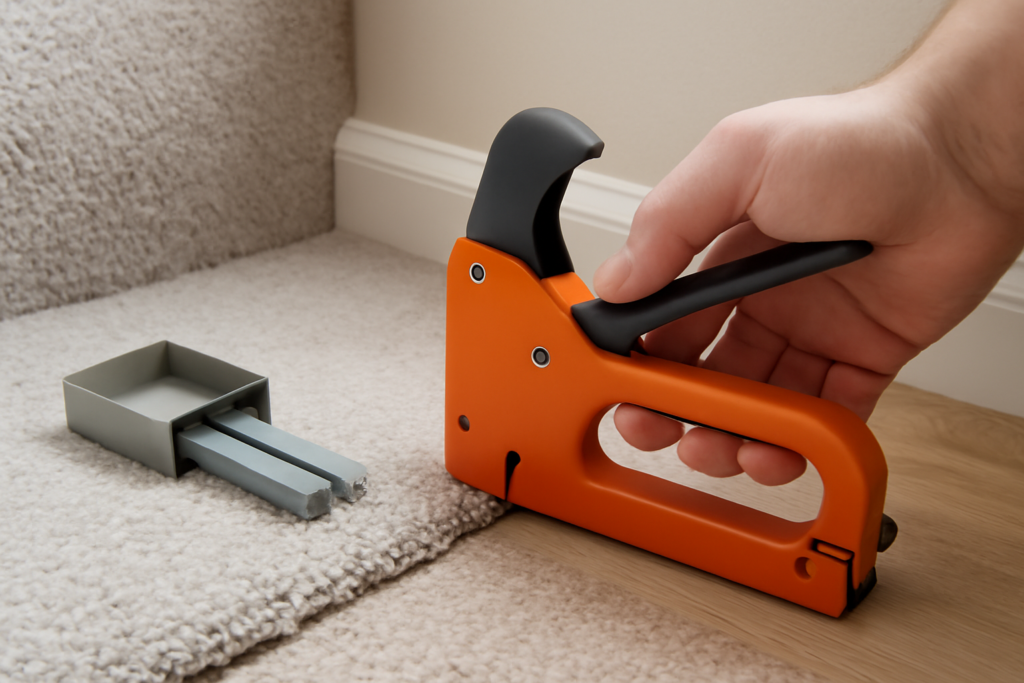
- Manual hammer tacker: You swing it like a hammer and it fires a staple on impact. Cheap, no power needed, great for padding. Less precise on thick carpet.
- Manual squeeze stapler: A heavy-duty hand stapler you press to fire. Good control for stair runners but tiring over big jobs.
- Electric stapler: Plugs in or runs on a battery and fires with a trigger pull. Less effort and consistent depth.
- Pneumatic stapler: Powered by an air compressor, it drives staples fast and deep. The pro choice for large or repeated jobs.
Choosing the Right Staples
The fastener matters as much as the gun. Carpet staplers use heavier crown staples than office tools, and leg length determines holding power. For padding, shorter legs around 1/4 to 3/8 inch are common. For securing carpet to a wood subfloor on stairs, longer legs around 1/2 inch grip better. Always match the staple type and size to your specific stapler, since each tool accepts a particular range. Buy galvanized staples to resist rust over time.
How to Use a Carpet Stapler Safely
These tools fire fasteners with real force, so treat them like the power tools they are. Follow this basic routine:
- Wear safety glasses, since a staple can ricochet off a hard subfloor.
- Keep your free hand clear of the firing path at all times.
- Pull the carpet taut over the area before fastening so the fibers do not bunch.
- Hold the stapler flat and press firmly against the surface before firing.
- Space staples evenly, working from the center outward to avoid wrinkles.
Never point a powered stapler at anyone, and disconnect the air or power when loading staples or clearing a jam.
Stair Runner Installation Tips
Stairs are where a carpet stapler truly shines. Work from the top step down, fold the runner into the crease where the tread meets the riser, and drive staples into that crease so they hide in the carpet pile. Keep the runner centered and check your alignment every few steps. Staple along both edges where the runner meets the tread for a secure, professional finish.
Carpet Stapler versus Other Tools
A carpet stapler is not a substitute for a knee kicker or power stretcher, which pull wall-to-wall carpet tight, nor for a tack strip, which grips carpet around a room’s perimeter. The stapler handles padding, runners, and edges. For a full room installation, you will likely use several tools together, with the stapler securing the cushion underneath before the carpet is stretched into place.
Avoiding Common Stapling Mistakes
A few habits separate a clean install from a lumpy one. The most common error is firing staples before the carpet is pulled taut, which locks in wrinkles you cannot fix later. Another is using staples that are too short to reach the subfloor, so they hold for a week and then work loose under foot traffic. Spacing too far apart leaves the carpet free to shift between fasteners, while spacing too tight wastes staples and can perforate the backing.
Hold the tool flat and square against the surface every time. A stapler tilted at an angle drives the staple in crooked, leaving one leg proud of the surface where it can snag socks and bare feet. If a staple does not seat fully, tap it down with a nail set rather than firing another on top of it.
Maintenance and Care of the Tool
A carpet stapler lasts for years with minimal care. Keep the magazine clean and free of debris so staples feed smoothly, and clear any jam by disconnecting power or air first. For pneumatic models, add a drop of pneumatic tool oil periodically and drain the compressor tank to prevent moisture from rusting internal parts. Store the tool in a dry place, and keep a spare box of the correct staples on hand so you never stall a job hunting for fasteners.
Securing Carpet Padding
Before carpet ever goes down in a full installation, the padding has to be fastened, and a stapler makes quick work of it on a wood subfloor. Roll the padding out, butt the seams together without overlapping, and tape the seams. Then staple the padding around the perimeter and along the seams so it cannot shift while you stretch the carpet over it. A manual hammer tacker is perfect for this job, since speed matters more than precision and the staples disappear under the carpet anyway. Trim the padding just inside the tack strip so the carpet can grip the strip cleanly at the edges.
What to Look For When Buying
Match the tool to the scope of your project. For a single stair runner, a quality manual or electric stapler is plenty. For repeated installs, a pneumatic model pays for itself in speed and reduced hand fatigue. Look for a comfortable grip, an easy-load magazine, and a jam-clearing feature. A manual hammer tacker can start around 15 to 30 dollars, electric models often run 30 to 80 dollars, and pneumatic staplers typically begin around 50 dollars plus the cost of a compressor.
The Bottom Line
A carpet stapler is the unsung hero of stair runners and padding installs, delivering the holding power that hand tacks simply cannot. Choose the type that matches your workload, pair it with the correct galvanized staples, wear eye protection, and pull the carpet taut before you fire. With the right tool, securely fastened carpet is a job you can finish in an afternoon.