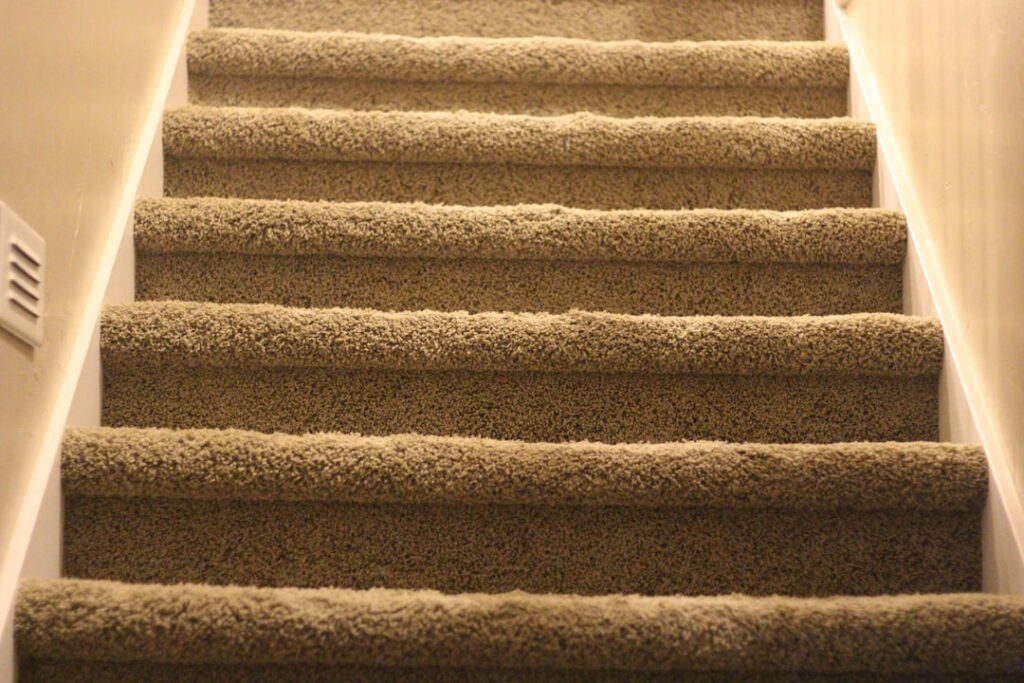
Carpet treads are the individual carpeted covers that sit on the horizontal step surfaces of a staircase, giving each step grip, warmth, and a finished look. If your stairs feel slippery in socks or you want to protect bare wood from scuffs, carpet treads are one of the simplest upgrades you can make in an afternoon.
Unlike a full runner that flows continuously down the staircase, treads cover only the part of the step you walk on. That difference matters for cost, cleaning, and how much of your hardwood stays visible. This guide walks you through the types, how to size and install them, and how to keep them looking sharp.
What Are Carpet Treads?
A carpet tread is a pre-cut rectangle of carpet, usually finished on all four edges, designed to cover the depth and width of a single stair step. Most fall in the range of 8 to 9 inches deep and 24 to 30 inches wide, which suits standard residential staircases. Some wrap slightly over the front edge, called the nosing, to cushion the spot that takes the most foot traffic.
You will find them sold individually or in sets of 13 to 15, which covers a typical flight. Because they leave the risers and the outer edges of each step exposed, treads are popular with homeowners who love their wood stairs but want a safer, quieter walking surface.
Types of Carpet Treads
There are several styles to choose from, and the right one depends on your stairs and how much effort you want to put into installation.
- Peel-and-stick treads: These have an adhesive backing that bonds directly to the step. They install in minutes and work well on clean, smooth wood, though the bond weakens over time and on textured surfaces.
- Rubber-backed treads: A gripping rubber or latex backing holds the tread in place through friction and a little tackiness, making them easy to lift for cleaning.
- Bullnose treads: These wrap over the front nosing of the step for extra edge protection and a softer landing underfoot.
- Indoor-outdoor treads: Made from polypropylene or rubber, these handle moisture and resist fading, which makes them a smart pick for entry stairs or decks.
- Custom-bound treads: Cut from carpet remnants and bound at the edges, these let you match an existing runner or room carpet exactly.
Benefits of Adding Carpet Treads
Safety is the headline reason. Hard staircases are a leading spot for household slips, and adding a textured surface gives shoes and bare feet something to grab. Treads are especially valuable in homes with young children, older adults, or pets whose nails slide on bare wood.
Beyond traction, treads cut down on noise. A carpeted step absorbs the hollow thud of footsteps, which makes a real difference in a two-story home or an apartment over a living space. They also protect the wood underneath from wear, so the high-traffic center of each step does not develop a worn path while the edges stay pristine. Finally, they add a decorative accent that you can swap out far more cheaply than replacing a full runner.
How to Measure and Choose the Right Size
Accurate measurement keeps your treads from looking lopsided or leaving awkward gaps. Grab a tape measure and check a few steps, since older staircases are rarely perfectly uniform.
- Measure the depth of the step from the back to the front nosing, then subtract about an inch if you do not want the tread to wrap the edge.
- Measure the width of the step. Most homeowners center the tread, leaving 1 to 2 inches of exposed wood on each side for a clean border.
- Count your steps, including the landing if you plan to cover it.
- Add one or two spare treads to your order in case of a measuring error or future replacement.
If your stairs are unusually narrow or wide, look for custom-bound options rather than forcing a standard size to fit.
Installing Carpet Treads
Installation is genuinely a do-it-yourself project for most people. Start by cleaning each step thoroughly, because dust and oils keep adhesives and grip backings from bonding. Let the surface dry completely.
For peel-and-stick treads, dry-fit each piece first to confirm placement, mark the position lightly with a pencil, then peel the backing and press firmly from the center outward to push out air pockets. For rubber-backed treads, simply position and press. If you want extra hold on any style, double-sided carpet tape along the back edge and the front nosing adds security without permanent damage. Work from the bottom step up so you are never standing on a freshly placed tread. Press each one for several seconds and avoid heavy traffic for the first 24 hours so the bond can set.
If your staircase is open-sided, curved, or unusually steep, or if you want a flawless wrapped-nosing look, hiring an installer is worth the modest cost to get clean, durable results.
Cleaning and Maintenance
One of the quiet advantages of treads is how easy they are to maintain compared with wall-to-wall carpet. Vacuum them weekly using a handheld vacuum or the stair attachment, working with the nap rather than against it. For removable rubber-backed treads, you can lift them, shake out debris, and clean the step beneath.
Spot-clean spills promptly by blotting with a clean cloth and a mild carpet cleaner rather than scrubbing, which can fray the fibers. Many synthetic treads can be machine washed on a gentle cycle, but always check the manufacturer’s label first, since some adhesives and bindings do not survive a wash. Rotate or replace individual treads as they wear, which is far cheaper than redoing an entire runner.
Carpet Treads vs. Stair Runners
Homeowners often weigh treads against a continuous runner. A runner gives a more luxurious, finished look and covers more of the staircase, but it costs more, usually requires professional installation with tack strips, and is harder to clean as one piece. Treads cost less, install yourself, show off more of your wood, and let you replace a single worn piece.
The trade-off is appearance and coverage. If you want maximum cushioning and a high-end aesthetic, a runner wins. If you want safety, simplicity, and the flexibility to change your look later, treads are the practical choice. Many people start with treads and upgrade to a runner only if they decide they want fuller coverage.
Final Thoughts
Adding carpet treads is one of the highest-value, lowest-effort improvements you can make to a staircase. They reduce slips, quiet your home, protect your wood, and bring a touch of style, all for a modest investment and a single afternoon of work. Measure carefully, pick a style that matches both your decor and your tolerance for upkeep, and follow the manufacturer’s guidance for any adhesive. With the right treads in place, your stairs become safer and more comfortable without sacrificing the wood you love.