If you have been searching for carpeta de vinil, you are looking at one of the most popular floors in America today: vinyl flooring. The Spanish term translates directly to “vinyl flooring,” covering both the roll-out sheet vinyl your grandparents may have had in the kitchen and the modern luxury vinyl planks and tiles that mimic real wood and stone. Whatever you call it, vinyl is waterproof, budget-friendly, and tough, which is why it now outsells laminate across the U.S. This guide breaks down the types, costs, and installation so you can choose the right one.
What Carpeta De Vinil Actually Means
Vinyl flooring is made primarily from PVC, a synthetic plastic, layered with a printed design film and a clear protective wear layer on top. That construction is what makes it completely waterproof, a real advantage over hardwood and laminate in kitchens, bathrooms, and basements. Modern printing is sharp enough that a good vinyl plank passes for oak or marble until you knock on it. There are three main categories to know: sheet vinyl, luxury vinyl plank (LVP), and luxury vinyl tile (LVT).
Sheet Vinyl
Sheet vinyl comes in wide rolls, typically 6 or 12 feet across, and installs as one continuous piece with very few or no seams. That seamlessness makes it the most water-resistant option of all, ideal for laundry rooms and full bathrooms where standing water is a risk.
It is also the cheapest, running just $0.50 to $2 per square foot for the material and $1 to $3 installed. The downsides are that it can look less convincing than thick planks, it is hard to repair (a damaged section means replacing a large area), and handling a heavy 12-foot roll solo is awkward. For a tight budget or a rental, though, sheet vinyl is hard to beat.
Luxury Vinyl Plank (LVP)
LVP is the product most people picture today. These are individual planks, usually 6 to 9 inches wide and 48 inches long, designed to look like wood boards. The best versions are built on a rigid SPC (stone-plastic composite) core that resists dents and stays dimensionally stable in heat and cold.
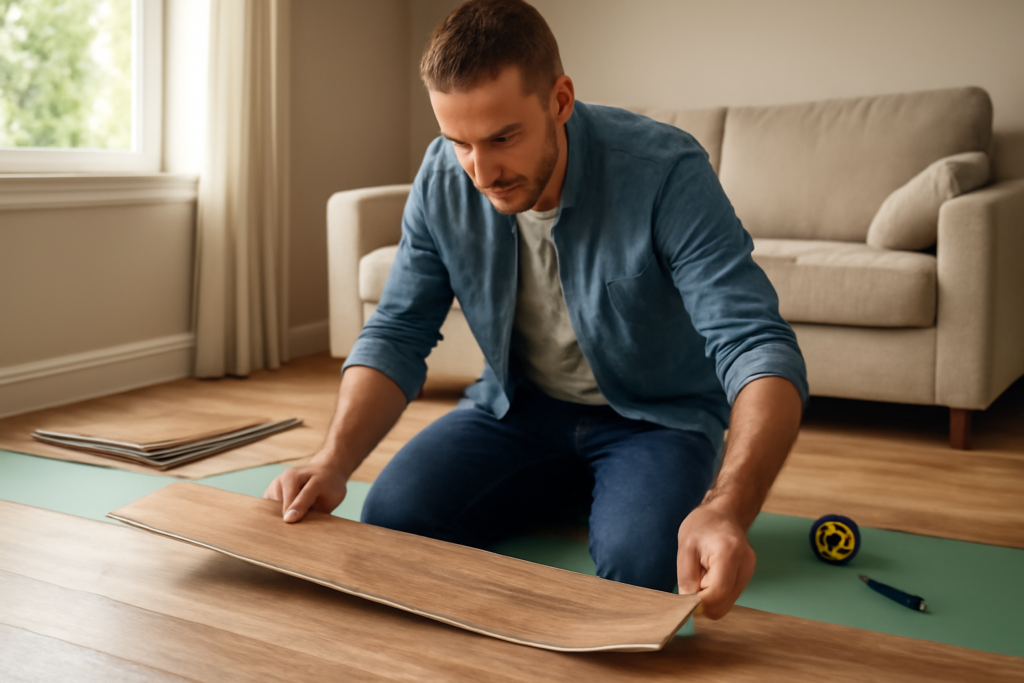
Most LVP uses a click-lock edge that floats over the subfloor without glue, making it a favorite DIY install. The single most important spec is the wear-layer thickness: 12 mil suits light residential use, 20 mil handles busy households with kids and pets, and 28 mil or more is commercial grade. Expect $2 to $5 per square foot for quality LVP, or $4 to $8 installed.
Luxury Vinyl Tile (LVT)
LVT works just like LVP but is shaped and printed to imitate ceramic tile or natural stone, often in 12-by-24-inch or 18-inch-square pieces. You can even install it with grout lines for a near-identical stone look at a fraction of the cost and with warmer, softer footing. Pricing tracks LVP closely, roughly $2 to $6 per square foot for the material.
Pros and Cons of Vinyl Flooring
Vinyl earns its popularity, but it is not perfect. Weigh both sides:
- Pros: 100 percent waterproof, comfortable and quiet underfoot, scratch and dent resistant, easy to clean with a damp mop, and far cheaper than the wood or stone it imitates.
- Cons: it cannot be sanded or refinished, lower-quality versions can fade in direct sun or off-gas a faint odor when new, and it does not add the resale value that real hardwood does.
Installation Methods and Cost
Vinyl installs three ways. Floating click-lock LVP and LVT snap together over a foam underlayment, the easiest method for homeowners, needing only a tapping block, spacers, and a utility knife to score and snap planks. Glue-down vinyl bonds to the subfloor with troweled adhesive for a permanent, quiet floor. Sheet vinyl is rolled out, trimmed, and either glued or held by perimeter adhesive.
In every case the subfloor must be clean, dry, and flat within about 3/16 inch over 10 feet, since vinyl telegraphs bumps and debris. Acclimate planks in the room for 48 hours first. All in, a vinyl, or carpeta de vinil, floor typically lands between $2 and $8 per square foot installed, delivering waterproof, wood-look performance for a fraction of what the real thing costs.
Caring for Vinyl Flooring
One of the biggest reasons vinyl wins is how little upkeep it needs. Sweep or dry-mop regularly to keep grit from dulling the wear layer, then damp-mop with a pH-neutral cleaner or a splash of mild dish soap in warm water. Skip abrasive scrubbers, wax, and harsh solvents, which can dull or cloud the surface, and avoid steam mops, since prolonged heat and moisture can loosen the planks over time. Use felt pads under furniture legs and a non-staining (non-rubber-backed) mat at entryways, because rubber and some latex backings can react with vinyl and leave permanent yellow marks.
Where to Use Each Type
Matching the product to the room saves money and headaches. Sheet vinyl is the smart pick for full bathrooms, laundry rooms, and mudrooms where seamless waterproofing matters most and the budget is tight. Click-lock LVP shines in kitchens, living rooms, hallways, and basements, anywhere you want a wood look that can handle moisture and traffic. LVT works beautifully in entryways and bathrooms where you want the stone-tile look without cold, hard footing. For a whole-home install, many people run the same LVP throughout the main floor for a continuous, seamless look that makes the space feel larger.
One caution: most standard interior vinyl is rated for indoor use only. Direct, prolonged sun through large windows can fade lower-quality planks, and only specific products are warrantied for sunrooms or covered porches, so check the spec sheet if the floor sees intense light.
Choosing the Right Wear Layer and Thickness
Two numbers separate a vinyl floor that lasts from one that wears out fast. The wear layer is the clear protective top film measured in mils: 6 to 8 mil suits a low-traffic bedroom, 12 mil handles a normal household, and 20 mil or more is built for kids, pets, and heavy use. Overall plank thickness (4mm to 8mm) affects how solid the floor feels and how well it spans minor subfloor imperfections, with thicker rigid-core planks feeling more substantial underfoot. Do not confuse the two, a thick plank can still have a thin wear layer, so read both figures before you buy.