A slip on bare hardwood stairs sends roughly 1 million Americans to the ER every year, and most of those falls happen at home. Carpeted stairs remain one of the simplest ways to add traction, reduce noise, and soften the look of a staircase without a full renovation. But carpet is not perfect for every household, and choosing the wrong fiber or pile can leave you with a worn-out eyesore in under two years.
Why Homeowners Still Choose Carpet for Stairs
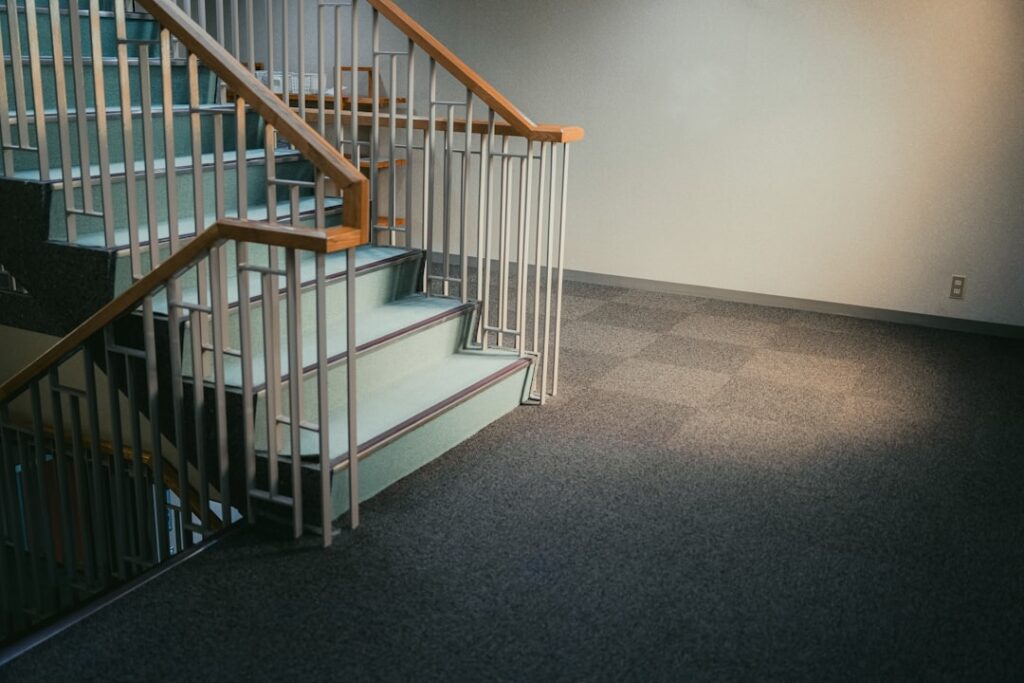
Carpet delivers a combination of safety, comfort, and sound dampening that hard surfaces struggle to match on a staircase. The added friction underfoot cuts the risk of slipping, which matters most in homes with young children or older adults. A padded stair also absorbs impact noise, so foot traffic between floors does not echo through the house.
From a budget standpoint, carpeting a standard 12-step staircase costs between $400 and $900 installed, depending on the fiber and pad quality. That is significantly less than refinishing hardwood treads or installing engineered wood stair nosing.
Pros of Carpeted Stairs
- Slip resistance: Carpet fibers provide far more grip than wood, tile, or LVP, especially in socks or bare feet.
- Noise reduction: A quality pad and carpet combo can reduce stair noise by up to 70%, a big deal in two-story homes with bedrooms upstairs.
- Comfort underfoot: Carpet cushions each step, reducing joint strain on knees and ankles during repeated trips.
- Hides subfloor flaws: Older stairs with scratches, stains, or mismatched wood disappear under wall-to-wall carpet.
- Design flexibility: Runners, wall-to-wall, or waterfall installations let you match virtually any interior style.
Cons to Consider Before Installing
- Wear concentration: Stair treads take focused foot traffic in the same 10-inch strip, so carpet wears faster here than on flat floors.
- Harder to clean: Spills, pet hair, and dust collect in pile fibers and along tread edges where vacuuming is awkward.
- Allergen trap: Carpet holds dust mites, pollen, and pet dander more than hard surfaces, a concern for allergy-prone households.
- Dated look if neglected: Matted, stained stair carpet can make an entire home feel outdated.
- Hides damage underneath: Rotting treads or loose nails can go unnoticed beneath carpet for years.
Best Carpet Types for Stairs
Not every carpet handles stair traffic equally. The ideal stair carpet is dense, low-pile, and made from a durable fiber. Here are the top performers.
Nylon (Best Overall)
Nylon is the gold standard for stair carpet. It resists crushing, bounces back from foot traffic, and holds up for 10-15 years on a busy staircase. Brands like Mohawk SmartStrand and Shaw Anso offer stain-treated nylon that simplifies cleanup. Expect to pay $3-$7 per square foot for quality nylon.
Wool (Premium Pick)
Wool is naturally resilient, flame-resistant, and has a luxurious feel. It costs more, typically $8-$14 per square foot, but it wears beautifully and develops a soft patina instead of looking flat. Wool is best for formal staircases with moderate traffic.
Polyester (Budget-Friendly)
Polyester costs less ($2-$5 per square foot) and offers decent stain resistance. However, it crushes faster than nylon, so it is only a good choice for low-traffic secondary staircases.
Carpet Styles That Work on Stairs
Pile type matters as much as fiber when it comes to stair performance. A tight, low loop or cut-loop carpet resists matting and shows footprints less than a plush pile.
- Berber (loop pile): Extremely durable and hides wear well, but snagging is a concern in homes with pets.
- Frieze (twisted cut pile): The tight twist disguises traffic patterns and vacuums easily.
- Cut-loop blend: Combines durability with a textured look that hides dirt.
- Patterned carpet: Geometric or striped patterns mask stains and add visual interest, especially on runners.
Avoid high-pile plush or shag on stairs. They look beautiful for about three months, then crush flat in the center of every tread.
Runner vs. Wall-to-Wall: Which Is Better?
A stair runner covers the center of each tread while exposing finished wood on the sides. It works well when your stairs are in good condition and you want a decorative element rather than full coverage. Runners also cost less, starting around $200-$500 installed for a standard staircase.
Wall-to-wall carpet covers the entire tread and riser, providing maximum noise reduction and slip protection. Choose this option when the underlying stairs are damaged or when safety is the top priority. Installation runs $400-$900 for most staircases.
Installation Tips for Long-Lasting Results
Professional installation is worth the cost on stairs. A poorly stretched stair carpet wrinkles within months and becomes a tripping hazard, defeating the purpose of adding carpet in the first place.
- Use a high-density pad rated for stairs, typically 6-8 lb density and no thicker than 3/8 inch. Thick padding feels nice on flat floors but makes stair edges unstable.
- Ask the installer to use the waterfall method (carpet flows over each tread edge) for a classic look, or the Hollywood method (carpet wraps tightly around the tread nosing) for a sleeker profile.
- Make sure tack strips are firmly anchored to both treads and risers. Loose strips cause carpet to pull away within the first year.
- Vacuum stairs at least twice a week to prevent dirt from grinding into fibers and accelerating wear.
When to Skip Carpet on Stairs
Carpet is not always the right call. If your household includes pets that have frequent accidents, hard surfaces with washable stair treads are easier to maintain. Homes in humid climates with below-grade staircases should also consider moisture-resistant LVP or tile, since carpet and moisture lead to mold. And if you plan to sell your home, exposing well-maintained hardwood stairs can boost resale appeal more than even brand-new carpeted stairs.
For everyone else, a properly chosen and installed stair carpet remains one of the best upgrades for safety, comfort, and noise control in a multi-story home.