Choosing exterior color is one of the highest-stakes decisions in a home’s curb appeal, and if you have landed on the Monogram line, the range of certainteed monogram siding colors gives you more flexibility than almost any other vinyl product on the market. Monogram is CertainTeed’s premium vinyl siding, and its palette spans soft coastal neutrals, warm earth tones, and rich saturated darks that used to be impossible in vinyl. This guide walks through the color families, the fade technology behind them, profile options, and how to pick a shade that will still look right in fifteen years.
- Why Monogram Sits at the Premium End
- The Color Families at a Glance
- The Technology Behind Dark Colors
- Profiles That Affect How Color Reads
- How to Choose the Right Shade
- Ordering and Viewing Samples
- Fade Resistance and the Warranty
- Pairing Colors With Architectural Style
- Coordinating Trim, Soffit, and Accents
- Common Mistakes When Picking a Color
- Making the Final Call
Why Monogram Sits at the Premium End
Monogram is a .046-inch-thick vinyl panel, heavier than builder-grade siding, which gives it better rigidity and a more convincing wood-grain finish. That thickness matters for color because a stiffer, higher-quality panel holds its shape and its pigment more consistently across a large wall. The line is known for its extensive color offering, roughly three dozen shades, and for including deep colors that many vinyl lines cannot produce without warping.
The Color Families at a Glance
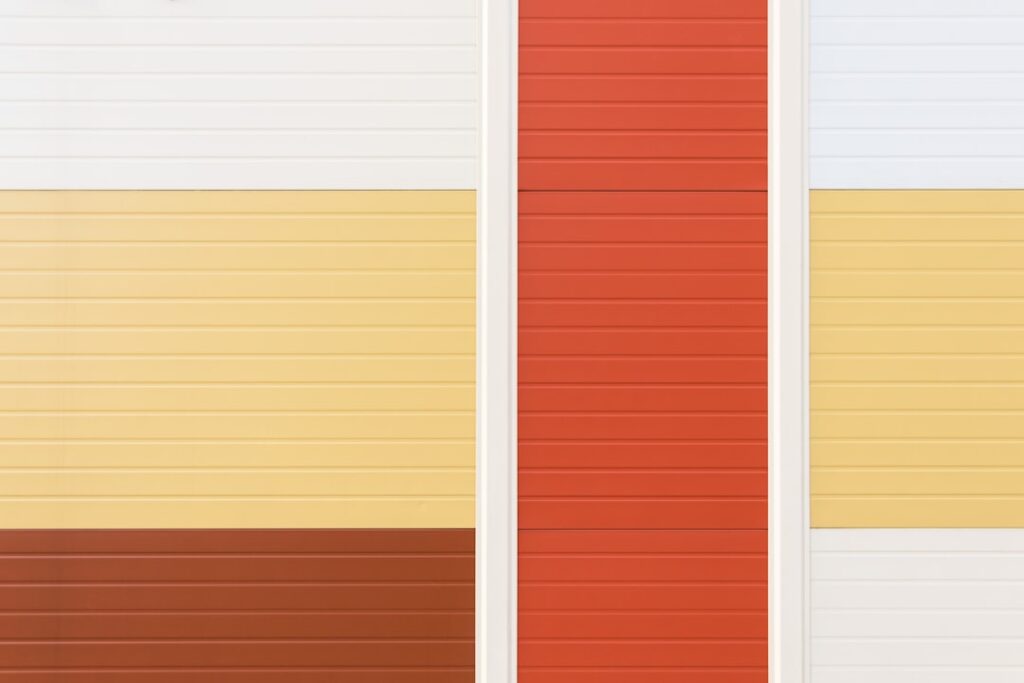
CertainTeed organizes Monogram colors into intuitive groups. Understanding the families helps you shortlist quickly rather than staring at three dozen swatches.
- Whites and off-whites: shades like Snow White, White, and Colonial White remain the most popular for classic and traditional homes.
- Warm neutrals: Sandstone Beige, Natural Clay, Buckskin, and Savannah Wicker suit brick accents and warm-toned roofs.
- Cool grays: Granite Gray, Pewter, Charcoal Gray, and Colonial Gray have become the dominant modern choice for farmhouse and transitional exteriors.
- Greens and blues: Forest, Sage, Herringbone, Heritage Blue, and Cape Cod Gray give traditional and coastal homes personality.
- Rich darks: deeper tones like Autumn Red, Charcoal, and select premium darks anchor the palette for dramatic modern looks.
The Technology Behind Dark Colors
Dark siding has always been risky in vinyl because deep pigments absorb heat, and heat makes vinyl expand, buckle, and fade. CertainTeed addresses this with its color-retention technology, which uses engineered pigments and, in the darkest shades, a proprietary formulation that reflects infrared energy to reduce heat buildup. This is why Monogram can offer charcoals and deep reds that hold up where cheaper siding would warp along the sunny south wall.
The practical takeaway: if you love a dark color, Monogram is one of the safer vinyl lines to get it in, but you should still discuss orientation with your installer. A dark wall in full afternoon sun in a hot climate will always run warmer than a north-facing one.
Profiles That Affect How Color Reads
Color never exists in isolation from profile, because the panel shape changes how light and shadow play across the wall. Monogram comes in several profiles:
- Clapboard (Double 4, Double 4.5, Double 5): the traditional horizontal lap look, the most common choice.
- Dutchlap (Double 4, Double 4.5): a beveled edge that casts a deeper shadow line, making colors look slightly richer and adding old-world character.
- Board & batten and beaded profiles in select ranges for accent walls and farmhouse styling.
Dutchlap tends to make a mid-tone gray or beige read a shade deeper because of the extra shadow, so order physical samples in your chosen profile, not just a flat chip.
How to Choose the Right Shade
The most reliable way to narrow the field is to work from the elements you cannot change. Start with your roof color and any masonry (brick or stone), because those are permanent and expensive to alter. Pull your siding color from the same temperature family as the roof: warm roofs pair with warm neutrals, cool gray roofs pair with grays and blues.
Next, consider your trim. Crisp white trim against a gray or green field is a timeless, high-contrast combination. If you prefer a softer look, keep the trim within two or three shades of the body color.
Finally, respect your neighborhood and any HOA guidelines. A charcoal-and-black modern scheme can look striking, but if every other house on the street is a soft neutral, the resale calculus changes. Aim for a color that stands out tastefully rather than clashing.
Ordering and Viewing Samples
Never commit from a small paper swatch. CertainTeed offers a color visualizer online where you can drop shades onto a photo of your own home, which is invaluable for seeing how a color scales across a full facade. Beyond the digital preview, request large physical samples and tape them to the actual walls. View them at three times of day (morning, midday, and evening) and in both sun and shade, because a gray that looks warm at noon can turn cold and blue at dusk.
Fade Resistance and the Warranty
One of Monogram’s selling points is a strong warranty that includes fade protection. CertainTeed backs the product with a lifetime limited warranty and, importantly, includes coverage against excessive fading measured on a defined color-difference scale. This matters because all exterior color fades slightly over decades; the question is whether it stays uniform. Because the pigment is compounded throughout the panel rather than painted on, scratches and nicks are far less visible than on painted siding, and the whole wall fades evenly rather than in patches.
Pairing Colors With Architectural Style
The most successful color choices respect the architecture of the home. A Colonial or Cape Cod looks its best in classic whites, soft grays, or historically accurate colonial blues and greens paired with crisp white trim. A Craftsman bungalow suits earthier tones, sage greens, warm tans, and muted browns, that echo the style’s connection to natural materials. Modern farmhouses have driven the popularity of the deep charcoal or black body with white trim and black window frames, a high-contrast look Monogram’s darker shades handle well.
Ranch and mid-century homes carry warm neutrals and muted earth tones comfortably, while a Victorian can support a more adventurous multi-color scheme with a body color, a contrasting trim, and an accent on gables and details. When you match the color temperature and saturation to the era and style of the house, the result reads as intentional and timeless rather than trendy.
Coordinating Trim, Soffit, and Accents
Siding color is never a solo decision, because the trim, soffit, fascia, corner posts, and shutters all frame it. The cleanest approach is a two- or three-color scheme: a body color, a trim color (often white or a light neutral for contrast, or a deeper shade for a monochromatic modern look), and an accent color reserved for the front door or shutters. CertainTeed offers coordinating accessories, corner posts, J-channel, soffit, and trim, in matching colors so the whole envelope stays consistent.
Pay attention to the front door as your opportunity for a pop of personality; a bold door color against a neutral field draws the eye to the entry and adds curb appeal without committing the whole house to a strong color. Also consider how gutters and downspouts read against the siding, and choose them in a color that blends with the trim or the body so they disappear rather than distract. Thinking through these accents at the same time as the main color prevents the disjointed look of a body color chosen in isolation.
Common Mistakes When Picking a Color
- Choosing from a chip indoors. Interior lighting distorts exterior color badly; always test outside.
- Ignoring the roof. A siding color that fights the roof undermines the whole scheme.
- Going too trendy. Siding is a 20- to 40-year decision; pick a color you will still like when the current trend passes.
- Underestimating dark heat. Even with heat-reflective pigments, verify dark-color approval for your wall orientation and climate.
- Forgetting accessories. Match soffit, fascia, corner posts, and shutters within the same line so the whole envelope coordinates.
Making the Final Call
The breadth of CertainTeed Monogram siding colors means almost any architectural style can find a fitting shade, from the safe elegance of Colonial White to the bold statement of a deep charcoal Dutchlap. Anchor your choice to your roof and masonry, test large samples on your actual walls at different times of day, and confirm any dark color against your home’s sun exposure. Do that groundwork and the color you pick will look as good on move-in day as it does two decades later, backed by one of the strongest fade warranties in the vinyl category.