Upgrading a patio, deck, or balcony doesn’t have to drain your savings. There are plenty of cheap outdoor flooring options that look far more expensive than they cost, and many of them install in a single weekend with basic tools. The trick is knowing which budget materials actually hold up to rain, UV, and foot traffic, and which ones fade, warp, or crack after one season. This guide breaks down the most affordable surfaces by price per square foot, walks through DIY difficulty, and points out where a few extra dollars saves you a costly redo down the road.
- How Cheap Can You Realistically Go?
- 1. Interlocking Deck Tiles
- 2. Gravel and Pea Stone
- 3. Concrete Pavers
- 4. Outdoor Rugs Over Existing Surfaces
- 5. Rubber Tiles and Mats
- 6. Brick
- Comparing the Budget Options
- Matching the Material to Your Space
- How Long Do Budget Floors Really Last?
- Money-Saving Installation Tips
- The Bottom Line
How Cheap Can You Realistically Go?
Truly budget outdoor flooring lands between $1 and $6 per square foot for materials. Below that, you’re usually looking at loose gravel or a bag of mulch; above it, you drift into mid-tier pavers and composite. Before you buy, factor in three hidden costs that catch DIYers off guard: base preparation (gravel, sand, or landscape fabric), edging to keep loose materials in place, and sealer for anything porous. A $2 material can quietly become $4 once you add those, so read each option’s full picture below.
Once your patio flooring is in place, think about how you’ll use the space. A gazebo adds shade and structure, while a good outdoor furniture set turns it into a spot you’ll actually want to hang out in. A deck box is also worth considering if you need somewhere to stash cushions and outdoor gear.
We may earn a commission when you purchase through our links.
1. Interlocking Deck Tiles
Snap-together deck tiles are the fastest way to transform an ugly concrete balcony or patio. They click into a grid over any flat surface with no adhesive, no nails, and no experience required. You’ll find them in acacia or eucalyptus wood, composite, and plastic.
- Cost: $2-$5 per square foot
- DIY difficulty: Very easy — no tools beyond a utility knife for edges
- Best for: Renters, balconies, covering worn concrete
Wood versions need annual oiling to prevent graying, while plastic and composite tiles just rinse clean. Because they lift out individually, they’re fully removable, which makes them a landlord-friendly choice.
2. Gravel and Pea Stone
For a patio, walkway, or seating area, few materials beat the price of gravel. Crushed stone and pea gravel run roughly $1-$3 per square foot delivered, and installation is little more than laying landscape fabric, dumping, and raking to a 2-3 inch depth.
Gravel drains beautifully and never cracks, but it does migrate. A steel, stone, or paver edge keeps it contained, and a compacted base helps chairs and tables sit level. It’s the cheapest way to define an outdoor room, though it’s not ideal for high heels or wheelchairs.
3. Concrete Pavers
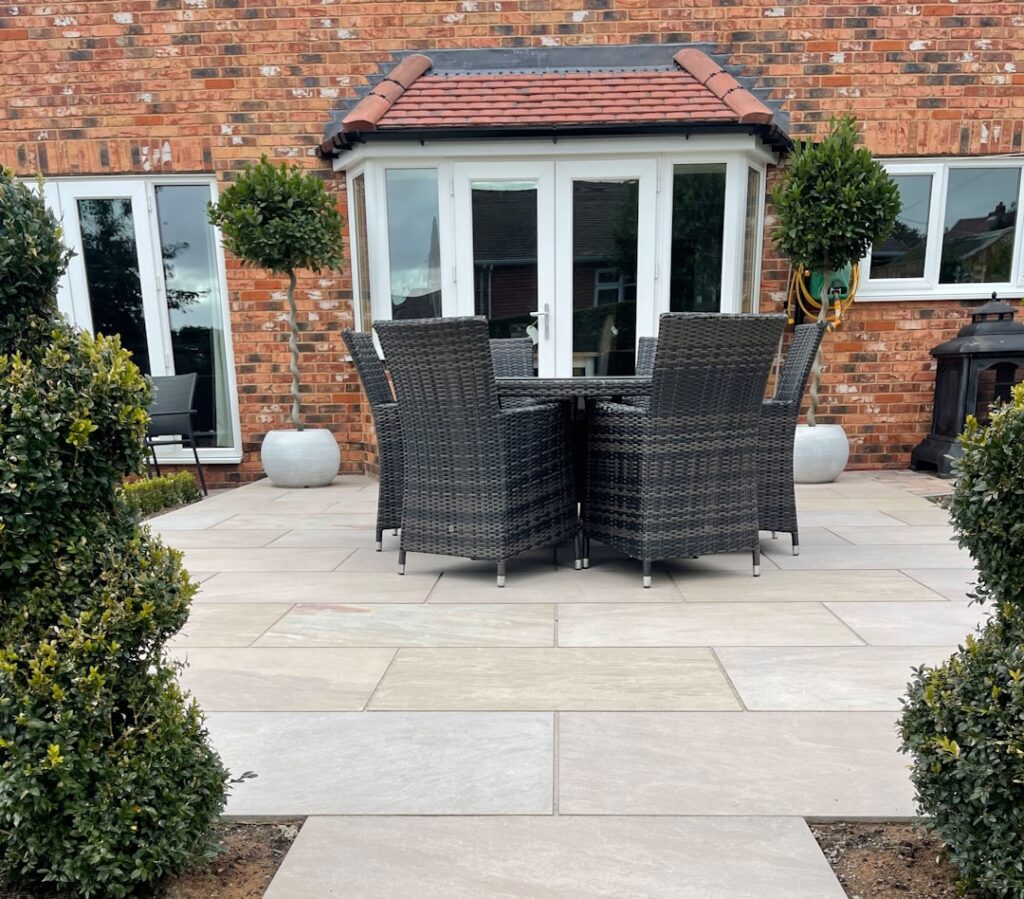
Standard concrete pavers deliver the look of stone at a fraction of the price. A basic 6×9 inch paver costs about $3-$6 per square foot, and you can dry-lay them over compacted gravel and sand without mortar.
They’re heavier work than deck tiles, but the payoff is a surface that lasts 25-plus years. If one cracks or stains, you lift and swap a single unit. Big-box stores frequently run pallet deals, and buying a full pallet often drops the per-square-foot price further.
Poured or Overlay Concrete
If you already have a slab, a resurfacing overlay or a coat of textured concrete paint costs just $1-$4 per square foot and hides stains and minor cracks. It’s one of the cheapest facelifts available for an existing patio.
4. Outdoor Rugs Over Existing Surfaces
Sometimes the cheapest fix is the simplest. A polypropylene outdoor rug thrown over tired decking or concrete instantly adds color and comfort for $0.50-$2 per square foot. UV-treated versions resist fading, dry fast after rain, and hose clean in minutes. They won’t fix a structural problem, but for a quick seasonal refresh on a tight budget, nothing is faster.
5. Rubber Tiles and Mats
Recycled rubber tiles shine in play areas, gym corners, and around hot tubs. At $3-$6 per square foot, they cushion falls, grip when wet, and shrug off freeze-thaw cycles that crack harder materials. Many interlock like puzzle pieces for tool-free installation. The trade-off is a utilitarian look and a faint rubber smell in hot sun, so they’re best where function beats form.
6. Brick
Reclaimed or standard clay brick offers timeless charm for $4-$8 per square foot. Dry-laid over sand in a running-bond or herringbone pattern, it needs no mortar and ages gracefully. Salvage yards and marketplace listings often sell used brick for pennies, dropping the cost dramatically if you’re willing to clean and haul it yourself.
Comparing the Budget Options
- Outdoor rugs — $0.50-$2/sq ft. Easiest, most temporary.
- Gravel/pea stone — $1-$3/sq ft. Cheapest permanent surface, needs edging.
- Interlocking deck tiles — $2-$5/sq ft. Best for balconies and renters.
- Concrete pavers — $3-$6/sq ft. Most durable value pick.
- Rubber tiles — $3-$6/sq ft. Best for safety and cushioning.
- Brick — $4-$8/sq ft (less if reclaimed). Classic, long-lasting.
Matching the Material to Your Space
The cheapest floor on paper isn’t always the cheapest for your particular project. A balcony that can’t take much weight rules out concrete pavers but welcomes lightweight deck tiles or an outdoor rug. A ground-level patio that gets heavy furniture and foot traffic justifies pavers or brick that won’t shift under a loaded dining set. A shaded, damp side yard where wood would rot points you toward gravel, rubber, or plastic composite tiles that ignore moisture.
Consider drainage too. Loose materials like gravel and pea stone let water pass straight through, so they never puddle and rarely freeze-crack. Solid surfaces need a slight slope, about 1/4 inch per foot, to shed rain away from the house. Matching the surface to how your space actually gets used prevents the expensive mistake of tearing out a floor that looked cheap but fought your conditions.
How Long Do Budget Floors Really Last?
Cheap doesn’t have to mean disposable. Here’s what to realistically expect from each option when installed correctly and maintained:
- Outdoor rugs: 2-4 years before UV fading and fraying set in.
- Wood deck tiles: 5-10 years with annual oiling; plastic and composite versions 15-plus.
- Gravel: Effectively permanent, though it needs a top-up rake and occasional replenishment.
- Concrete pavers and brick: 25-plus years, often outlasting the house’s other exterior features.
- Rubber tiles: 10-20 years depending on sun exposure and traffic.
Divide the material cost by those lifespans and the true value picture changes. A $5 paver that lasts 25 years costs pennies per year, while a $1 rug replaced every three years quietly adds up. For a permanent patio, spending slightly more upfront on pavers or brick is often the cheaper long-run choice.
Money-Saving Installation Tips
You can stretch a budget further with a few smart moves. Rent a plate compactor for a day rather than buying one. Buy materials by the pallet or cubic yard instead of the bag. Use landscape fabric under any loose material to block weeds and reduce the amount of gravel or sand you need. And time your purchase for late fall, when garden centers discount patio inventory to clear space.
One caution: don’t skimp on the base. A poorly prepared foundation is the single biggest reason cheap patios fail early. Spending an extra $50 on gravel and a rented tamper protects the hundreds you spent on the surface above it.
The Bottom Line
The best cheap outdoor flooring options balance upfront price against how long they’ll actually last. Interlocking deck tiles and outdoor rugs win for renters and quick refreshes, gravel and concrete pavers deliver the lowest cost per year of service, and brick offers lasting character if you shop salvage. Match the material to your surface, prep the base properly, and you can build an outdoor space you’re proud of for a few hundred dollars rather than a few thousand.
Prefer to explore on your own?
See how new flooring looks in your actual room in seconds — free, no signup.
Try the free Floor Studio →