
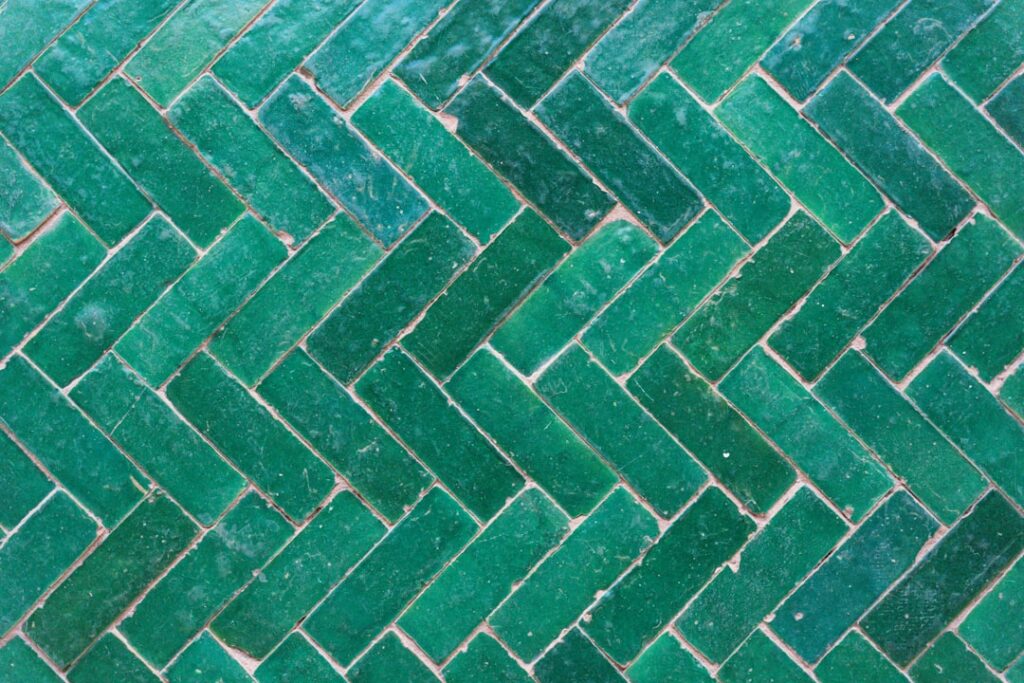
People mix these two up constantly, and it is easy to see why, but the chevron tile pattern vs herringbone debate comes down to one simple detail: how the ends of the tiles meet. Chevron tiles are cut at an angle so their ends butt together into a continuous, unbroken zigzag. Herringbone uses plain rectangular tiles laid at a 90-degree angle to one another, creating a broken, interlocking staircase. Both are striking, both are timeless, but they cut, install, and read very differently. Here is exactly what separates them.
- The Core Structural Difference
- How the Two Patterns Actually Look
- Cutting and Material Waste
- Installation Difficulty
- Cost Comparison at a Glance
- Material Matters: Tile, Wood-Look, and Stone
- Grout Color Changes Everything
- Scale and Room Size Considerations
- Which Pattern Suits Which Space
- Variations Worth Knowing
- The Bottom Line
The Core Structural Difference
Chevron is built from parallelograms. Each tile has its short ends mitered, usually at 45 degrees, so when two rows meet they form a crisp, symmetrical point that runs in a perfect vertical seam up the wall or floor. The zigzag never breaks; it flows in one continuous line.
Herringbone is built from ordinary rectangles. You lay one tile vertical, then set the next horizontal against its end, and repeat. The result is an interlocking L-shape that steps diagonally across the surface. Look closely and you will see the pattern is “broken,” with each tile end meeting the side of its neighbor rather than another end.
How the Two Patterns Actually Look
The visual mood is genuinely different. Chevron reads cleaner, more modern, and more formal because of those unbroken vertical points. It draws the eye straight up or down a hallway and feels tailored, almost like a fabric weave. Herringbone reads more classic, textured, and busy. The staggered breaks give it an old-world, parquet-floor character that suits everything from a Parisian bistro to a farmhouse mudroom.
Orientation changes the effect too. Run either pattern straight and it emphasizes length; turn it 45 degrees and it energizes the whole space and can make a narrow room feel wider.
Cutting and Material Waste
This is where your wallet notices the difference. Because chevron requires tiles with angled, mitered ends, you either buy specially cut chevron tiles at a premium or cut every standard tile yourself at 45 degrees. That angled cutting produces significant offcut waste and demands real precision, so most installers order 15 to 20 percent extra material.
Herringbone uses standard uncut rectangular tiles for the field, so waste is lower, typically 10 to 15 percent, most of it from the triangular border cuts along the edges. If you are buying off-the-shelf porcelain or wood-look plank, herringbone is friendlier on both material cost and your patience.
Installation Difficulty
Neither pattern is a true beginner project, but they demand different skills. Herringbone is more forgiving to lay out because you are working with square-cornered tiles and consistent 90-degree relationships. Your main challenge is keeping the whole field square to a snapped chalk line, because any drift compounds fast across the room.
Chevron is less forgiving. Those mitered points must align in a dead-straight vertical seam, and any inconsistency in the miter angle or grout spacing shows immediately as a wandering, sloppy zigzag. If you are cutting your own miters, a good tile saw with a locking miter gauge is essential. For a first-timer, herringbone is the safer bet.
Cost Comparison at a Glance
- Tile price: Herringbone wins; standard rectangles are cheaper than pre-mitered chevron tiles.
- Waste factor: Herringbone 10 to 15 percent; chevron 15 to 20 percent.
- Labor: Chevron costs more per square foot because of the precision cutting and layout time.
- Overall project: Expect a chevron floor to run noticeably higher than the same tile in herringbone.
Material Matters: Tile, Wood-Look, and Stone
The material you choose interacts with the pattern in ways worth planning for. Rectified porcelain, with its precisely cut, sharp edges, is ideal for chevron because those crisp points depend on perfectly straight tile ends. Natural stone like marble is a showstopper in either pattern but demands careful sealing and a skilled hand, since the softer material chips more easily during cutting. Wood-look porcelain planks are enormously popular in herringbone because they mimic classic parquet floors while shrugging off the moisture that would ruin real wood. If you love the chevron look but want to avoid the mitering premium, some manufacturers now sell wood-look planks with the angle already cut into the ends.
Grout Color Changes Everything
Do not treat grout as an afterthought, because it dramatically shifts how loud or subtle either pattern reads. A matching grout, close to the tile color, softens the geometry and lets the pattern whisper, which suits a large floor where a busy contrast would overwhelm. A contrasting grout, dark grout with light tile or vice versa, makes every zigzag or interlock pop and turns the floor or backsplash into a graphic statement. For chevron especially, a contrasting grout emphasizes those clean continuous points, while a matching grout on herringbone plays up the woven texture without shouting.
Scale and Room Size Considerations
Tile size relative to the room matters more than people expect. Small mosaic-scale chevron or herringbone reads as intricate texture and shines on backsplashes and shower niches, while large-format planks in either pattern make a big floor feel expansive and modern. In a small bathroom, an oversized herringbone can feel cramped and chopped up, whereas a slim plank herringbone can elongate the space. Chevron’s directional pull is a useful trick: run it lengthwise down a narrow hall to stretch it, or across to visually widen. Match the tile scale to the room and the pattern flatters the architecture instead of fighting it.
Which Pattern Suits Which Space
Reach for chevron when you want a sleek, contemporary statement, especially in a backsplash, an entry, or a feature wall where the continuous point becomes the focal element. Its formality pairs beautifully with modern kitchens and clean-lined bathrooms. Choose herringbone when you want warmth, tradition, and versatility. It flatters wood-look planks, marble subway tile, and busy areas because the broken pattern hides minor imperfections and everyday wear better than crisp chevron does.
Variations Worth Knowing
Both patterns have popular variations that expand your options. Double herringbone pairs two tiles together in each step for a bolder, chunkier weave, while a diagonal herringbone turns the whole field 45 degrees for extra energy. Chevron can be run in multiple colors per row to create a striking gradient or stripe. Knowing these twists exists helps you describe exactly what you want to an installer and avoid an ordinary layout when a small variation would make the space feel custom.
The Bottom Line
When you weigh chevron tile pattern vs herringbone, remember it is really a choice between mitered points and interlocking rectangles. Chevron gives you a polished, continuous zigzag at a higher price and with fussier installation. Herringbone gives you a classic, forgiving, budget-friendlier weave that works almost anywhere. Match the pattern to the mood you want and the skill of whoever is holding the trowel, and either one will still look sharp decades from now.
Prefer to explore on your own?
See how new flooring looks in your actual room in seconds — free, no signup.
Try the free Floor Studio →

